Snap Peas in 9 Weeks

Future Snap Pea Trellis Rows

Future Snap Pea Trellis Rows

I am working on an excel spreadsheet that lists vegetables, earliest planting dates for region, field locations – essentially anything and everything that is required to plant crops. Snap peas are one of the earlier crops that can go in the ground in early spring, even before the last frost date. With our farmer mentor’s help, I set today as “THE” snap pea date to plant 2 rows set 11 feet apart so that Dan can drive the tractor in between for weeding purposes.
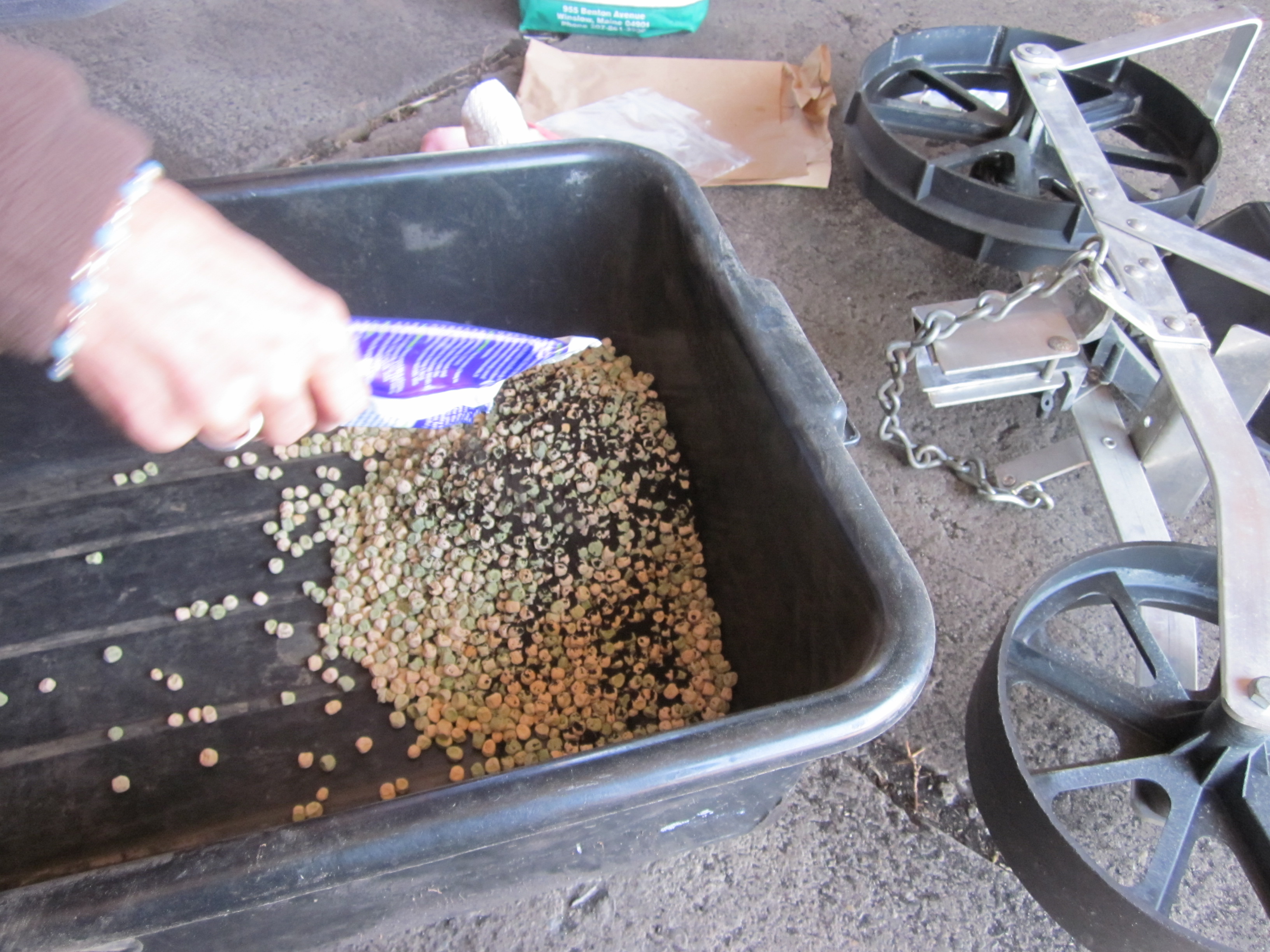
Snap Peas, Inoculant, and Seeder

Snap Peas, Inoculant, and Seeder

Peas are in the fabaceae or the legume family (experts, please help me with the pronunciation of botanical latin names). They form root nodules and contain symbiotic bacteria Rhizobia which can fix nitrogen from the atmostphere. Why is this important? Nitrogen molecules are necessary building blocks of DNA and for plants to make chlorophyll, which plants require to make energy from the sun. Many vegetables are considered heavy feeders and extract a lot of nitrogen from the soil. Plants that grow in nutrient-poor soil are smaller and less healthy.

Farmers used various methods to reintroduce nitrogen such as bird droppings and bonemeal. After world war II, American plants that manufactured bombs, of which nitrogen was a key component, were re-tooled to produce ammonia for agricultural fertilizer. As farming became bigger and more industrial, monocrops of corn and wheat began to replace traditional crop rotation and farmers turned to fertilizer.
Industrial agriculture applies nitrogenous fertilizers to re-energize the soil with a lost nutrient.

This is why beans (same family) are the best source of non-animal protein, all that nitrogen. See nutrition profile of sugar snap peas. http://nutritiondata.self.com/facts/vegetables-and-vegetable-products/2517/2

We set down 2 rows and will wait a few weeks when they sprout to put up supports and trellis. In about 9 weeks, we should be able to host a pick-your-own snap peas event!

Posted in plants | Tagged | Leave a comment

Re:generation

Sprouted Potato

Sprouted Potato

These potatoes are from the Hawthorne Valley CSA in Oct 2013, which wintered comfortably in a bag on my kitchen floor. Eyes started to sprout from them in the winter, so I figured I’d be patient and wait for spring planting.

Lots Of Potatoes

Lots Of Seed Potatoes

There is a lot of work associated with potatoes. I have been warned about Colorado Potato Beetle, which are a significant pest for potatoes, eggplants, and tomatoes, all plants in the nightshade (Solanaceae) family. Soil has to be mounded as it grows to protect the tubers from light, which causes a buildup of solanin, which is toxic to eat. Read Cornell’s organic potato production guide.

Update: We are close to the last frost date in the Warwick valley, but wouldn’t you know it, a cold front is upon us right now. I might have been too hasty and planted it too soon.

Posted in Uncategorized | Leave a comment

Spring Greening

030

Garlic

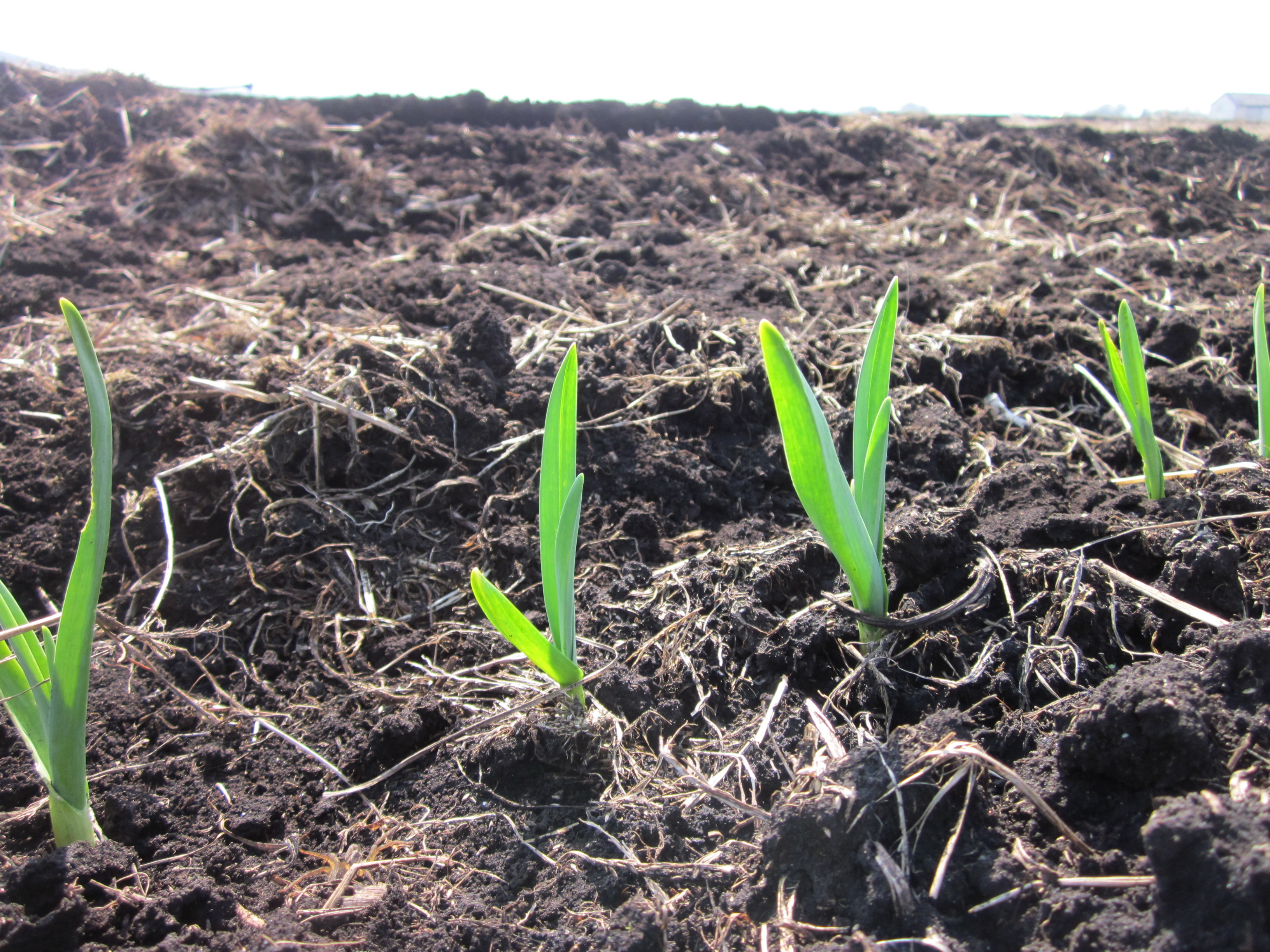
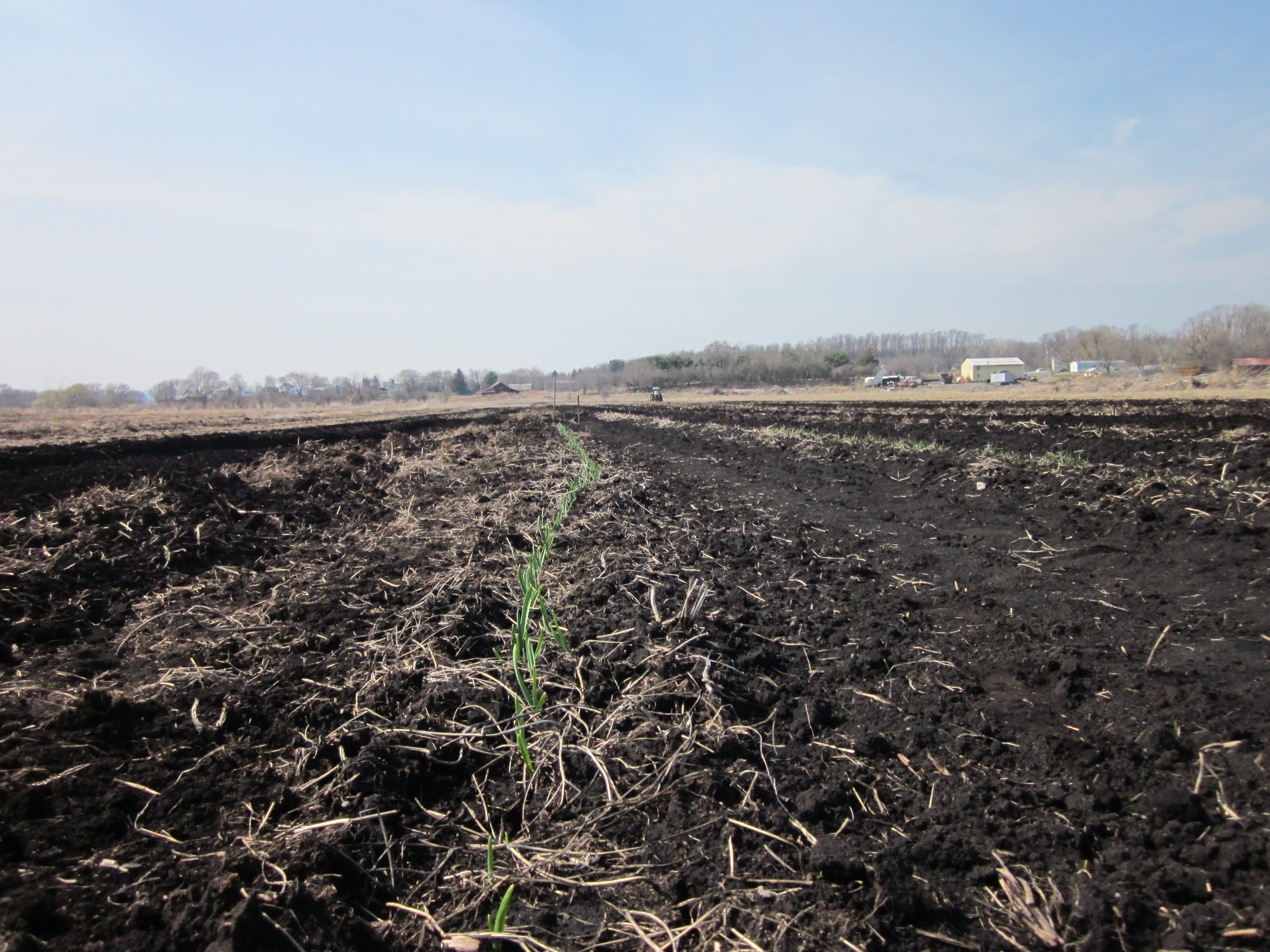
The temperature rose steadily during the week and reached 80 on Sunday. There was a little bit of rain over the week and the garlic seems to be thriving.

Curvy Garlic Row

Curvy Garlic Row

You can just make out tiny green clumps to the right of the garlic row. The chives are real champs, coming up through an unweeded row after a long winter. I had grand plans last fall to dig up the perennial herbs and move them to their own “perennial garden”, it didn’t happen. I had grand plans to see what comes back to life in spring, then move them to their garden, that’s not happening either. Breaking down plant residues and preparing the soil for new planting before weeds start germinating is the name of the spring game. But I think I will grab these chives and re-home them next week.

Stinging Nettle

Stinging Nettle

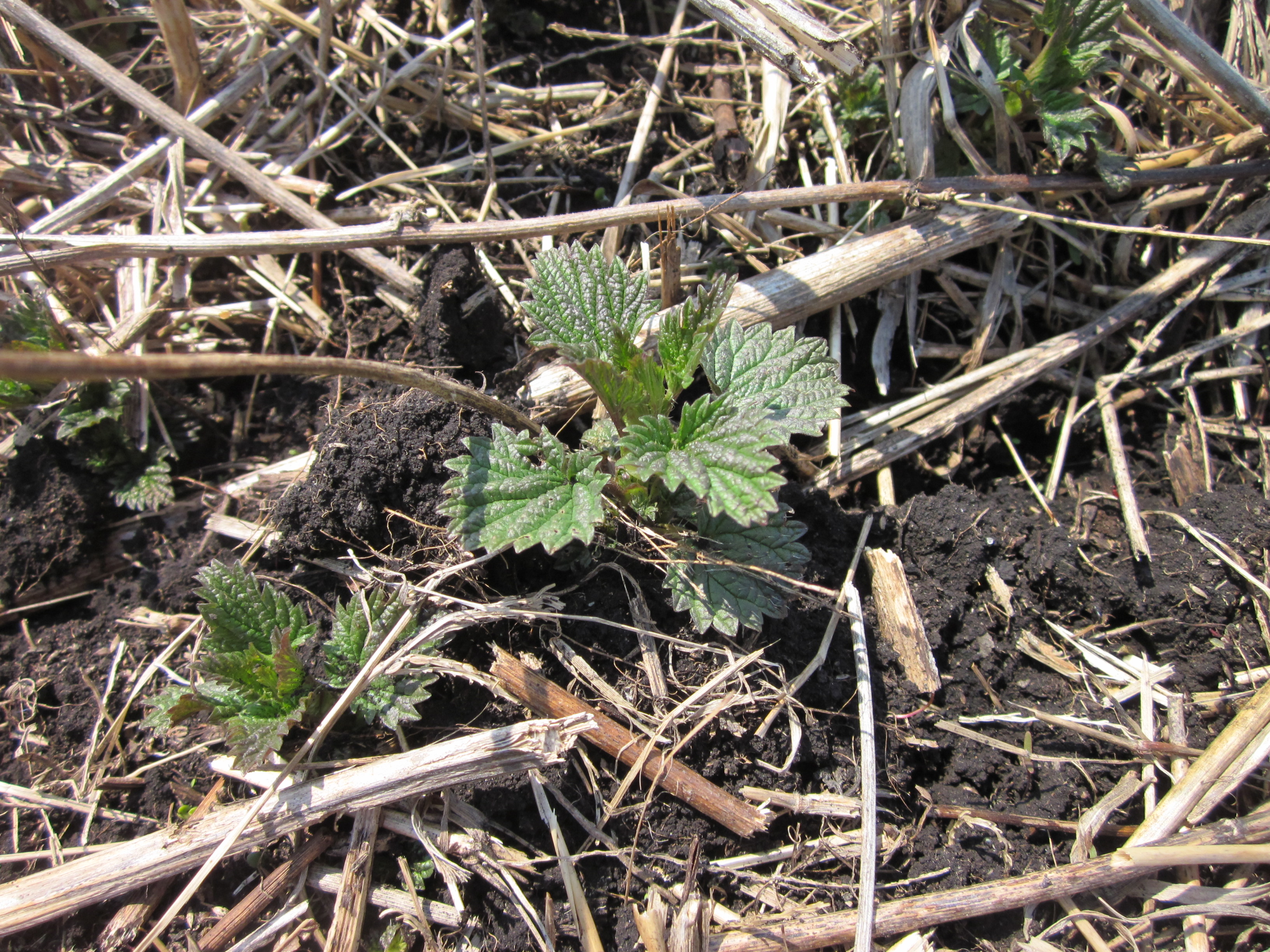
Additional hints of spring are also starting to flourish in the understory beneath yellowed plant residue. A few years ago after taking a foraging walk with wildman Steve Brill, I rushed a patch of lemon verbena to pinch a leaf and confirm its lemony scent. It turned out to be stinging nettles and the pain in my fingers lasted about 4 hours. Stinging nettles (Urtica dioica) are considered weeds from a gardening perspective, but they are a nutritious edible vegetable (high vitamin, minerals, and 25% protein).  Leaves are dried to make tea. Its high nitrogen level also makes it very potent in compost piles. Although once bitten twice shy, I am definitely a fan of this weed.

Posted in plants | Tagged , , | Leave a comment

Breaking Ground

Image

We checked out the rototiller. But it rained on Friday night, so the ground was too damp to properly till.

Image

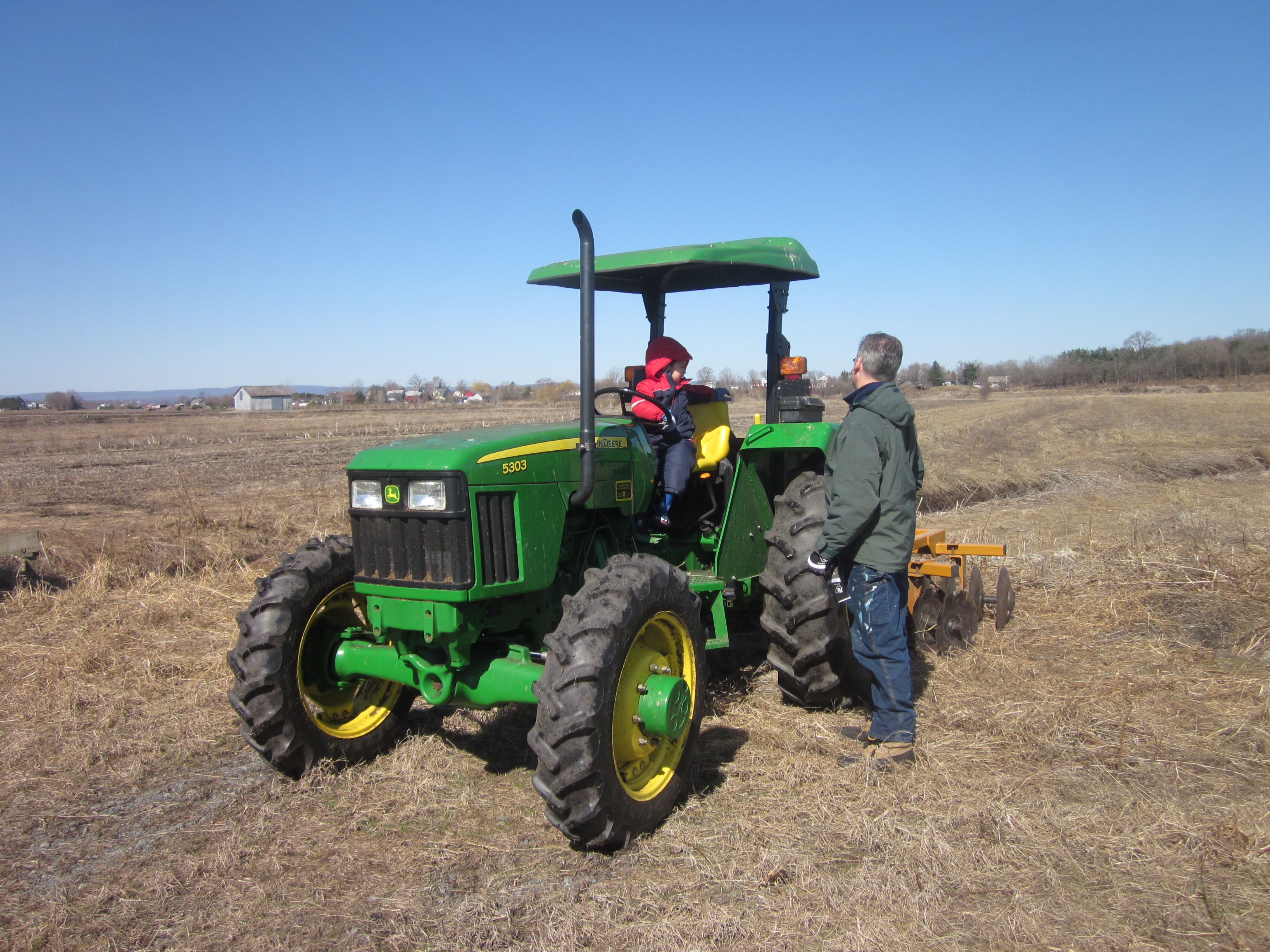
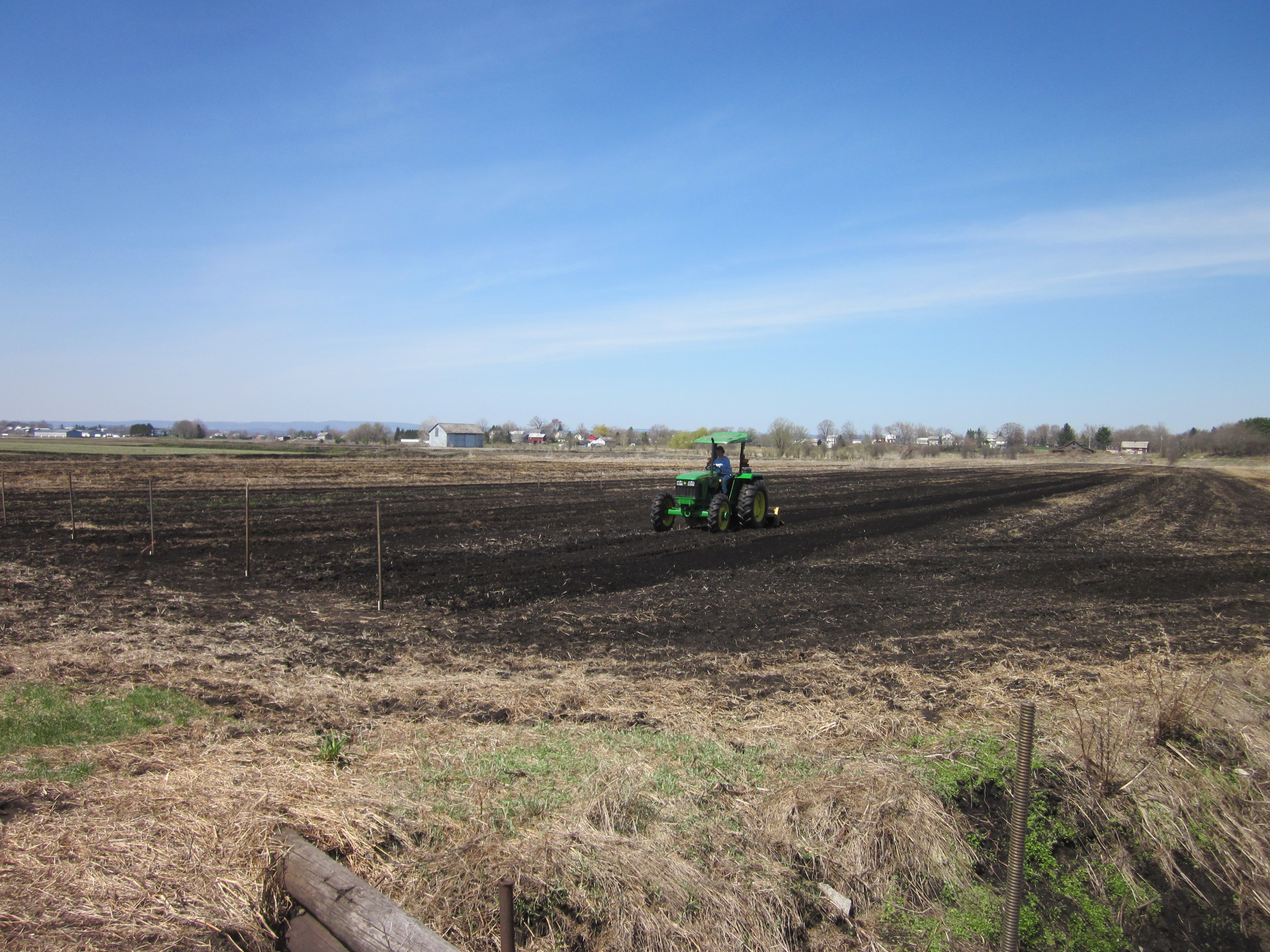
So we waited until Sunday. The temperature was perfect, the soil was workable, and we checked out the tractor.

Image

Ah, the black dirt.

Posted in Uncategorized | Tagged , | Leave a comment

It’s a Garlic Life

Image

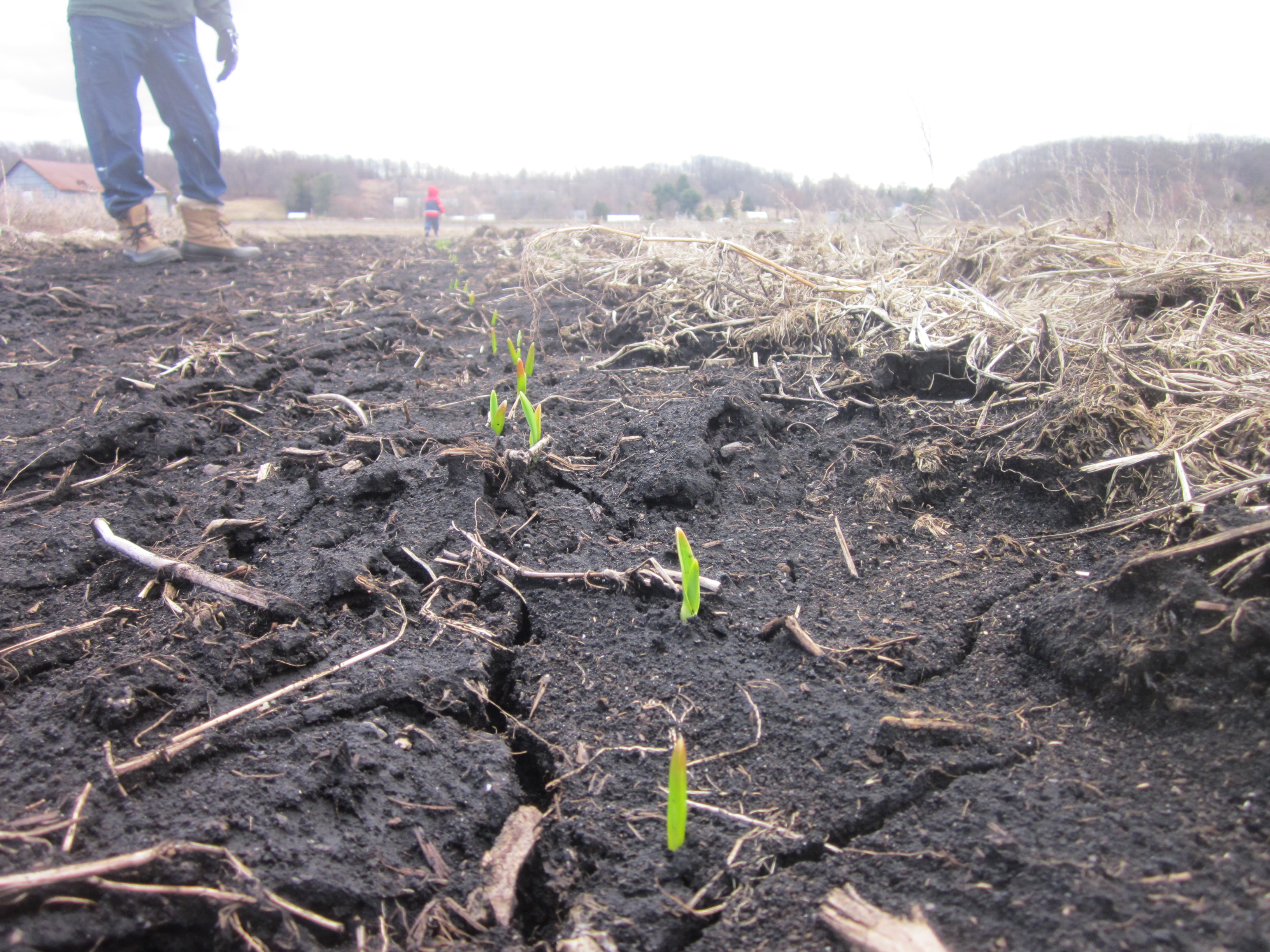
You can see evidence of autumn labor with garlic shoots breaking through. This was garlic planted on a whim, when I spotted forgotten hardneck garlics that looked like it had spilled from a crate by the barn. I wasn’t sure the garlic would survive the epic low winter temperature that might have brought us from zone 6a (average minimum extrememtemperature -10 to -5 Fahrenheit) to 10 degrees BELOW that. 2 weeks ago there was nothing, now the shoots have broken ground!

Hardneck type garlic sends up a false flower stalk, called a scape, and instead of flowers, develops bulbils at the end. Although these small bulbs can be used to plant more garlic, it takes a few years to grow to a large size. Usually, famers sell scapes as a spring delicacy. We will see how it grows in the next few weeks!

I planted another 2 rows of garlic that sat in the barn over the winter. Some additional cloves seem to have survived the winter sitting in a box at the barn, so I planted another 2 rows and we will see if spring planting will yield anything.

Posted in plants | Tagged | Leave a comment

What Will It Be

Image

I ordered seeds this weekend, about 60 different vegetables. What did I choose and why?

I mostly picked open-pollinated varieties, which means there is a possibility of saving seeds for the next season. Growers who develop hybrids can boast certain qualities, but the seeds of the next generation will not run true.

Heirloom seeds. There’s a very real risk that heirlooms don’t have sufficient disease resistance. At the very worst, the entire crop is lost. Check with me in a few months how I feel about heirlooms.

Above is an unusual looking but very popular vegetable. Can you guess what it is?

Posted in plants | Leave a comment

Start the Adventure

Spring is just a few weeks away. As the ice mounds in New York City thaw slowly, enabling cars to properly perform parallel parking, our thoughts turn to the upcoming planting season at the farm. I have 4 seed catalogues and am learning a whole new vocabulary!

The catalogues are beautiful and every vegetable is tempting. There is no way to plant everything I want, but I would like to have a squash patch, a corn maze, and an herb garden. I have thoughts on a strawberry and raspberry patch, but it might be too ambitious this year. Oh yes, definitely want snap peas and string beans.  Come to think of it, the only thing I don’t want to grow is lettuce!  They need to be harvested often and it is just not feasible.

I have also been thinking a lot about physical layouts, crop rotations, beneficial insects, green manures and cover crops – foundational concepts for an organic farm.

Posted in season | Leave a comment

Buried in Snow

Buried in Snow

Buried in Snow

It has been a seriously cold and snowy winter for New York this season.  There is about 2 feet of snow on the farm.  It’s times like that a high-riding vehicle is all one can think of.

Posted in Uncategorized | Leave a comment

NOFA Farming Conference

I joined the Northeast Organic Farming Association (NOFA) and attended the annual winter conference. Hearing from real farmers and agricultural researchers helps to clarify some of the concepts I’ve been reading about in books and online.

  • Small farm startup planning and example of 4 year production
  • Growing Potato basics
  • Growing Cucurbits
  • Smallscale greenhouse
  • High Performance Cover crops

Not too bad for a day and a half, although I would have liked to clone myself and go to more sessions.

Posted in Uncategorized | Leave a comment

Taking Better Stock

Image

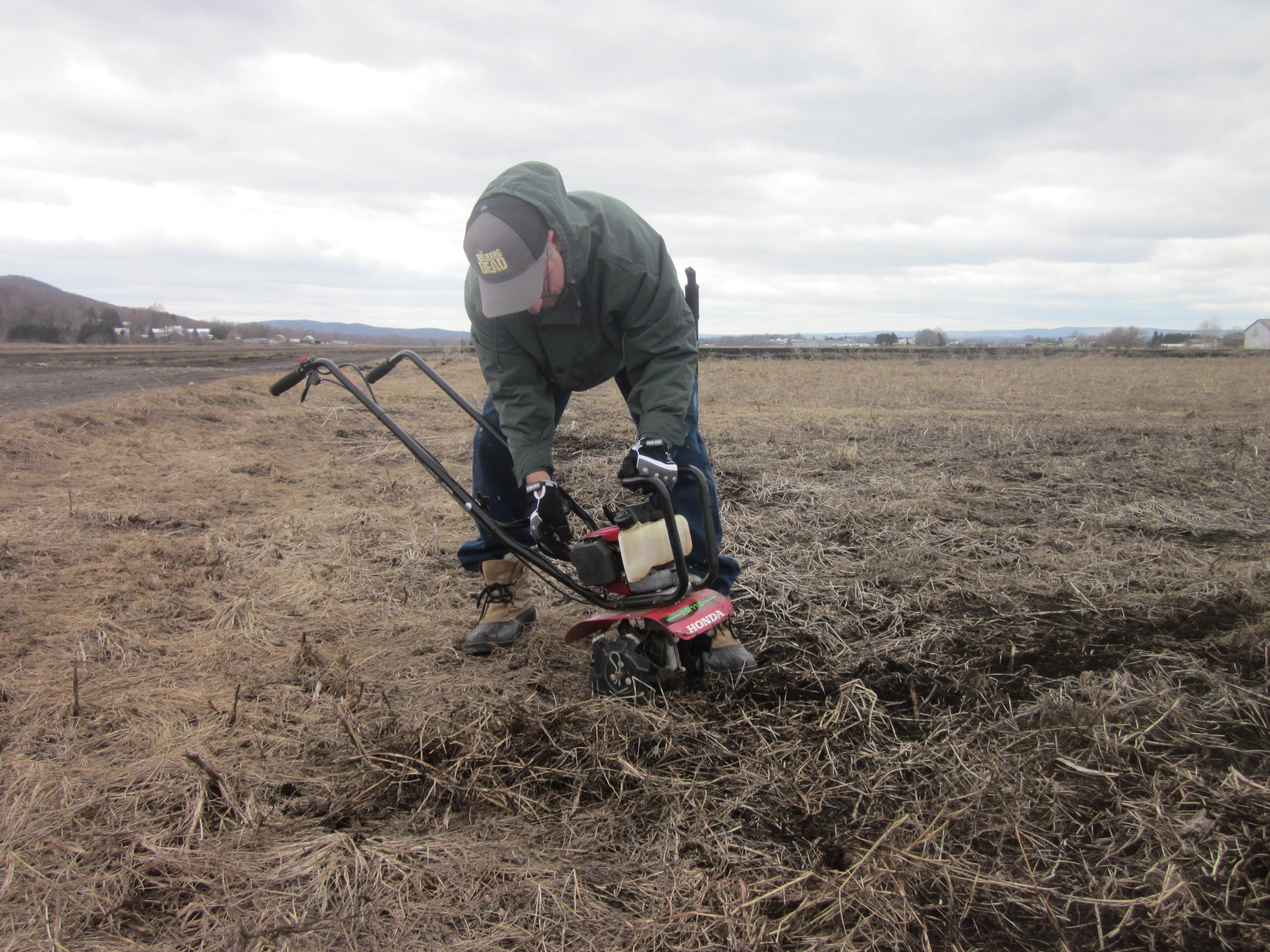
Let me just begin by telling you I don’t know my farming tools. It took some googling to figure out this is a Rotating Tiller. Then I looked on youtube on how to use a tiller. Now I am adding steeltoe work shoes to my “to purchase” list. A tiller breaks up soil and weeds on the surface.

Now, had I known what this implement was before I hand dug a channel for planting garlic in the fall… will chalk that one up to “exercise”.

Posted in Uncategorized | Leave a comment