How to: Garlic


Two varieties of garlic did not make it into the ground in the fall, Broadleaf Czech and Inchelium Red. The softneck varietals, which do not form a scape, or flower stalk, store longer than hardneck varietals and can be braided. Last year I had success with spring-planted garlic and here we are again.

I also had some 40 hardneck bulbs that did not get planted, which when opened, exposed beautiful large cloves, sprouting happily.  Though these were a mix and I can’t tell which is which, my bet would be that several are the German Extra Hardy, with 3 to 4 very large cloves surrounding the stem.

Posted in Uncategorized | Leave a comment

Start’em Up Spring 2015

Garlicking in 2015

Garlicking in 2015

The farm is waking up from the depths of single-digit temperatures. The crates of winter squashes stored in the cabin had definitely frozen rock hard, and then thawed and deflated. There was squash juice everywhere. It was not a pretty sight. We never got around to doing any machine maintenance in the winter. When the tractor roared back to life, Dan said “That’s one amazing piece of equipment there.”

The first sprouting of garlic tells me the race is about to begin. We are not anywhere near ready for this season. This winter we made an unexpected move out of NYC to CT. It was shocking how quickly we decided, packed, moved, unpacked, and adapted to new town new school, new job, and new commutes.

But nevermind all that. As the last frost date for Warwick edges closer, it is time to focus on the dirt, seeds and weeds. Are you ready?

Posted in Uncategorized | Leave a comment

Snowscape

Farm in Winter

Farm in Winter

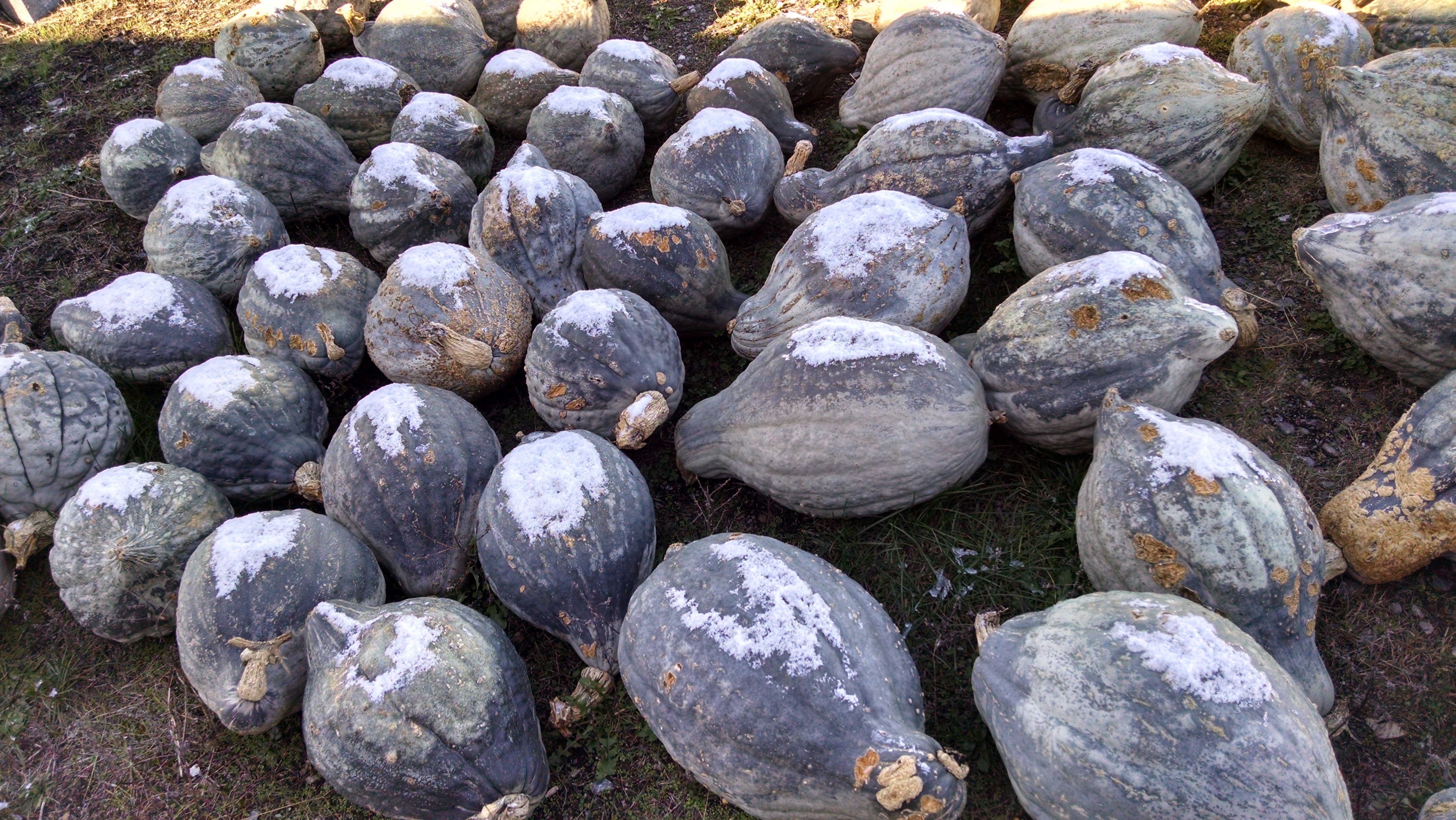
The pre-thanksgiving storm system that swept up the East Coast blanketed the farm in a fluffy, drifty snow.

  • Remaining garlic that needs to be planted – not happening this time
  • Blue hubbards in front of the cabin – covered by snow
  • Squash inside the cabin – keeping fingers crossed they are ok
  • Brussels sprouts – still in the field, enjoying insulation from low nighttime temperatures by domes of snow


Posted in Uncategorized | Leave a comment

November 2014 Squashes

November Squash Share

November Squash Share

  • Winter Luxury pumpkin
  • Blue hubbard squash
  • Acorn Squash “Tuffy”
  • Sunflower seeds
  • Garlic
  • Parsley, Sage, Thyme

The winter luxury pumpkin is an heirloom eating pumpkin. I cut the pumpkin into 12 slices and steam for 30 minutes. Scoop it out and make soup, puree to make pie, or freeze for future use. They are velvety smooth, with a true pumpkin flavor. The seeds can be roasted.

The blue hubbard squash has a really hard and thick shell. People have been known to bring out hacksaws when the butcher knife gets stuck. They are great storage squashes and can last well into the spring, if not for the hard freeze at night and our lack of controlled temperature storage operation.  So alas, the cold has frozen them lightly, and a few projected days of 50 degree weather will allow them to thaw. These are best processed, and eaten or frozen immediately.

The “Tuffy” acorn squash does indeed have a tough shell. Be careful when cutting open!! They start out dark green and turn orange over time.

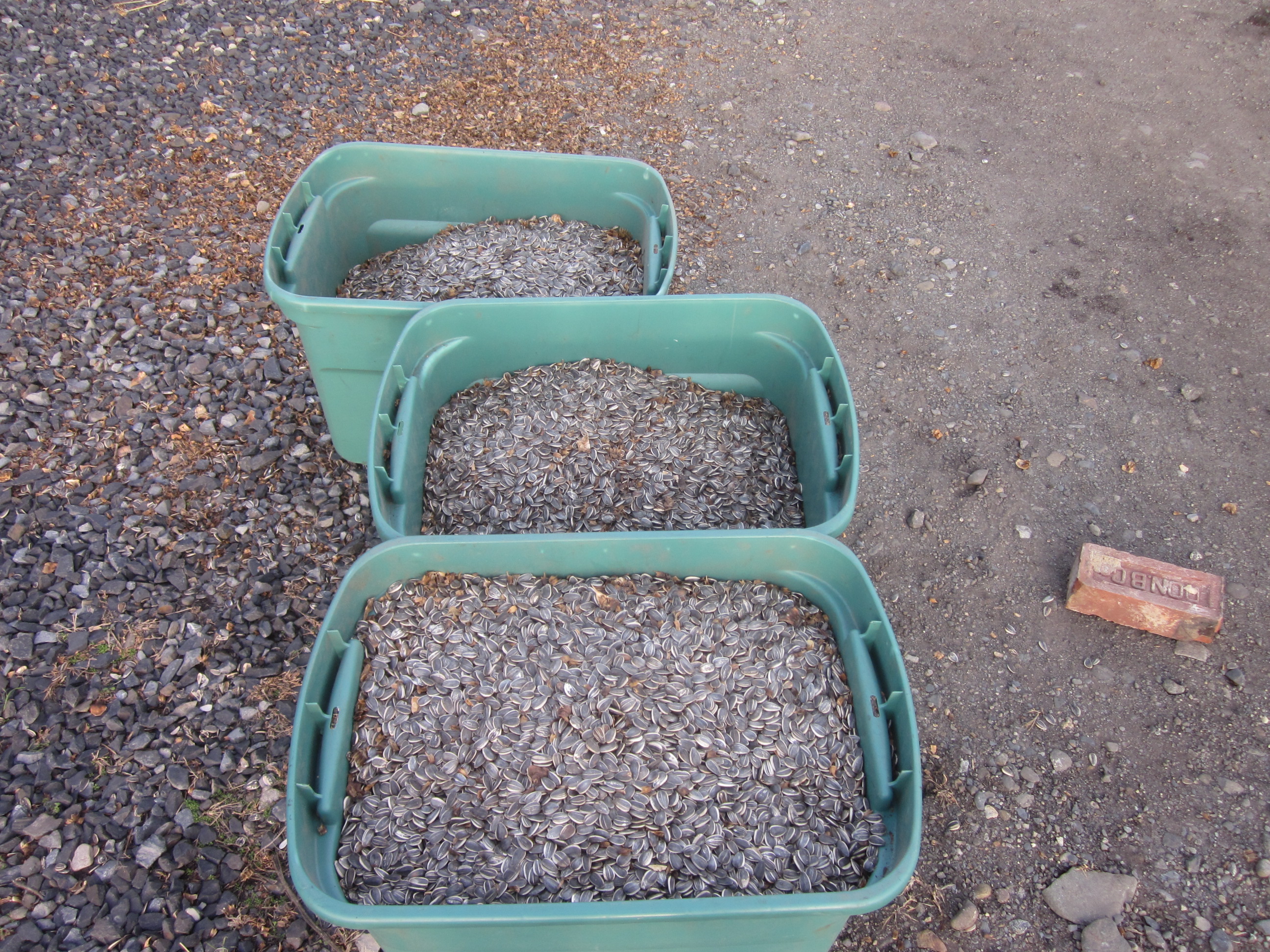
Sunflower seeds are Dan’s experiment, quite successful at that. Each flower head was bigger than my head and gave about 1/2 lb seeds (each bag is about 1 lb, even though the label is for 1/2 lb). We have 3 65-gallon containers of sunflower seed, and mowed down the last 50 flower heads. Early on, we cut some flowers to dry hanging upside down in the barn. The mice loved them. So we left the rest in the field through Oct to dry naturally on the stalk. It was much less work that way. There’s dust and petals mixed in. You can rinse and dry in the oven, or soak overnight in salt water for salted seeds. Finally, they can be sprouted and eaten, or grown for an 8-foot stalk of a flower.

Posted in Uncategorized | Leave a comment

Wintry Weather Wallop

Polar Vortex in November

Polar Vortex in November

As quickly as I patted myself on the back for a decent season, a burst of cold plunged the nighttime temperature to below freezing and put our squashes in danger. 8 degrees below freezing, which drove me to google how to calculate the rate of freezing water. (Answer still elusive on google, chemical engineers or physicists please send me the equation.)

We arrived to find some snow on the blue hubbard squashes outside, with light frozen spots. I left them outside, better they stay semi-frozen than thaw out. Then I went inside the storage cabin to check the other squashes. Some of the tan-colored squashes in a far corner might have chilling injury too.  This includes the Long Island Cheese Pumpkin, Pennsylvania Dutch Crookneck, and butternut squash. There were few to begin with, and this freeze is claiming additional squashes.


Posted in Uncategorized | Leave a comment

Surprise Season Finale

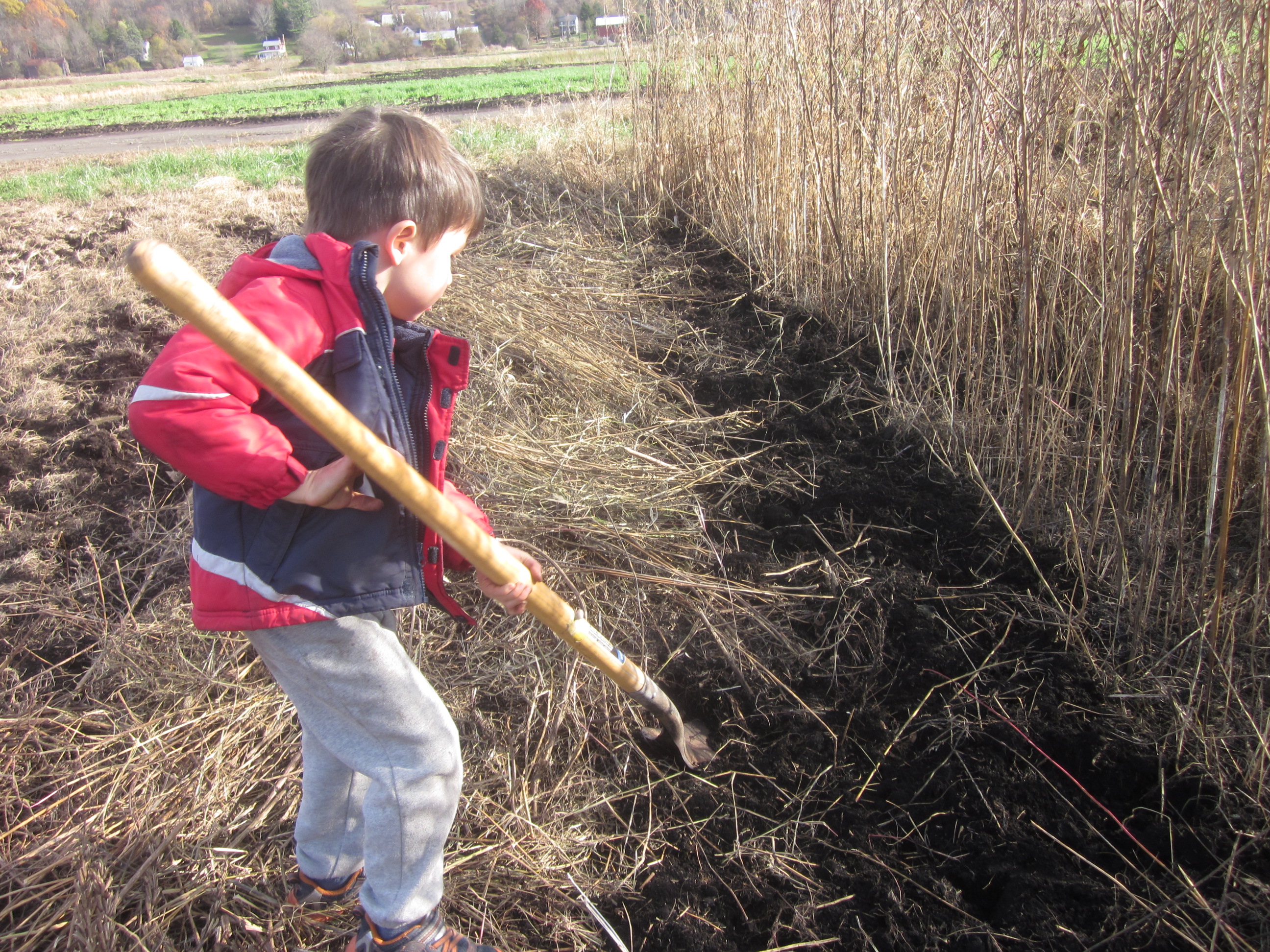
It is just a bit colder inland than in the city. Coupled with the breeze, wind-chill starts to make itself known. Most of the farm has turned to an amber golden tone, with just the herbs and brussels sprouts announcing themselves in green. The goal from here til the ground freezes is to break up the plant residue, and maybe put on a cover crop of winter wheat to prevent erosion.

The drainage ditches were left untamed over the summer, and now the withered weeds provide a sort of windbreak. As I walked along the outermost ditch, I spotted 2 stakes marking potato rows.  My heart skipped a beat. I had completely given up when the weeds overtook the plants in late May. It was on my list of to-weed, but something else always had higher priority. I thought the entire field was already broken up, and yet the stakes stood.  We grabbed a pitchfork and a shovel, and eyeballed where the first line of potato would have been. Voila!

Potato

Potato

They measured no more than 2 inches, but we dug up about 40 of them! The white ones came from the Hawthorne valley CSA from the end of last summer and overwintered in my kitchen. We found a couple red ones, but no blue ones. Next year, we plant and weed properly, for digging potatoes is indeed fun.

Dig, dig

Dig, dig

Over the past month, we had ideas of harvesting sunflower seeds. Some were cut down, bundled up, and hung in the barn. Some came home, only to stink a few days later. Some that had been drying inside the barn since late august were pillaged by mice. We realized there are 3 ways to harvest sunflowers 1) pay someone else to do it 2) by specialized equipment or 3) let it dry on the stalk. Because of the sheer number of stalks and the failure of hang-drying, we left it on the stalk until now. This is what resulted from about 30 flowers. There’s more, but we have no more storage and no more desire to battle critters. They can have what’s in the field. Next year, maybe some seeds will sprout by itself. Or, we may feed some african swallows migrating north carrying coconuts.

Sunflower Seeds

Sunflower Seeds

Posted in Uncategorized | Leave a comment

Geography Through Garlic

Garlic for 2015

World Wide Garlic

Planting Session

Planting Session

For me, garlic marks the beginning of the next season. It is planted in the fall, allowed to winter in the ground, and spring up through the April chill. Battling weeds in the garlic rows was disagreeable in May, discouraging in June, and a definite debacle in July. So this time the rows are spaced 4.5 feet apart. We modified a disk harrow so we can drive a tractor over the small young plants in the spring. I’m trying to find some clever way of sowing a low-growing cover which won’t compete with garlic and helps to deter other weeds.  There’s always straw or plastic mulch, and I could be overthinking the problem.

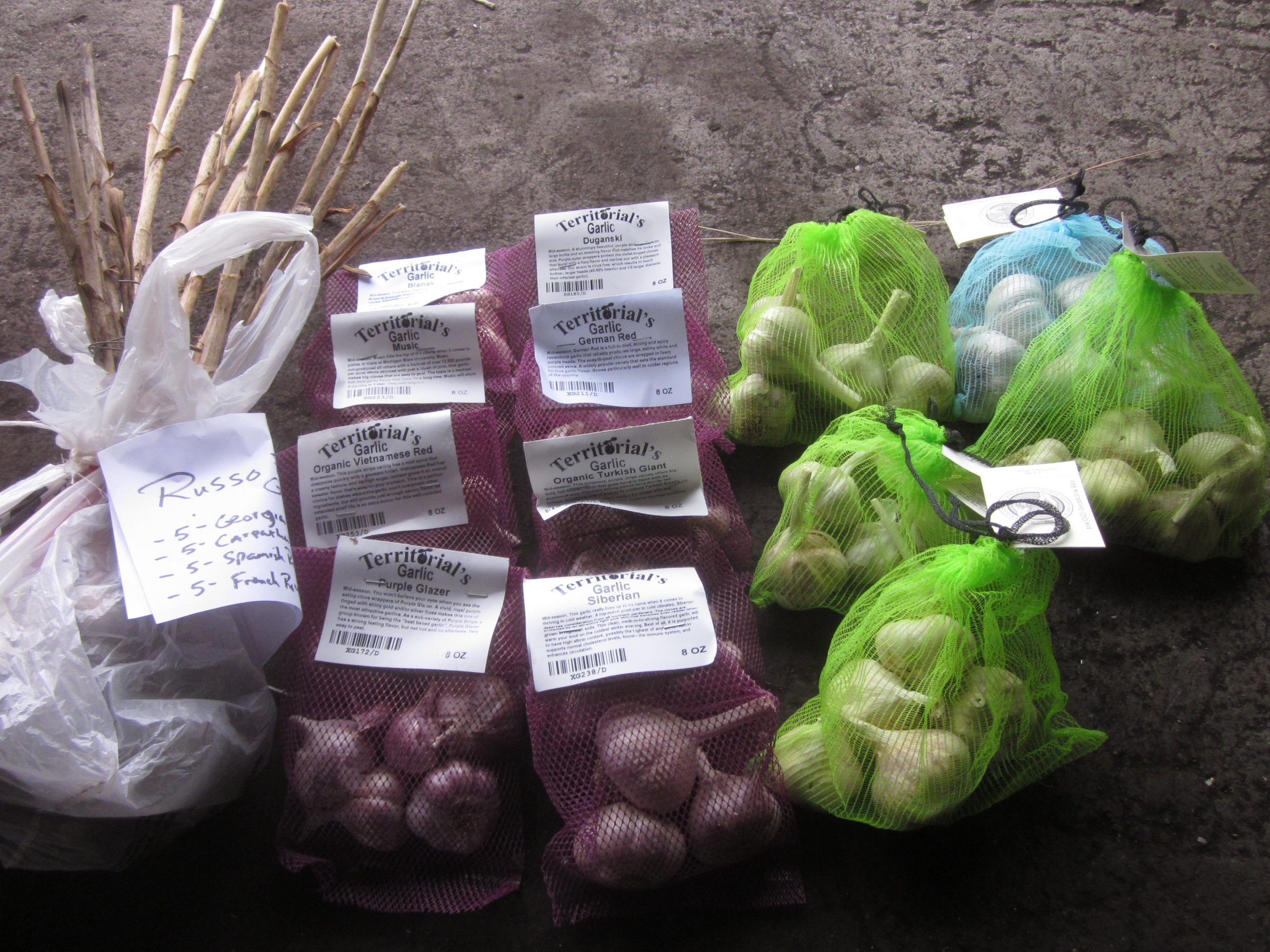
In addition to our own garlic stock this year, here are additional varieties for next year. Each type is a modest half pound, and we have 17 types originating from various areas across the globe.

All of the hundreds of sub-varieties of garlic grown all over the world came from the ten groups of hardnecks that evolved in the Caucasus Mountains between the Black Sea and the Caspian Sea. Garlic (Allium Sativum) has two subspecies, hardneck and softneck. Hardneck refers to the flower stalk that forms bulbils. There are eight types of hardneck varieties: Porcelain, Purple Stripe, Marbled Purple Stripe, Glazed Purple Stripe, Asiatic, Turban, Creole and Rocambole.

Variety Description Origins
German Extra Hardy Also known as German White. Vigorous grower with long roots that enable it to overwinter without heaving out of the ground. Outside skin is ivory-white, but the clove skin is dark red. Strong raw flavor, high sugar content, one of the very best for roasting. Hardneck, 4-7 cloves per bulb. Germany
German Red Mid-season. German Red is a full-bodied, strong and spicy rocambole garlic that reliably produces large, satiny white and purple heads. The easy-to-peel cloves are wrapped in fawn colored skins. A widely popular variety that sets the standard for true garlic flavor. Grows particularly well in colder regions of the country. Germany
French French rocambole. France
Music Mid-season. Music hits the top of the charts when it comes to yields. In trials at Michigan State University, Music out-produced all others with a harvest of over 13,500 pounds per acre! White skinned with just a blush of pink, this garlic makes big cloves that are easy-to-peel. The taste is a medium hot, true garlic flavor that lasts for a long time. Music will store 9 months to a year. Very cold tolerant. Italy
Carpathian Originating near the Carpathian mountains of Poland. Poland
Spanish Roja Sharp and assertive flavor when used raw. Spain
Blanak Mid-season. This spicy, vigorous, cold-hardy rocambole from Bulgaria produces elegant, pearly white heads with chunky cloves. Blanak’s cloves are covered with a shiny purpley-taupe colored skin that is easily peeled. The flavor is fiery and lasting; great for roasting, salsa making and adding zing to pickles. Bulgaria
Turkish Giant Mid-season. This gorgeous, purple stripe variety offers bold, full-bodied flavor that goes hand in hand with its size. The extra strong plants have sturdy, tall foliage, supplying lots of energy to produce Turkish Giant’s bright red bulbs. An excellent choice for those who are looking for robust garlic flavor and superior storage qualities. Turkey
Duganski Mid-season. A stunningly beautiful, purple stripe garlic with large bulbs and an amazing flavor that matches its looks and size. Purple outer wrappers protect the violet-tinged cloves that burst with a fiery flavor and mellow out with a pleasant aftertaste. Czech Republic
Bogatyr Obtained from the Gatersleben Seed Bank (#7204), but originally from Moscow. Beautifully marbled brown or purple striped cloves. Good storage qualities. One of the most consistent garlics grown at Heritage Farm. Hardneck, 5-7 cloves per bulb. Moscow
Siberian Mid-season. This garlic really lives up to its name when it comes to thriving in cold weather. A top-notch producer in cold climates, Siberian deserves consideration from all northern gardeners. The cloves are protected by an attractive light pink skin that becomes even redder when grown in high-iron soils. This clean, medium-to-strong flavored garlic will warm your soul on the coldest winter evening. Best of all, it is purported to have high allicin content, possibly the highest of any garlic. Allicin supports normal cholesterol levels, boosts the immune system, and enhances circulation. Russia
Purple Glazer Mid-season. You won’t believe your eyes when you see the satiny clove wrappers of Purple Glazer. A vivid, royal purple tinged with shiny gold and/or silver hues makes this one of the most attractive garlics. As a sub-variety of Purple Stripe, a group known for being the “best baked garlic”, Purple Glazer has a strong lasting flavor, but not hot and no aftertaste. Very easy to peel. South Russia
Georgian Fire Obtained from the Gatersleben Seed Bank (#6822) in eastern Germany. Described by chefs as a truly “white hot” garlic. Raw taste is strong with a hotness that is not at all unpleasant. Great for salsa and salads. Hardneck, 4-6 cloves per bulb. Georgia
Pskem River Originally collected by SSE member John Swenson in 1989 from the Pskem River Valley in Uzbekistan. Beautiful purple striped cloves, full flavor. Hardneck, 4–5 cloves per bulb. Uzbekistan
Vietnamese Red Mid-season. This purple stripe variety has a mild spice that dissipates quickly with a pleasant finish. Vietnamese Red has a creamy texture, and its high sugar content gives it an overall sweeter flavor that’s easy on your stomach. This is a perfect choice for dishes where the garlic won’t overpower other ingredients, but still provide just enough savory flavor. Its extended shelf life is an extra bonus for this well-rounded garlic. Vietnam

Softneck garlic do not form scapes, and can be stored longer than hardneck varieties. They can be braided (think rustic Italian countryside). They form smaller cloves and grow well in milder climates. Most supermarket varieties are softneck and imported from overseas industrial farms.

Broadleaf Czech Nice tan cloves with a hint of red. Cooked flavor is very nice, described as mild and full flavored. When raw the flavor is hot to very hot. Obtained from the Gatersleben Seed Bank (#146). Softneck, 8-12 cloves per bulb. Czech Republic
Inchelium Red Found growing on the Colville Indian Reservation in Inchelium, Washington. Light purple blotching on bulbs. Compound bulbs have 8-10 outer cloves and 10- 15 small cloves in the center of the bulb. Rated the best tasting garlic by the Rodale Institute in 1990. Softneck, 12- 16 cloves per bulb. US, Washington State
Posted in Uncategorized | Leave a comment

Back To Chill

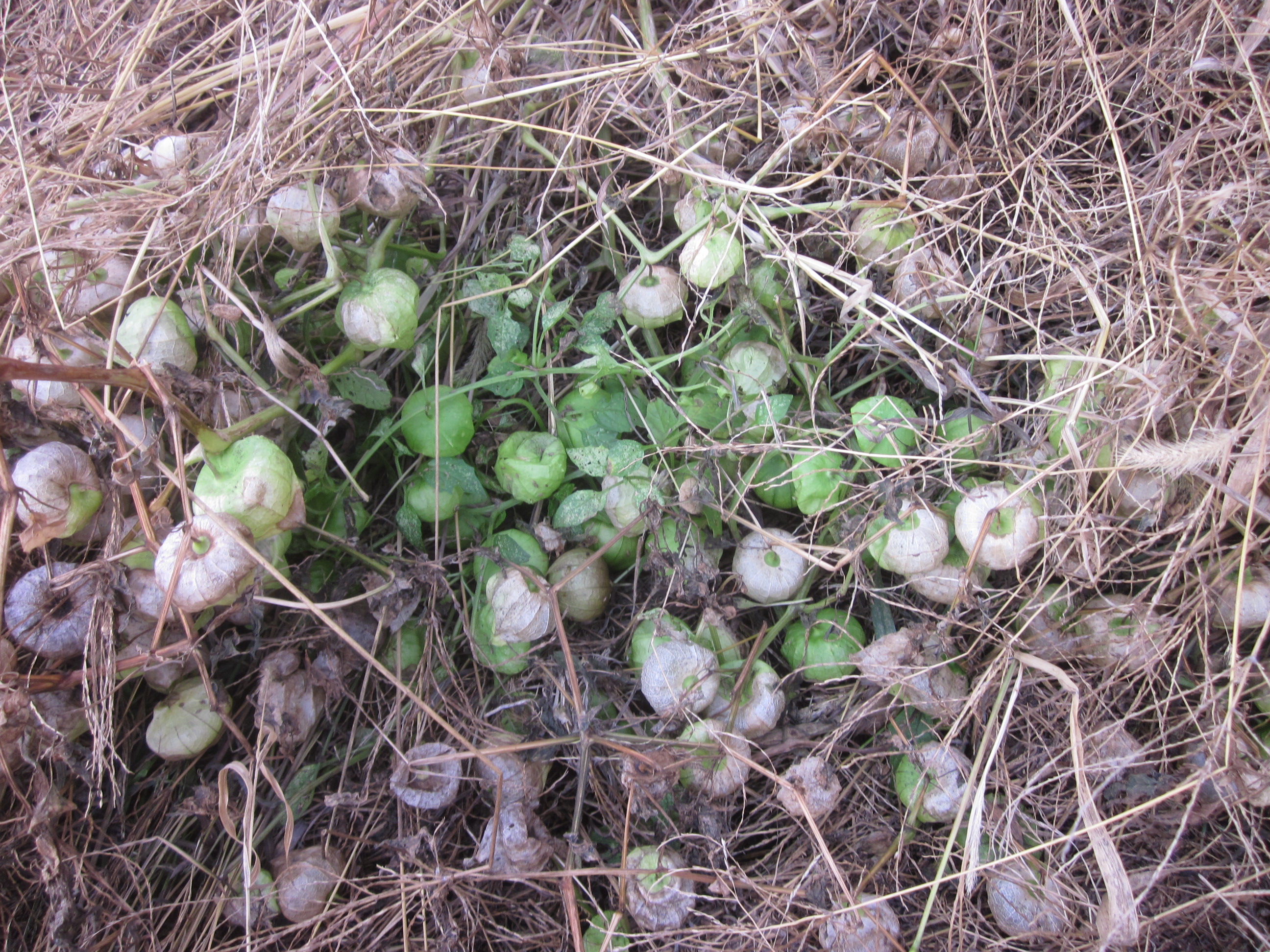
The drying golden hues of grass has settled over the farm. While neighboring farmers have cleared their land and planted a cover crop for the winter, we are on the relaxed schedule. There are still many tomatillos to be collected here and there. Funny thing about the tomatillo husks, they smell bad. When you remove the husks, the tomatillos are slightly sticky. I dunk everything into a bowl of water with a little soap, and pull off the husks.

Tomatillo

Nest of Tomatillo

With a bit of rain last week, the dill seeds sprouted and are attempting to carpet a portion of the herb row. I didn’t manage the dill properly this season, letting them flower and go to seed very early in July. But nature performed beautifully, shed seeds, and waited for the proper time to bring forth more.

Dill

Dill

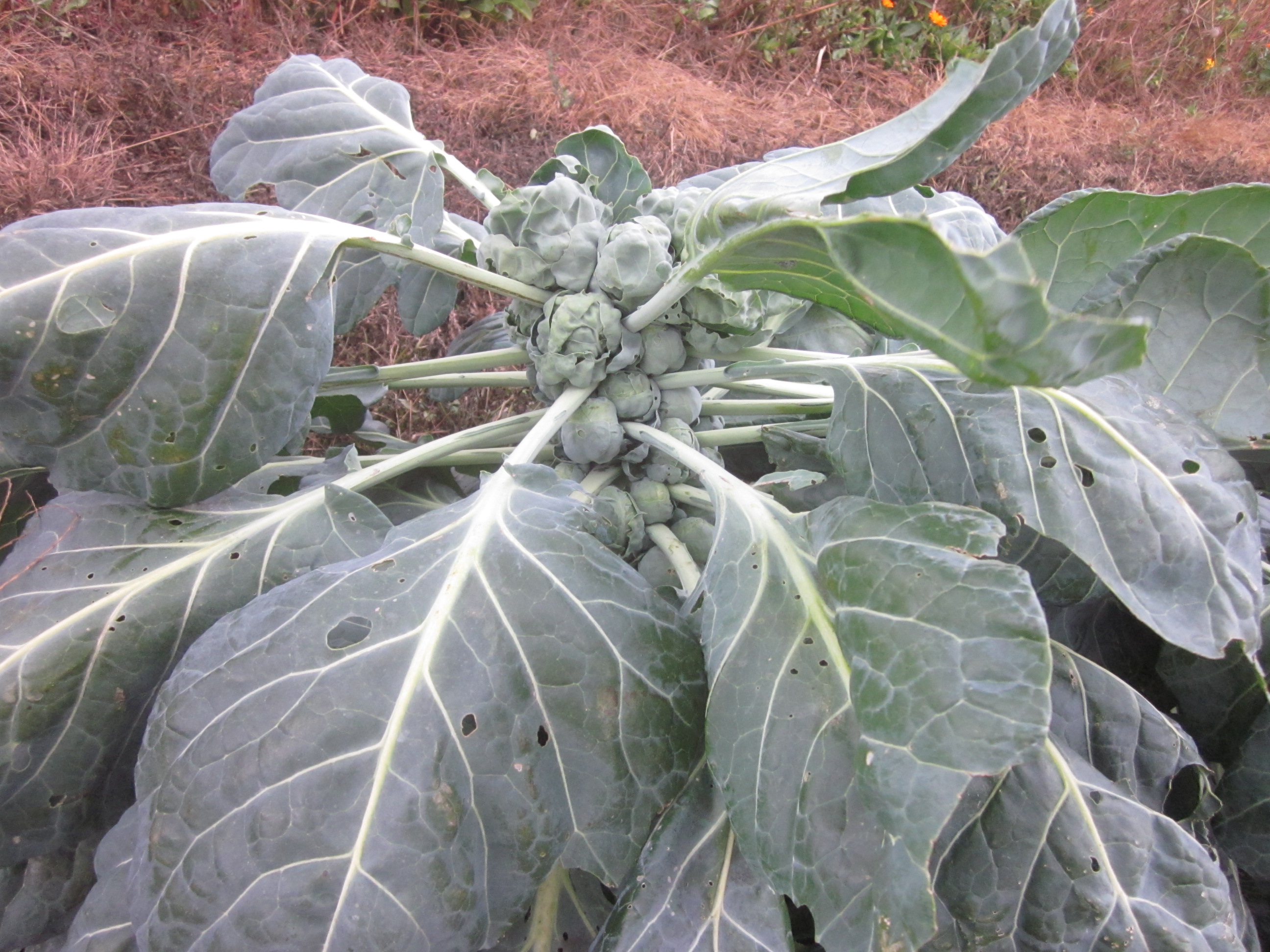
A nice fall crop of brussels sprouts, which can survive some cold. These stalks are like the leaning tower of pisa. The top layer of bud growth is amazing, flowering into additional buds and shoots.

Brussel Sprouts

Brussel Sprouts

Sowing flowers in a row, truly a novice thing to do. The weeds towered 5 feet over them for the majority of the summer. Now the weeds have yellowed and dried, these flowers are getting its second breath of life. When alive, these plants are resinous and sticky. It is no fun to pick the flower without gloves.

Calendula

Calendula

Posted in Uncategorized | Leave a comment

Finding The Last Harvest

With night time temperatures dipping right to about freezing, we walked through the rest of the squash field to retrieve the remaining winter squashes. Surprising to find this many more spaghetti squash left in the field. When cooked, they are stringing and separate like spaghetti. They can be topped with sauce and cheese, as if you were having a plate of flour-based pasta! Believe it or not, this was originally cultivated in China in 1890’s and was imported to the US in the 1930’s. During world war II era, the squash gained popularity as an inexpensive replacement for Italian spaghetti.

Spaghetti Squash, Anna Swartz Hubbard

More Spaghetti Squash, Anna Swartz Hubbard

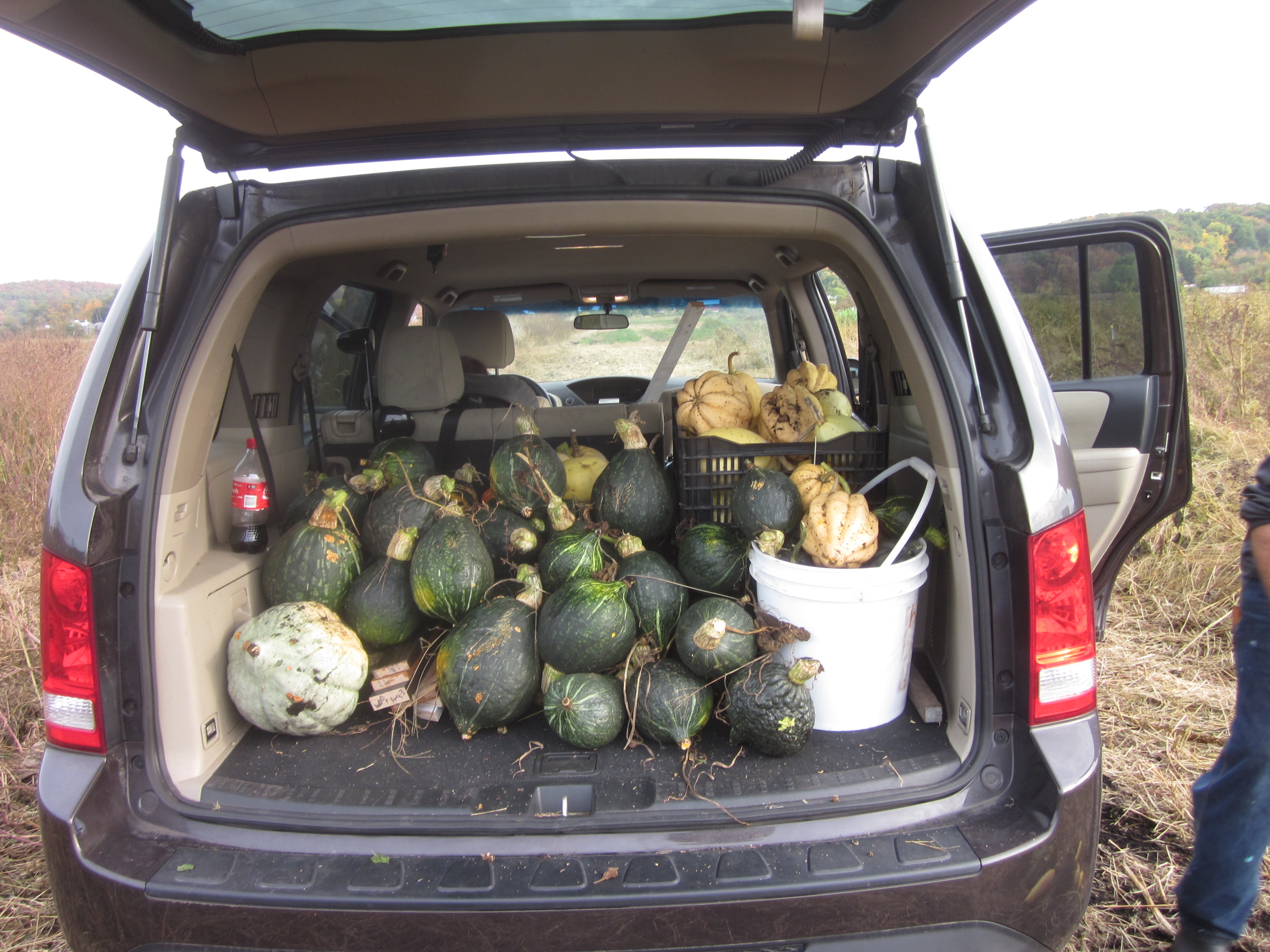
Hubbard squashes are usually very large with a hard skin. Anna Swartz hubbard is an heirloom from Massachusettes. We cut an 100 foot row and packed it into the SUV.

Workout for the SUV

Workout for the SUV

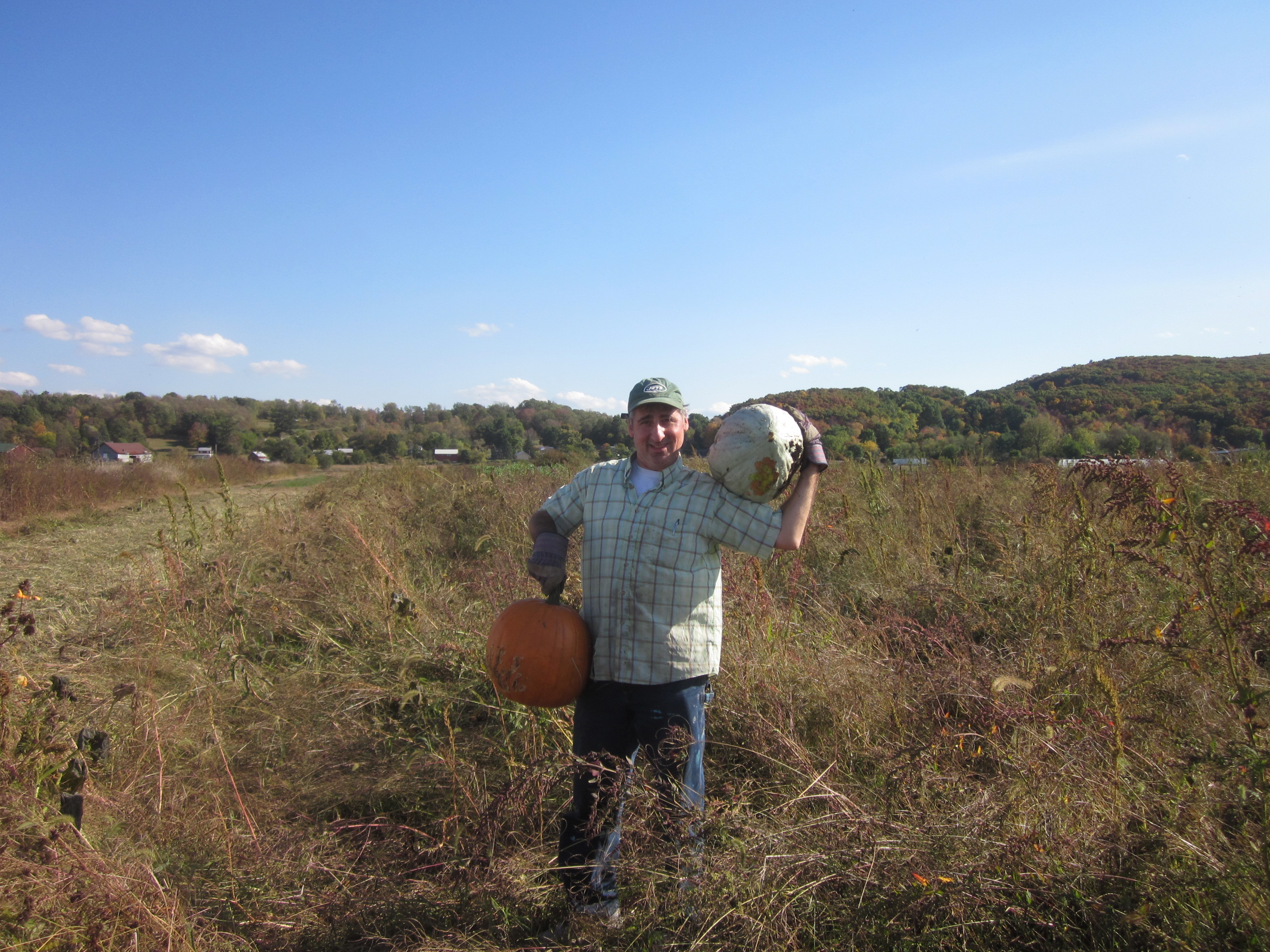
Last year a farmer had rented one of the fields and grew corn, pumpkins, and squash. A few of the seeds generated some large pumpkins, which we found hanging near the ditches. If you look closely there are some serious teethmarks from woodchucks.

Extras

Extra Pumpkin

There were only 4 of these heirloom French pumpkins this year. At maturity, they turn an orangey tan. Tall weeds in the squash patch blocked the sunlight this season. Next season, we’ll put in a different growing grid, so that we can weed more frequently with the tractor.

Musquee de Provence

Musquee de Provence

Posted in Uncategorized | Leave a comment

Squash Is The New Black

Looking at the droopy squash leaves with a black-green color tells you that the temperature dipped low enough to form ice crystals. We are approaching the “first frost date”, mid-October, for our zone and region. So we set about clearing the squash patches.

These three orange squashes had been woodchuck favorites.

  • Potimarron (French heirloom squash that has a hard skin and of the hubbard group) – small yield, 10 for us and 10 for the woodchucks.
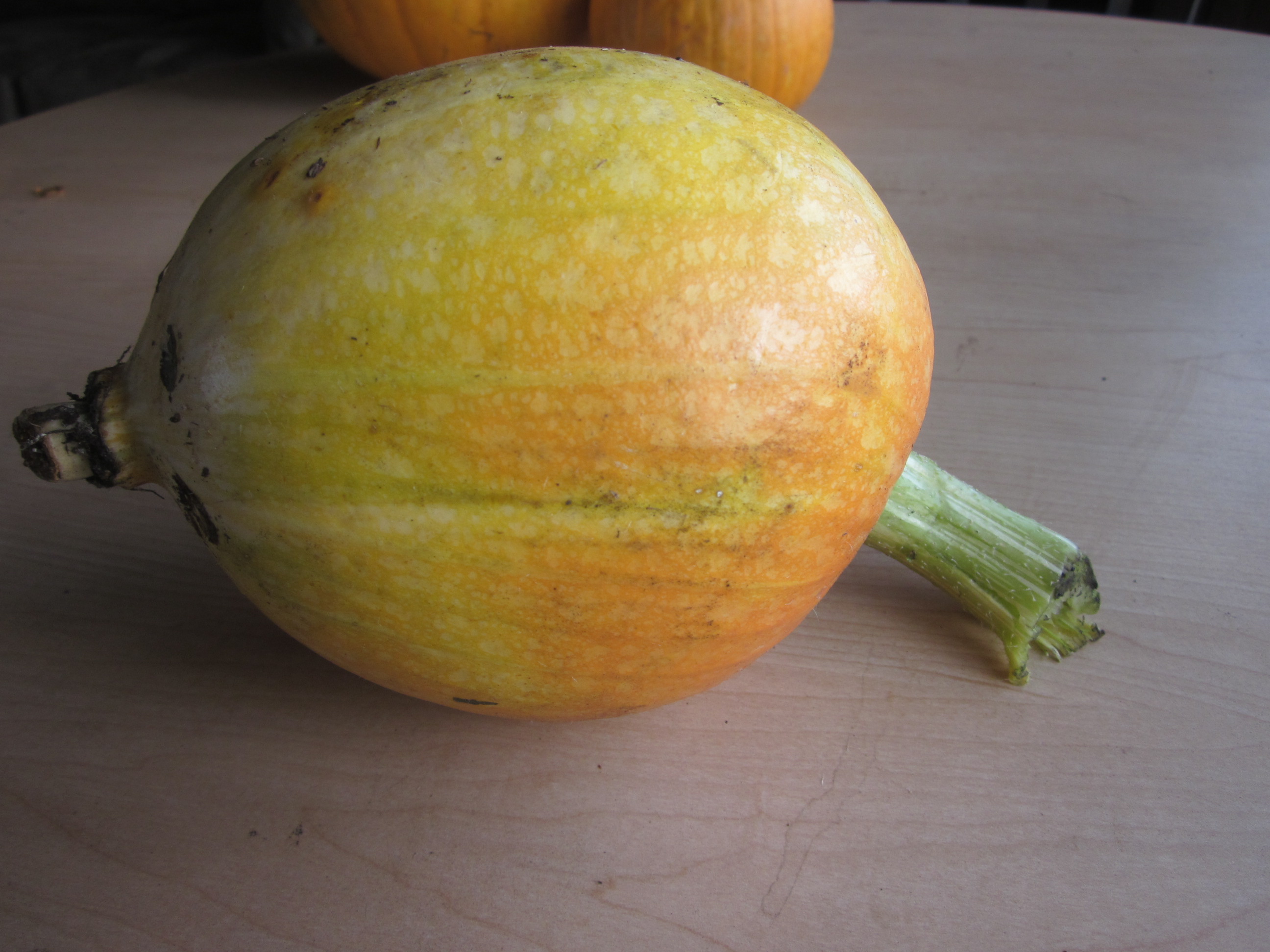
  • Orange Dawn – 50 for us!
  • Boston Marrow (Originated in upstate NY with 200 years of history, now only grown by a very few. Listed in the Slow Food Ark of Taste) – small yield, 5 for us and 5 for the woodchucks. There are several immature fruits in shades of yellow still on the vine.
Potimarron, Orange Dawn, Boston Marrow

Potimarron, Orange Dawn, Boston Marrow

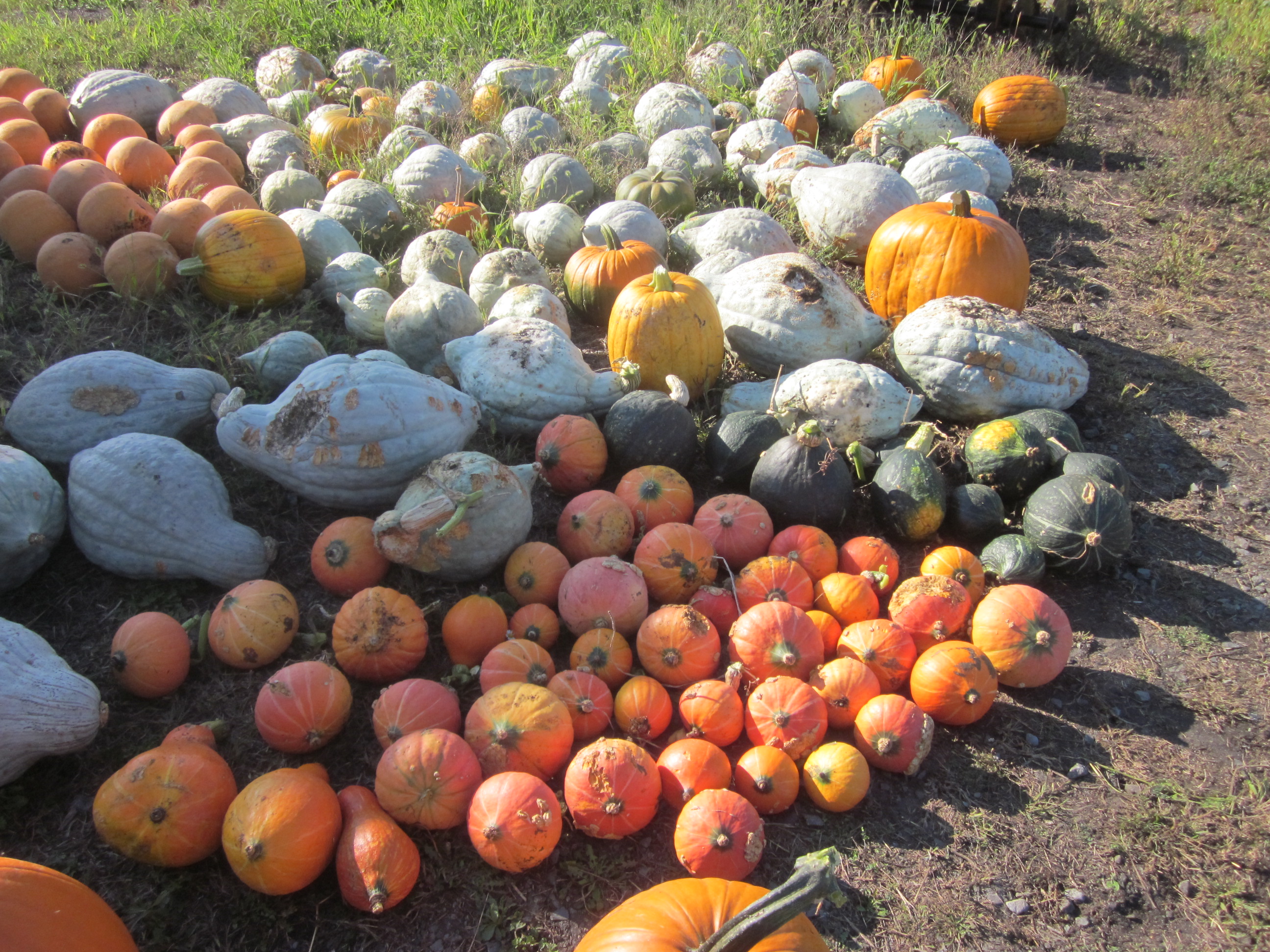
Blue hubbards curing in the field since last week, with newly collected pumpkins other orange squashes. The dark green are a hubbard-type squash called Anna Swartz. Leaving them outside to cure is a bit of field roulette, maybe the woodchucks will come for them, maybe the frost will descend upon us.
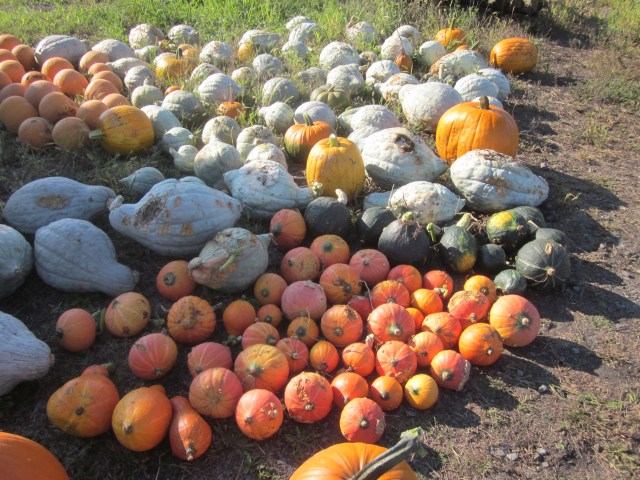
Field Roulette

Field Roulette

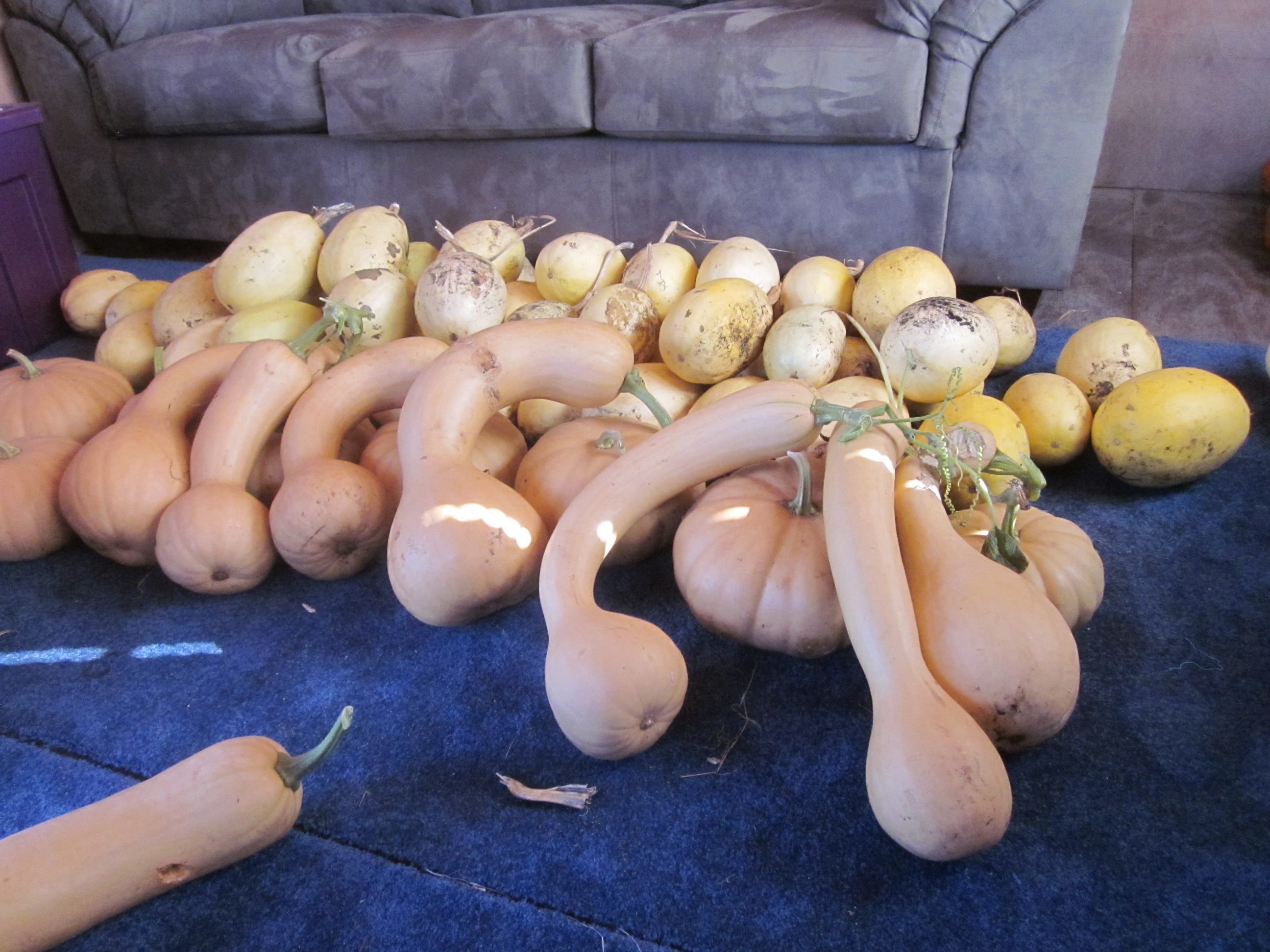
A butternut with lots of neck? Yes please, presenting the Pennsylvania Dutch Crookneck squash. Critters seem to love seeds and I found a few with the seeds eaten out of the bulbous part.

Pennsylvania Dutch Crookneck

Pennsylvania Dutch Crookneck

Long Island Cheese pumpkin – 8 for us, 2 for the woodchucks.
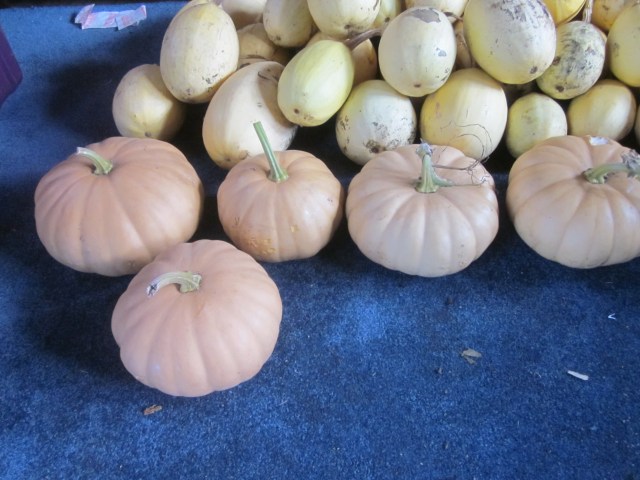
Long Island Cheese Pumpkin

Long Island Cheese Pumpkin

The one and only Marina di Chioggia pumpkin. The plants did not do well.

Marina di Chioggia Pumpkin

Marina di Chioggia Pumpkin

The one and only Amish Pie pumpkin. There were a few immature fruits that set recently, and the plant is still flowering.

Amish Pie Pumpkin

Amish Pie Pumpkin

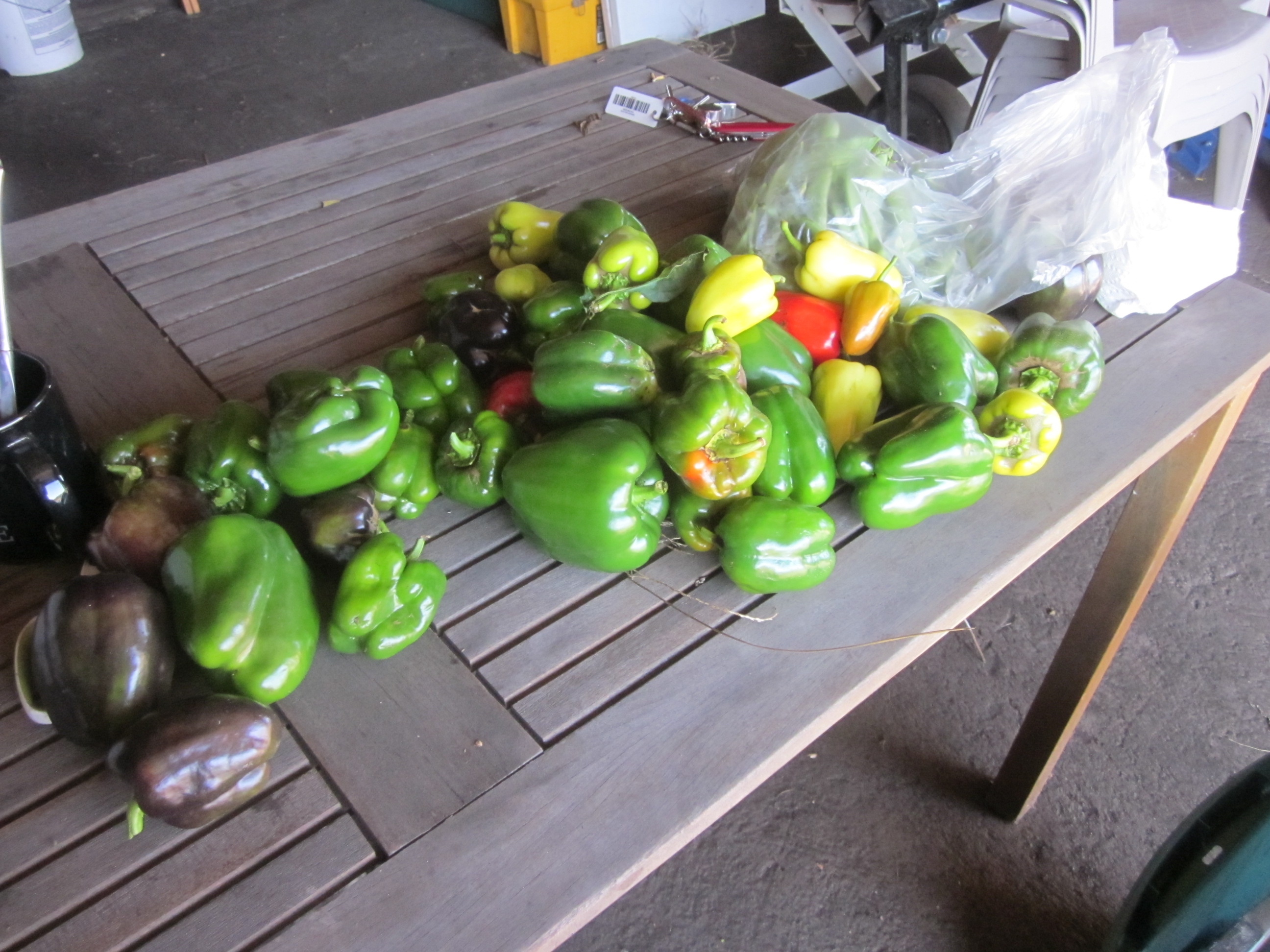
Closing out the summer vegetables, a surprise round of sweet bell peppers. After the first round of harvesting, I did not think the small fruits would size up. How wrong was I?
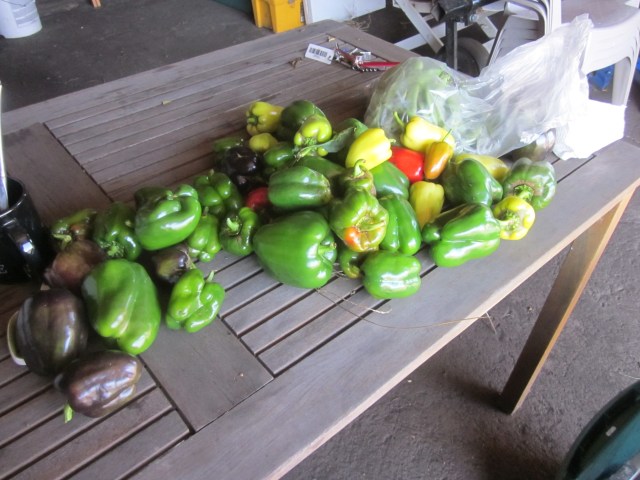
Peppers, round 2

Peppers, round 2

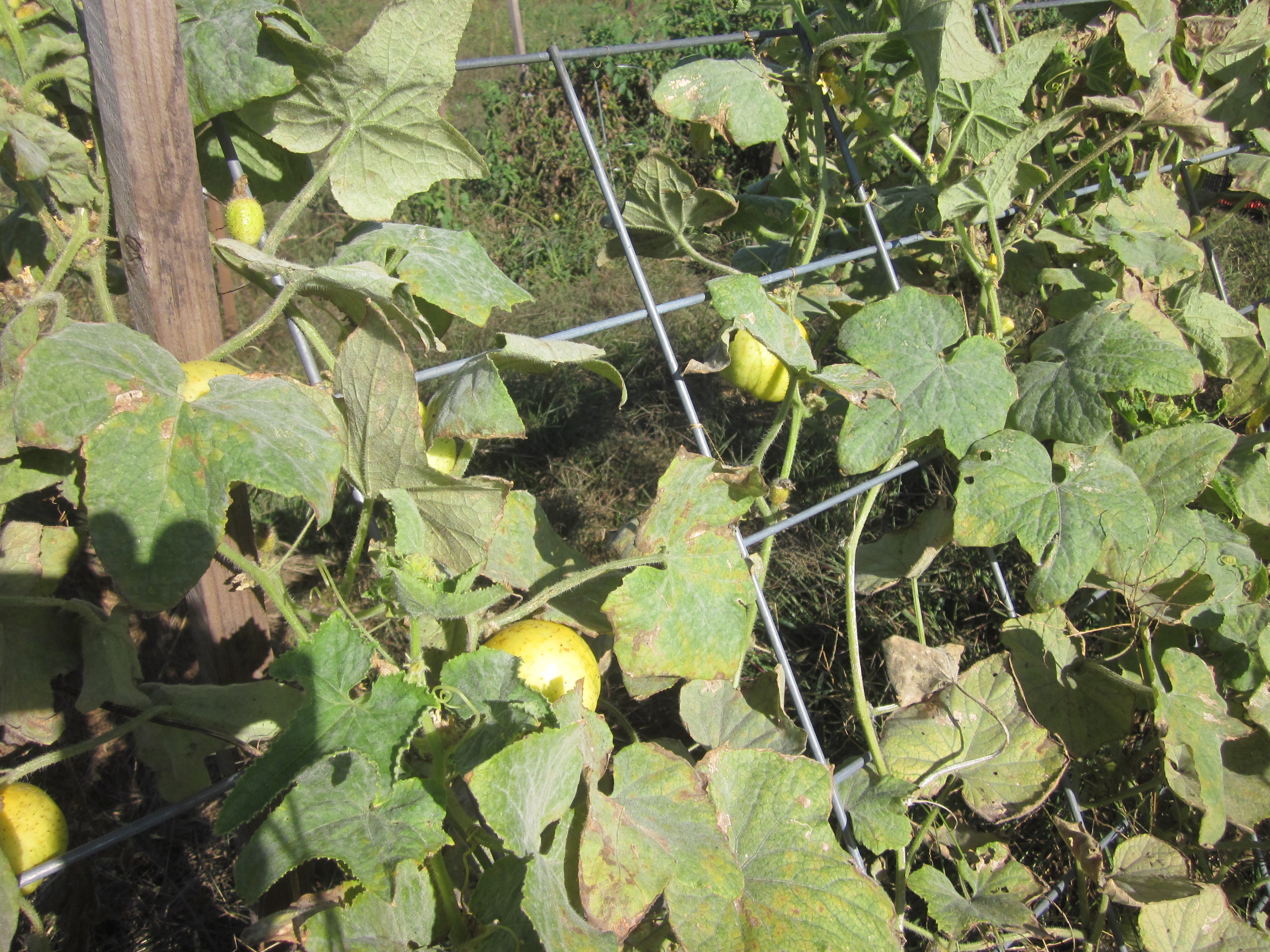
Last call for cucumbers. The leaves and vines are drying out.
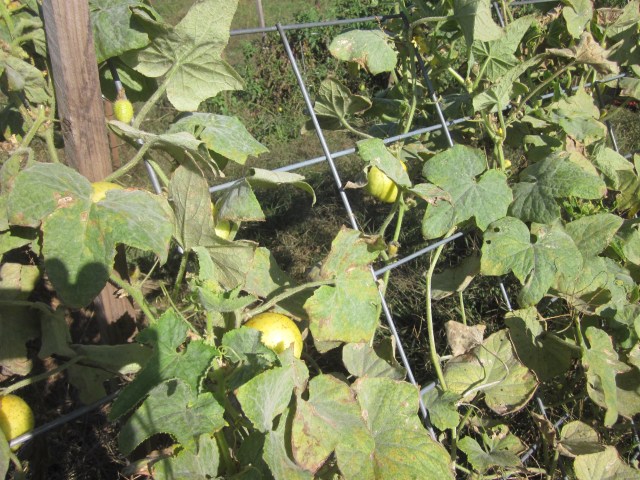
Last Call for Cucumbers

Last Call for Cucumbers

I had no energy to plan a fall rotation, except these brussels sprouts. Taking off the top allows the plant to focus on developing the sprouts along the stem. The top ring of sprouts burgeoned to this size within 2 weeks.

Topped Out

Topped Out

While the fall snap peas I planted are spotty, and deer-munched, these volunteer seedlings came up all by itself from the spring planting. Although they will not have enough time to form pods, I do anticipate having some snap pea shoots in the next few weeks!
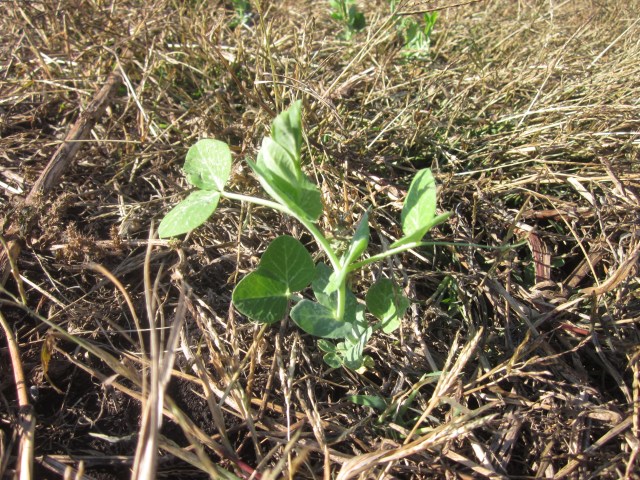
Again Snap Pea?
Again Snap Pea?

Posted in Uncategorized | Leave a comment