Autmn Surprise

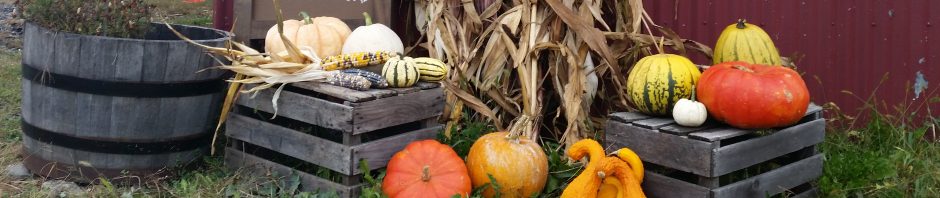
We are on our way to a season of diminishing and cooler sunlight, but the harvest is just starting to get really heavy. First surprise, the few popcorn stalks that fought through weeds and imperfect spacing produced cobs, and dried well so far. The improperly pollinated ones we refer to as snaggletooth, which we will still pop and eat. Had the half acre of popcorn actually produced, I’m not sure we’d know what to do with it right now.

Popcorn

Popcorn

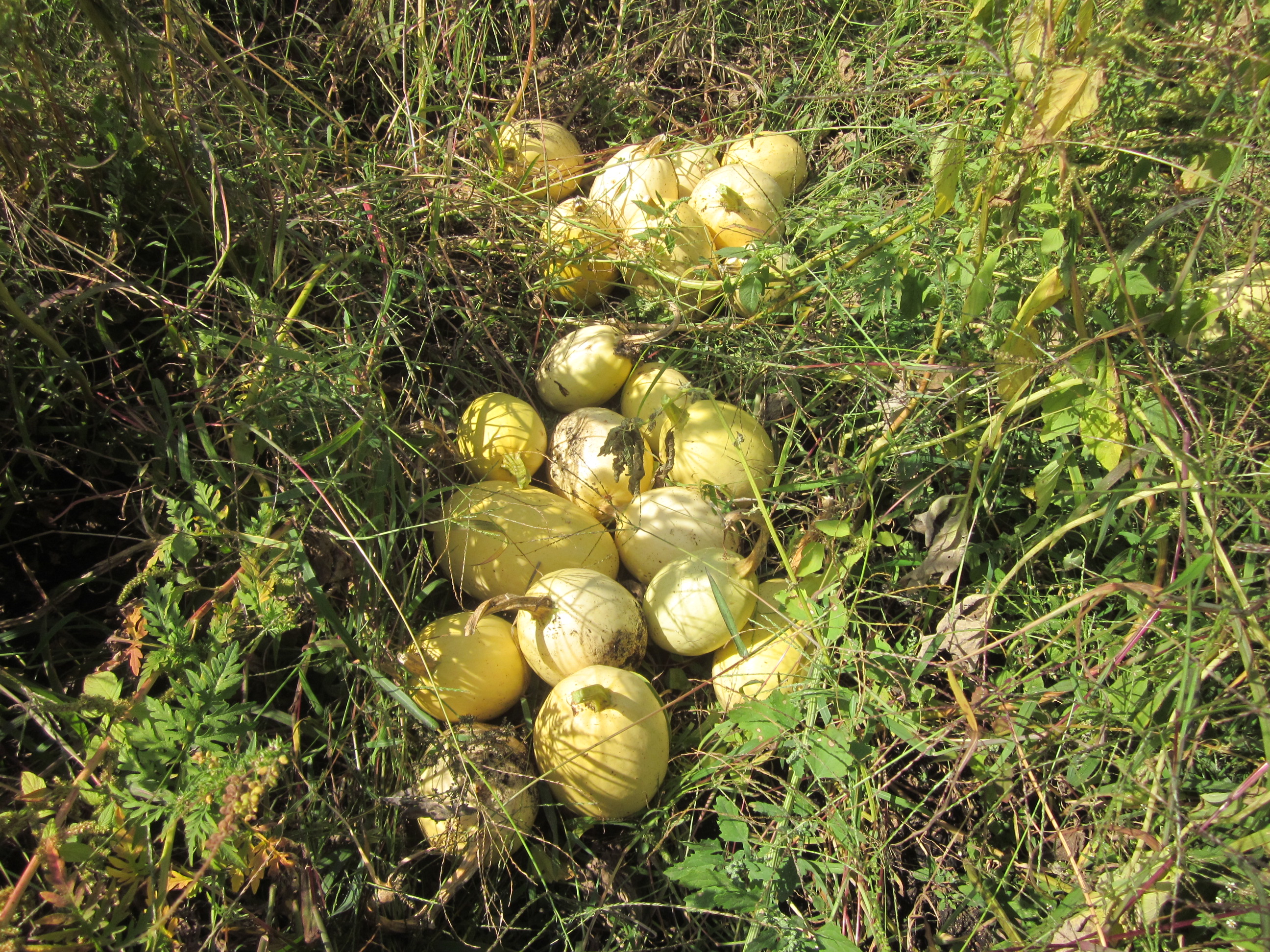
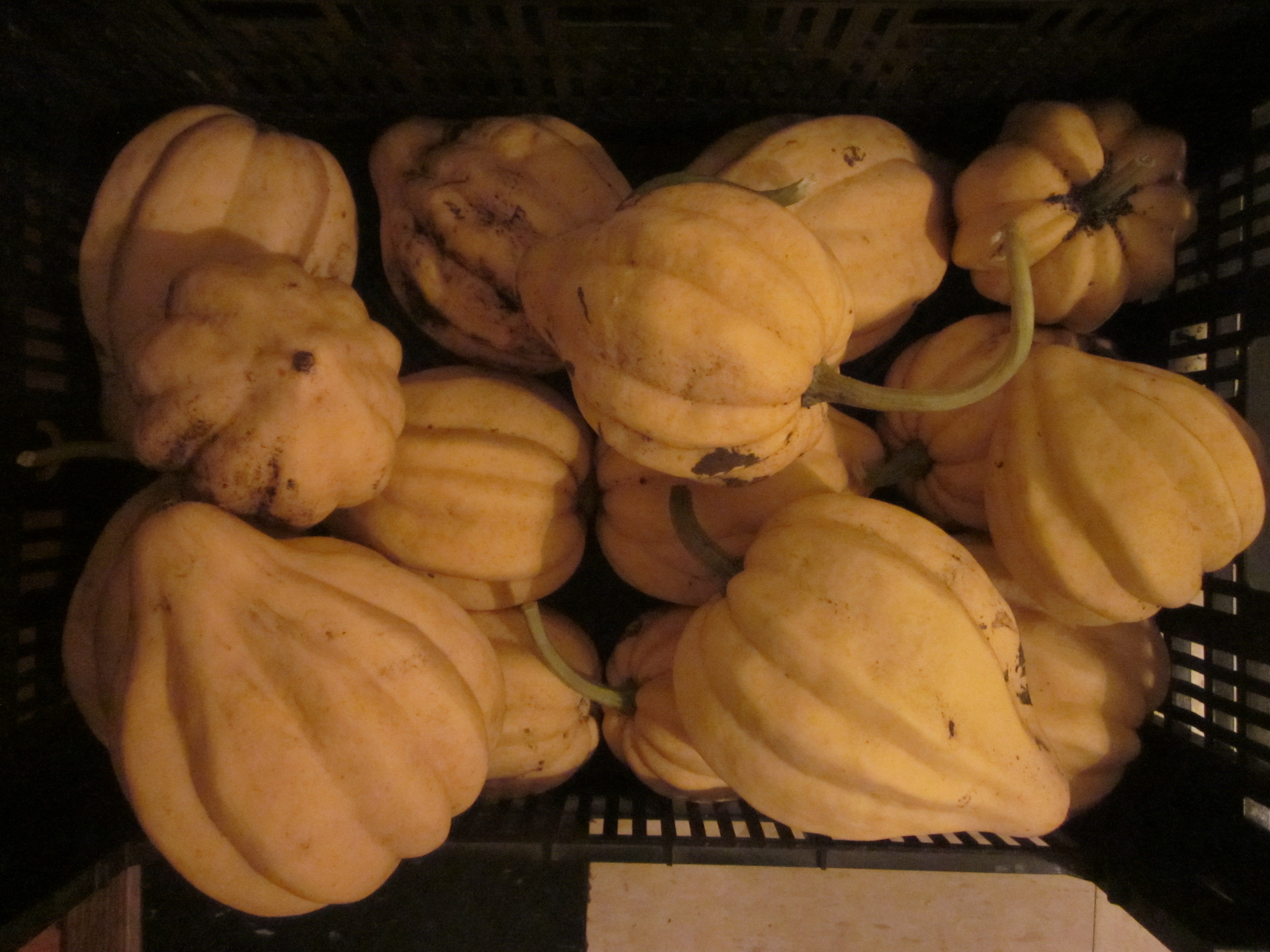
Spaghetti squash seem to have produced well, there are 50 curing in our shed.

Spaghetti Squash

Spaghetti Squash

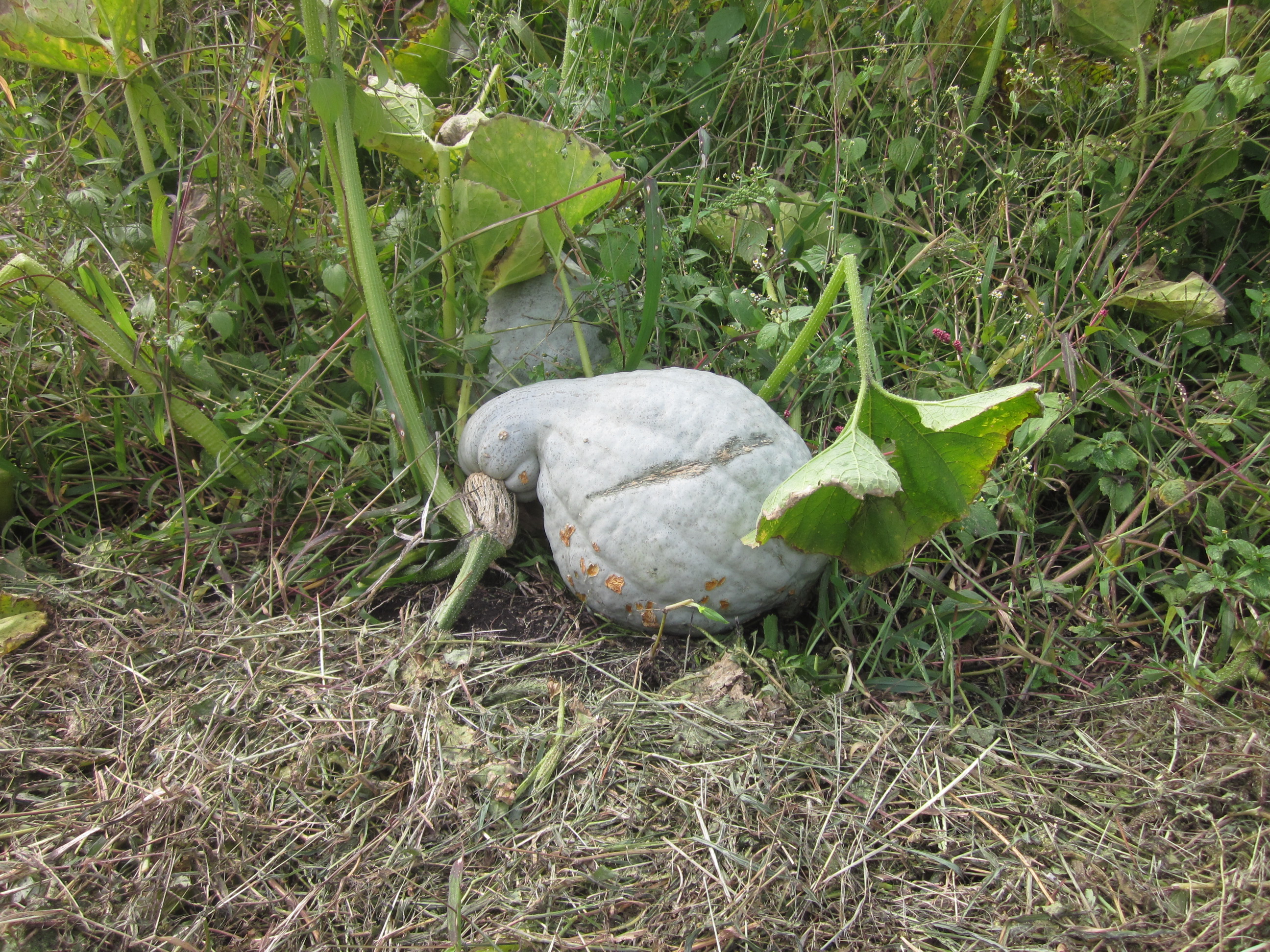
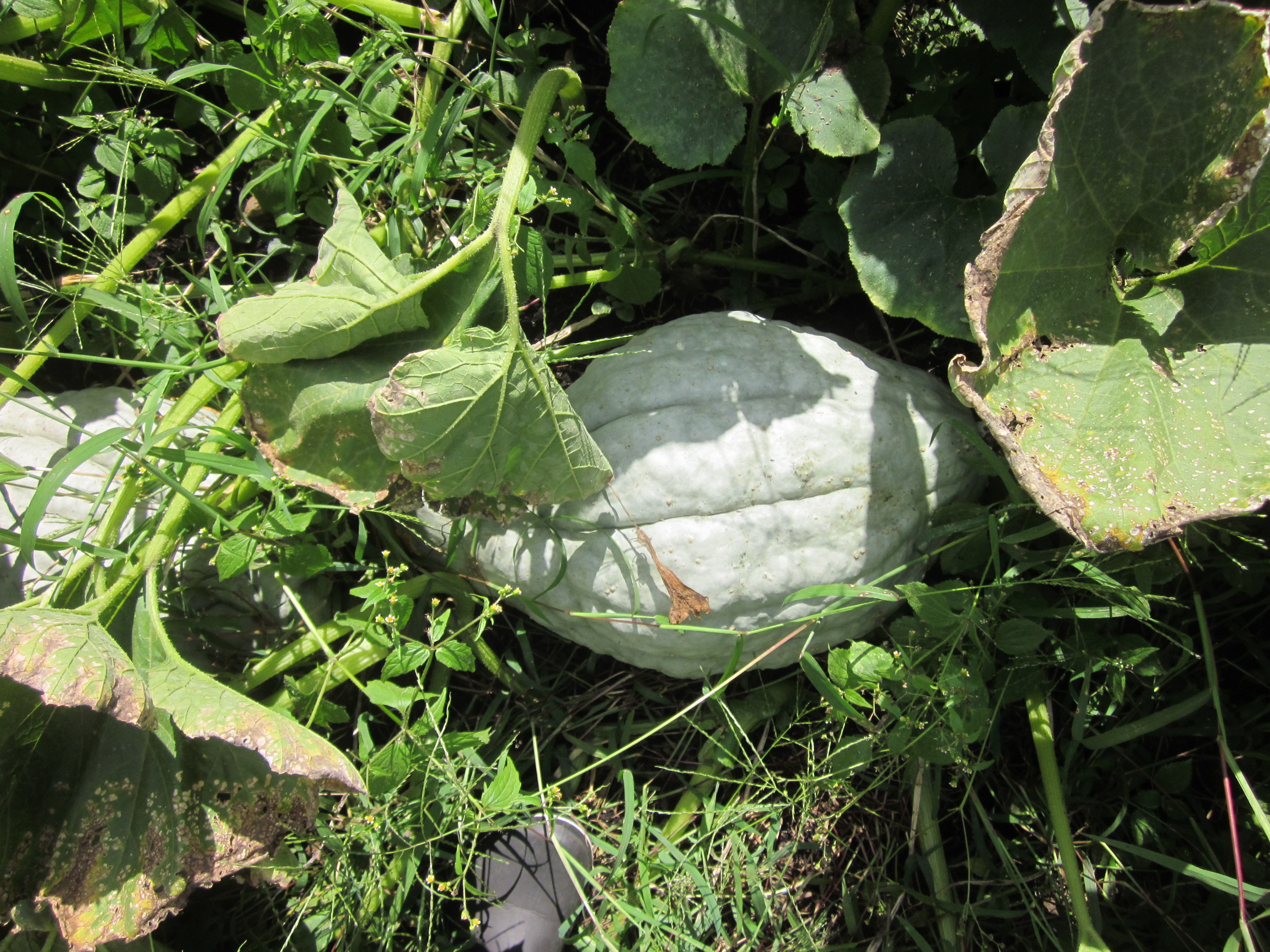
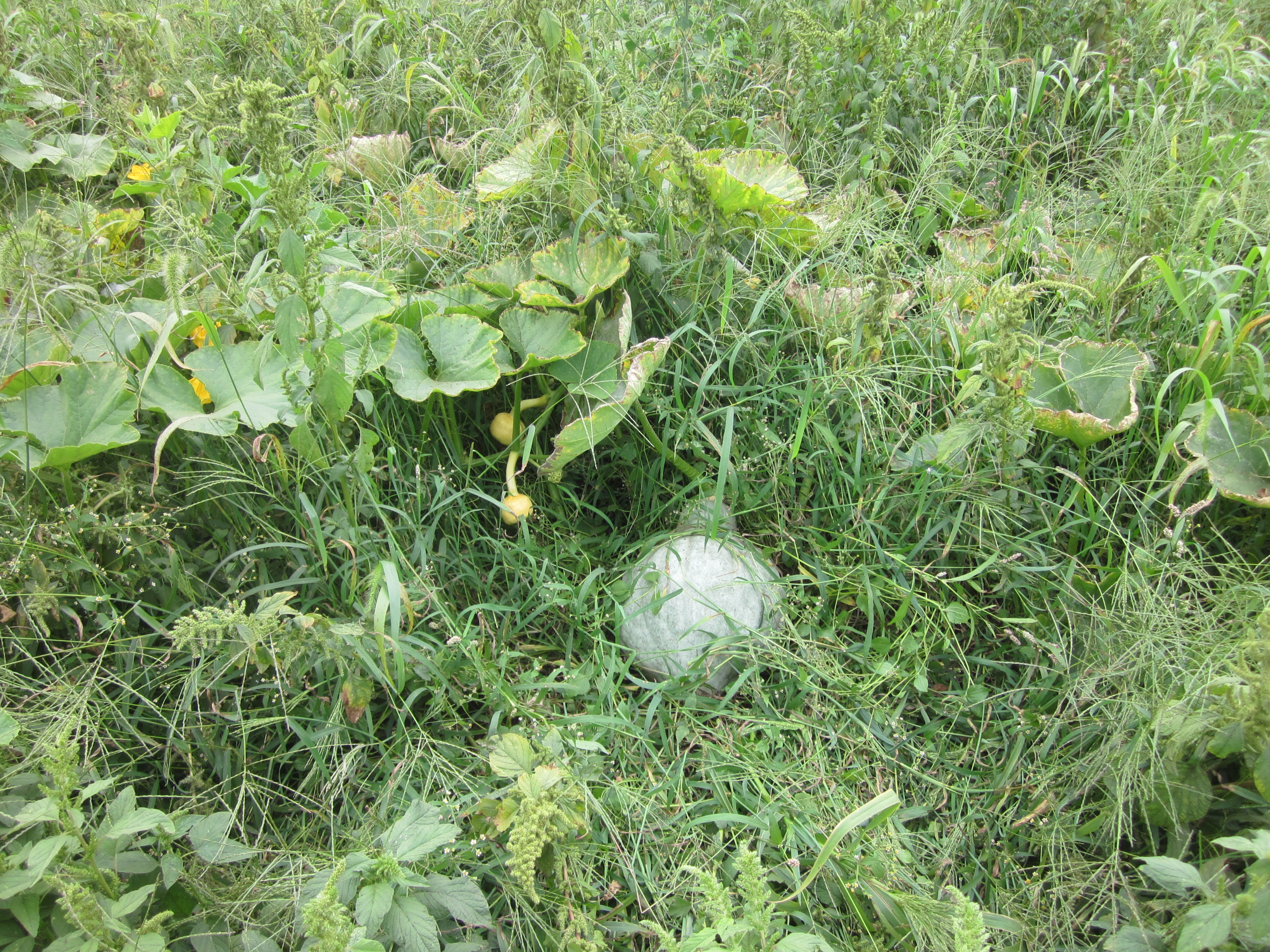
The blue hubbards have grown really well and most weight well over 10 pounds. They will cure in the sun, scars and all. Next year, I might try to use self-stick googly eyes and see if the woodchucks still take bites.

Blue Hubbard from 1 row

Blue Hubbard from 1 row

Bigger Than A Baby

Bigger Than A Baby

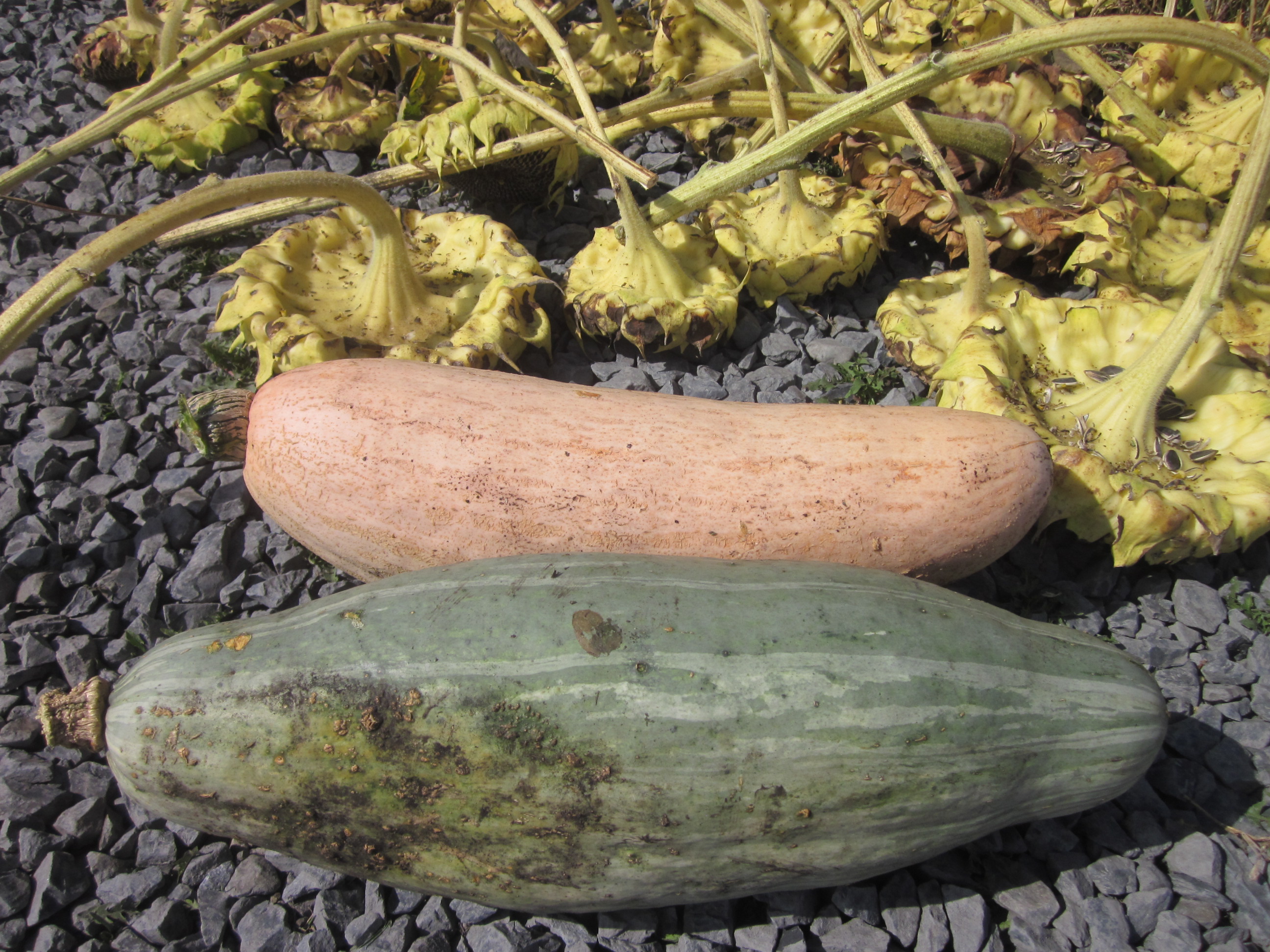
Banana squash, Pink and Blue. The pink banana squash may grow bigger yet, but this is the only one I saw.

Banana Squash

Banana Squash

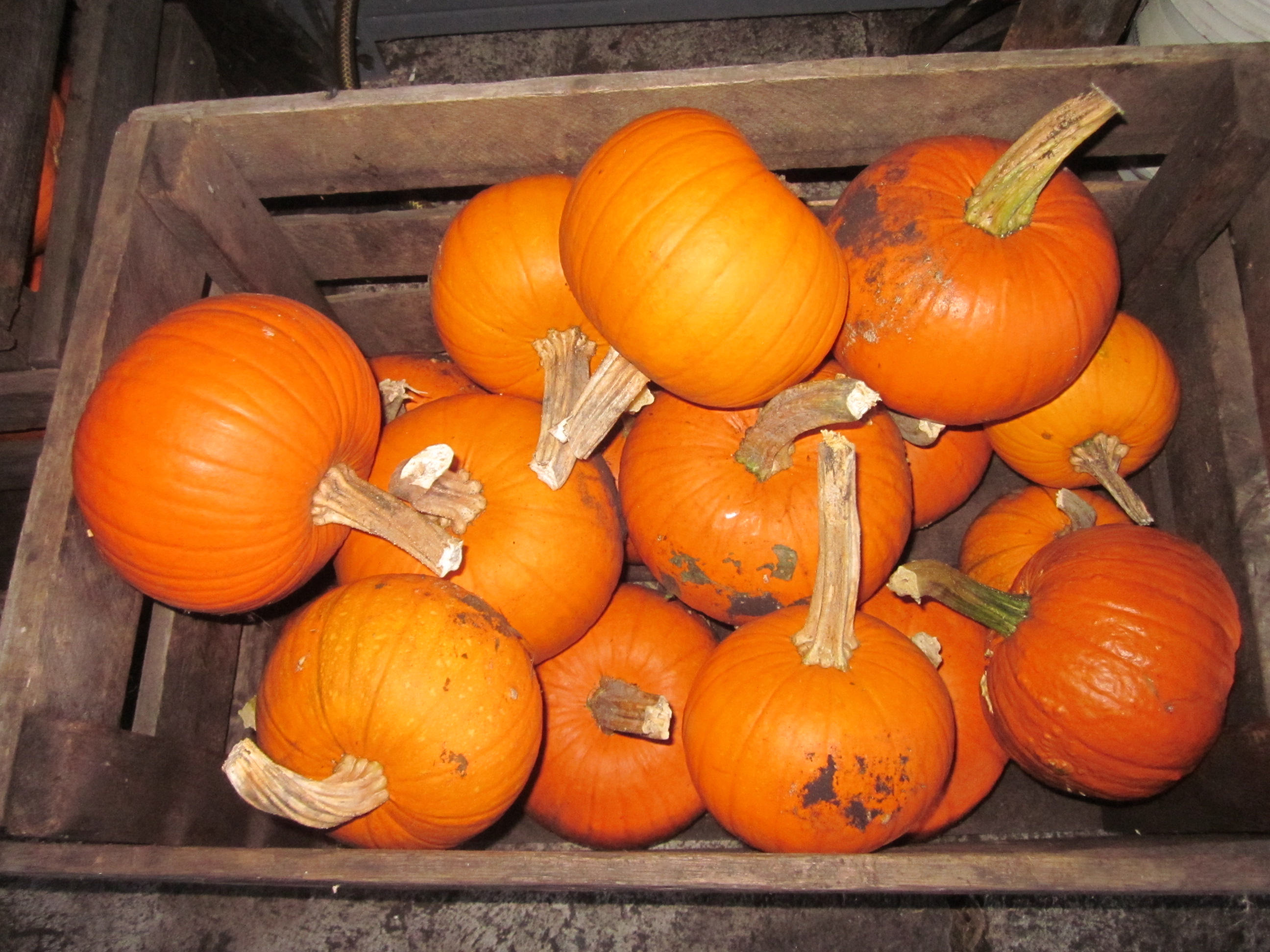
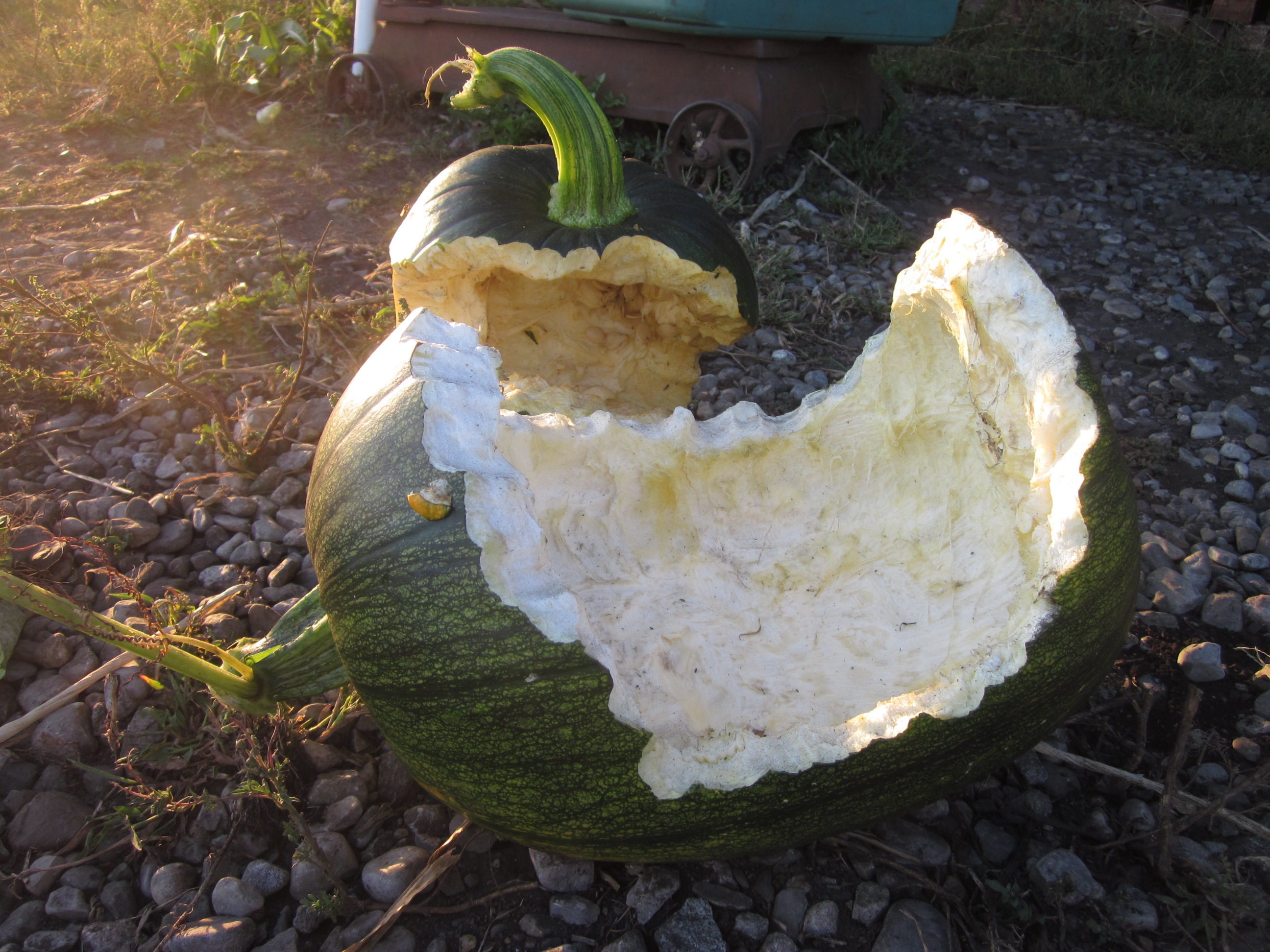
Don’t fear the woodchuck, it’s the mice in the barn. They have been taunted with drying  sunflower seeds for a few weeks, and finally had their meal qith some pumpkin too. So the pumpkins are now in the shed.

Pumpkin Carnage

Pumpkin Carnage in the Barn

Posted in Uncategorized | Leave a comment

Winter Squash Bounty

Ah oui madame et monsieurs, the single greatest potimarron squash grown on our field, noshed. It was undoubtedly delicious, since woodchuck normally take a small nibble and then move to the next squash. Potimarron is a French heirloom, the name comes from potiron (pumpkin) and marron (chestnut). With an edible rind and sweet chestnut flavor, you can understand why it has been targeted.

Mixed Winter Squashes

Mixed Winter Squashes

Acorn Squash, Blue Hubbard, PA Dutch Crookneck, Butternut, Sweet Dumpling

Acorn Squash, Blue Hubbard, PA Dutch Crookneck, Butternut, Sweet Dumpling

Acorn Squash "Thelma Sanders"

Acorn Squash “Thelma Sanders”

Guatemalan Blue, Spaghetti, PA Dutch Not-so-crookneck

Guatemalan Blue, Spaghetti, PA Dutch Not-so-crookneck

A bunch of pie pumpkins were cut off the vine last weekend, and we forgot to get them. Leaving them in the sun for 10-14 day helps harden the skin and seal the stem. This allows the squashes to store for the winter. I really should do this with all the acorn squashes we cut this week, but I fear the woodchucks.

Forgotten, Cured, and Curiously Unscathed

Cut and
Piled, Forgotten for a Week, Cured, and Curiously Unscathed

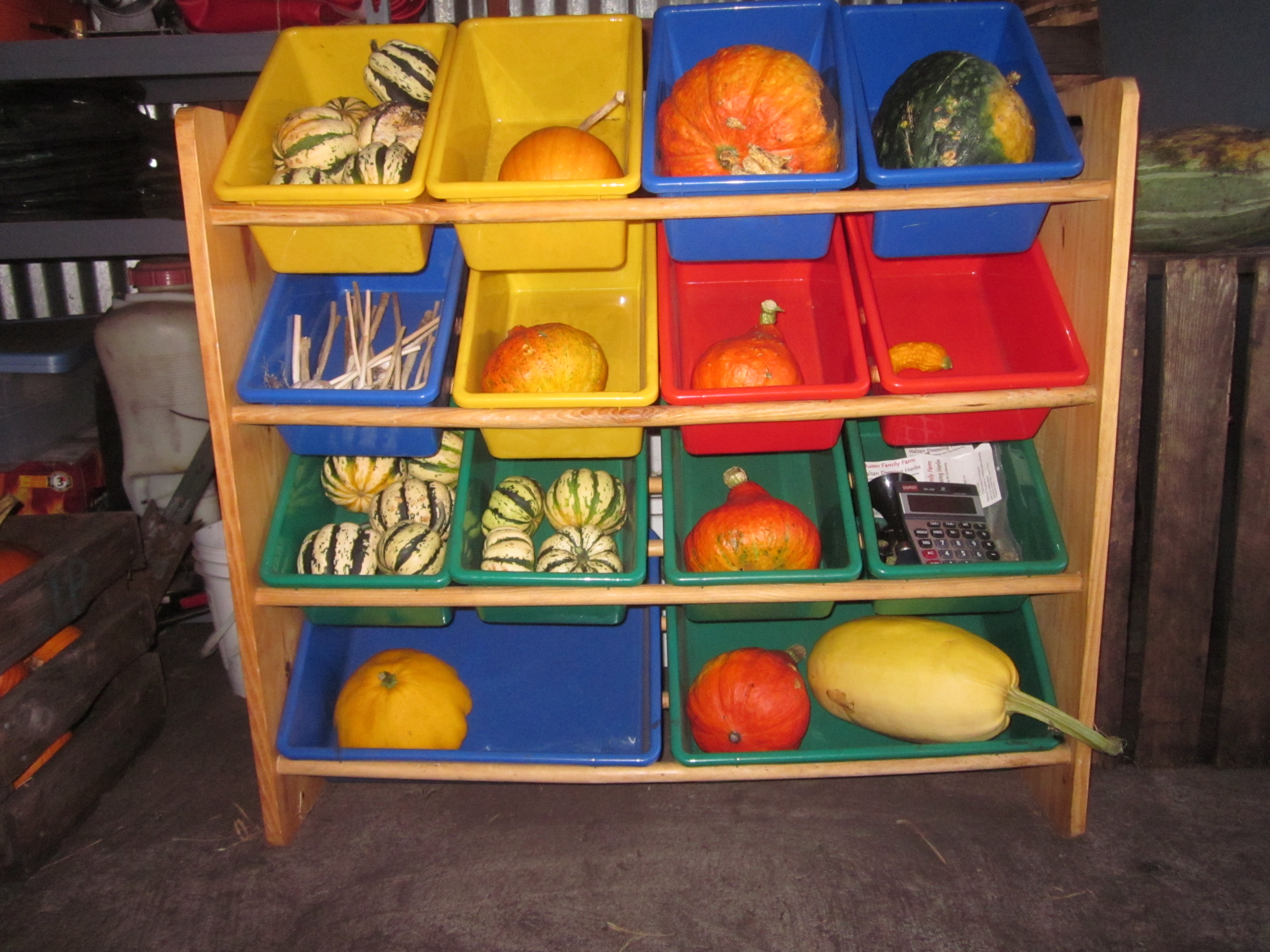
Not enough winter squash varieties you say? Pshaw, here’s a bit more, from left to right, top to bottom.

  • garlic
  • Anna Swartz
  • Acorn squash “Tuffy”
  • Guatamalan Blue
  • Orange Dawn
  • Potimarron
  • Pumpkin “Baby Pam”
  • Sweet Dumpling
  • Acorn Squash “Thelma Sanders”
  • Summer Squash – Pattypan , Crookneck
  • Spaghetti Squash

squash_0920_4

A counterpoint to the Guatamalan Blue Banana Squash, the Jumbo Pink Banana Squash. I left it on the vine for now and taking my chances with the woodchucks. Next week I’ll spray it with a cayenne solution.

Jumbo Pink Banana Squash

Jumbo Pink Banana Squash

Only found 1 Australian Butter squash.

Australian Butter

Australian Butter

Musquee de Provence must have been delicious too. This is a cheese pumpkin, because it’s deeply ribbed and flattened shape resembles a wheel of cheese.

Musquee de Provence

Musquee de Provence

Bonanza, the blue hubbard. They are everywhere. The vines easily run 20 feet and the fruits seem to average at least 15 pounds. That’s a lot of “pumpkin” pies. Did you know commercial pumpkin filler is mostly blue hubbard? Dan things they are ugly, I think they are beautifully fascinating. We could easily have 30-40 of these!

Blue Hubbard

Blue Hubbard

The grasses are unbelievably long, towering at 4-5 feet.

Hues of Bronze, Yellow, and Green

Hues of Bronze and Green

And finally we bid adieu to the prolific summer squashes. There’s a crate of mature crooknecks sitting in the barn, I may try to save some seeds.

Goodbye Summer Squash

Goodbye Summer Squash

Posted in Uncategorized | 1 Comment

I Say To-mah-to

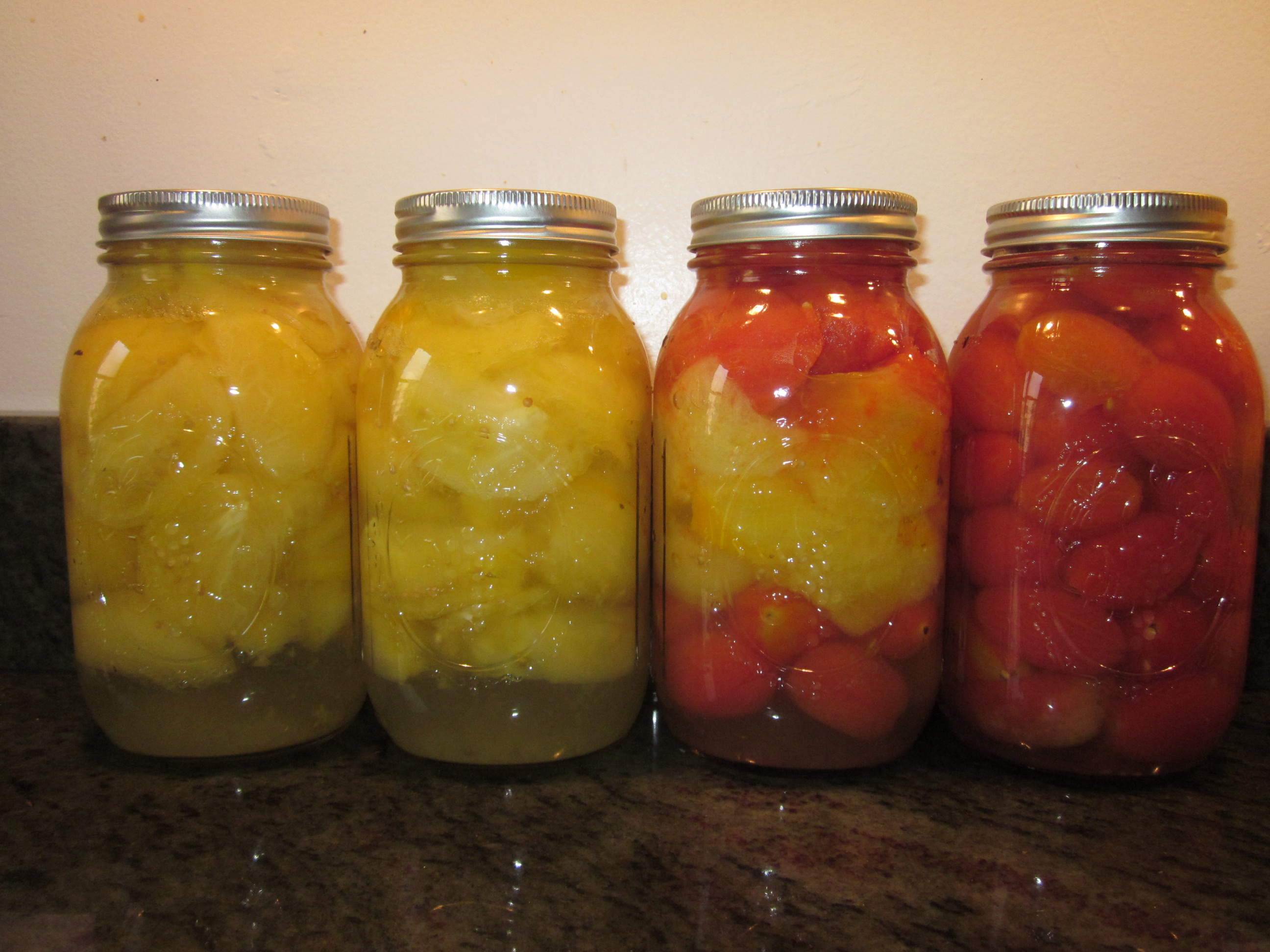
Produce as birthday party favors? Yup, we did that last weekend. With the excess not quite ripe, I gave it a few days on the counter, and decided to can it. And so I present Lot 1 of the 2014 tomatos. Yellow tomato’s are lower in acidity, so these are all preserved with 2Tbl lemon spoon per quart. (I’ll be trying 1/2 tsp citric acid for the next batch.)

Tomato Medley

Tomato Medley

Posted in Uncategorized | Leave a comment

Autumn Upon Us

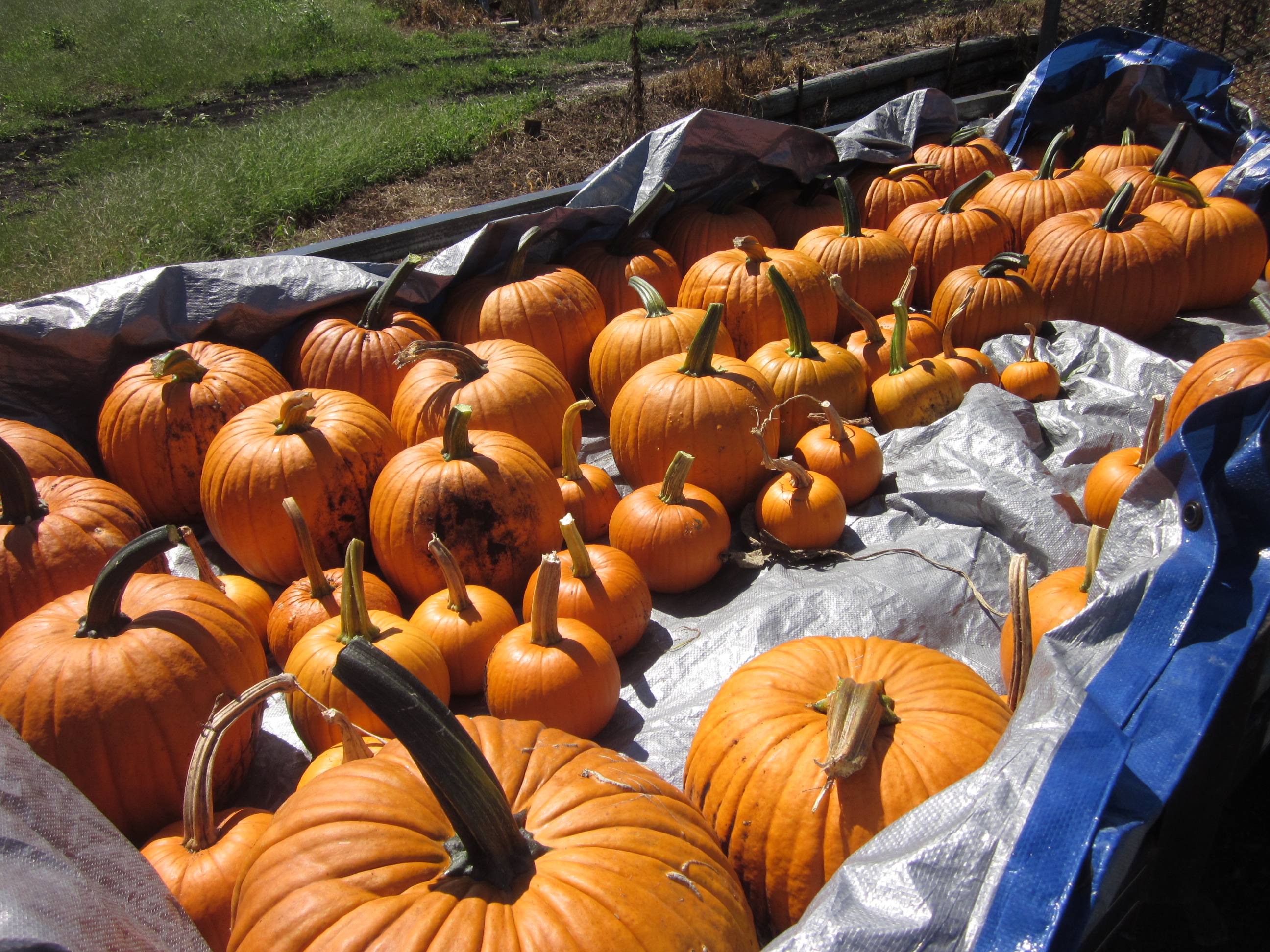
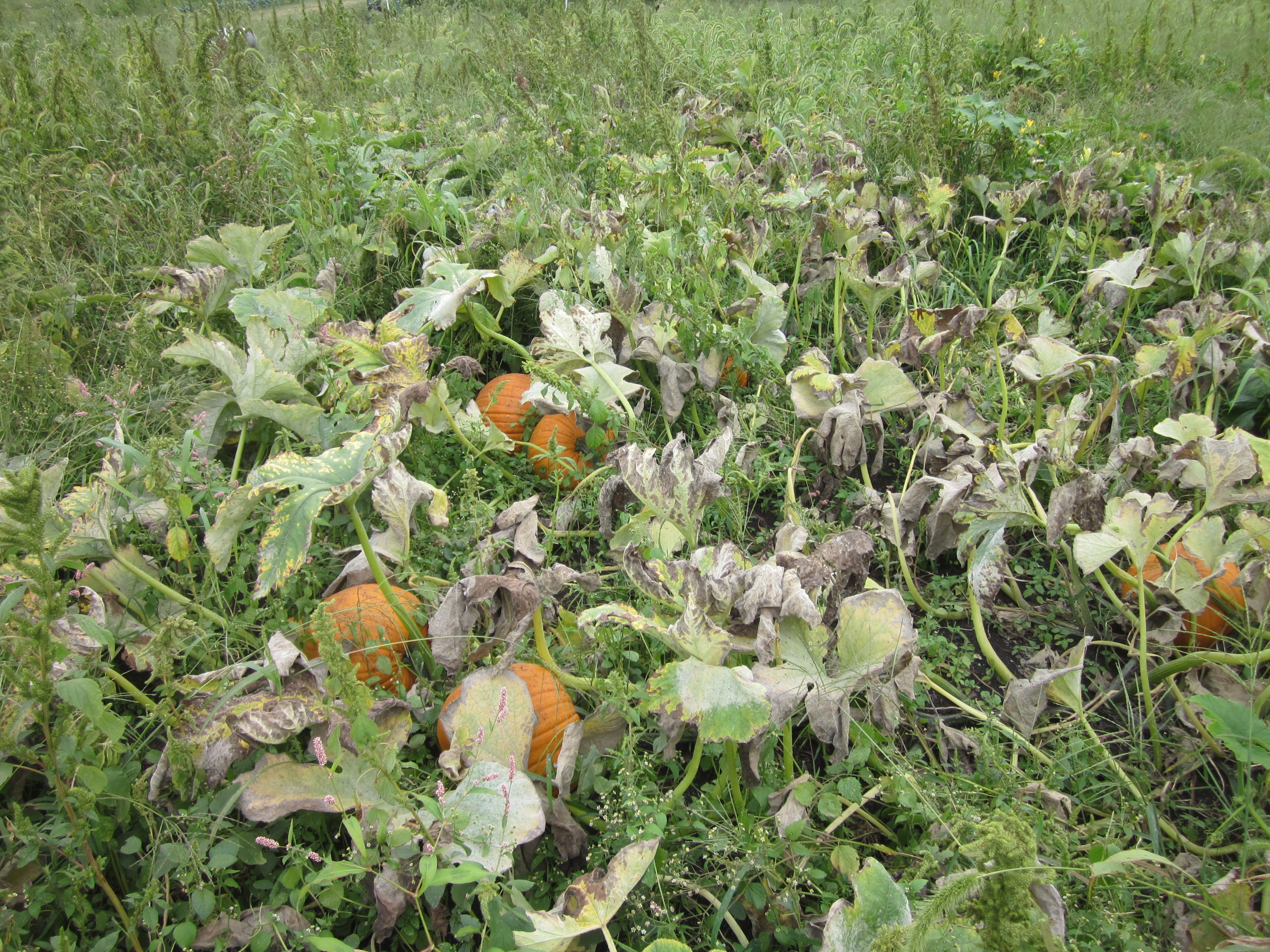
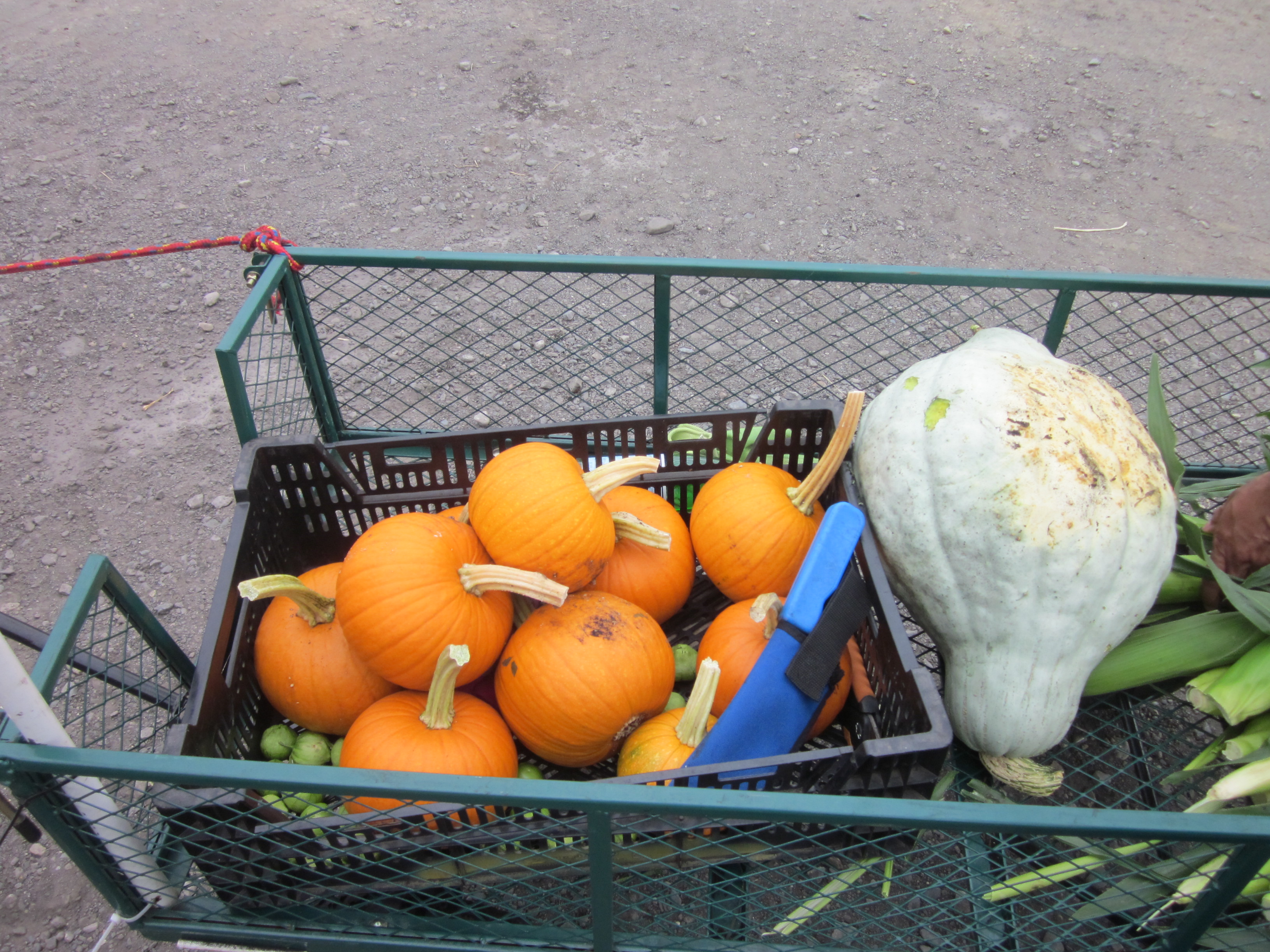
Mid-September heralds the beginning of the end of this growing season. Most of the vegetables are winding down, and the winter squashes are just about ready. These pumpkins are leaving the field today, largely due to the woodchuck problem in the outer fields.

Pumpkins On The Go

Pumpkins On The Go

Large Jack-O’Lantern pumpkins are for decorations as the meat is stringy and coarse, not great for eating. The Baby Pams are fine-textured, and great for making pies.

Pumpkin "Baby Pam", for Pie

Pumpkin “Baby Pam”, for Pie

This is from last year’s seed-saving experiment. Some seeds were lost early on to critters in the barn. These were planted very late in the season. The plants rallied and produced large fruit, but lost the battle to deer/woodchuck. The critters apparently love the seeds.

Planted Late, Enjoyed Early

Saved Seed, Planted Late, Enjoyed Early

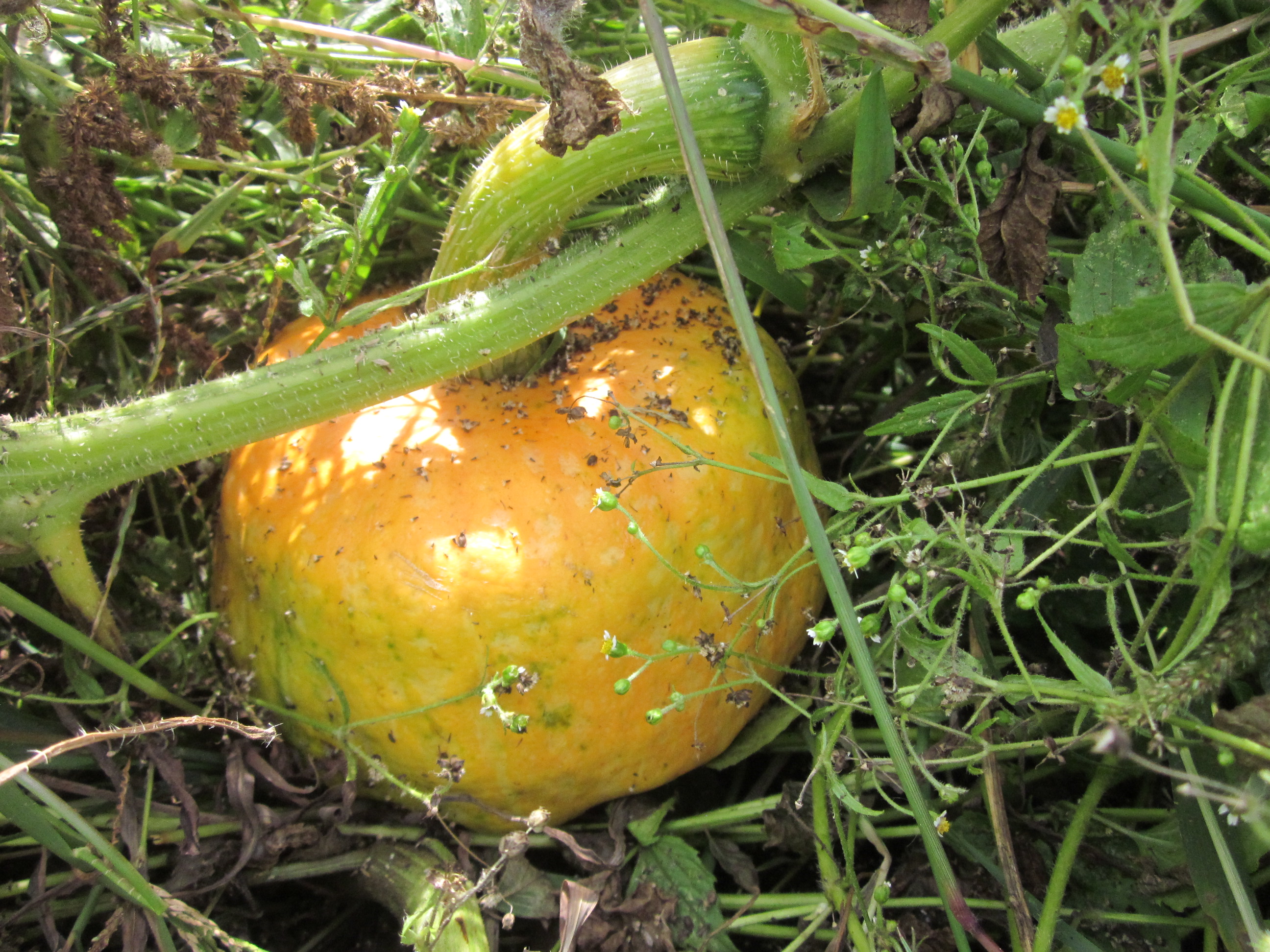
Walking through the winter squash patch with the map this week drove home a point, squash vines will travel. I spotted delicata squash “sweet dumpling” (ribbed with white and green) as they rolled under my feet. Potimarron (tear-drop shape, dark orange) seems to be a woodchuck favorite.

Winter Squash Preview

Winter Squash Preview

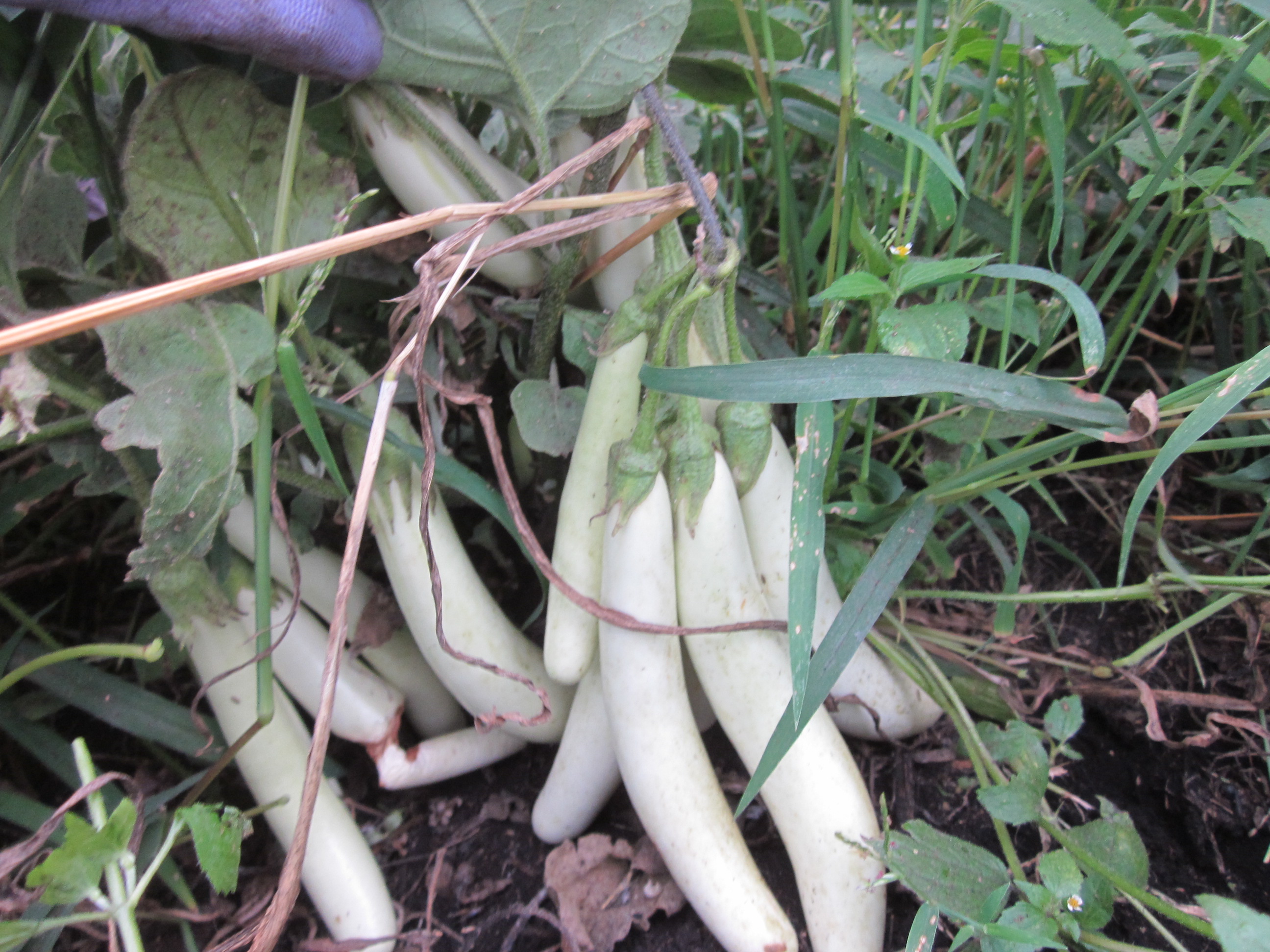
There were special surprises in the Solanceae family. After the Colorado Beetle infestation on eggplant leaves in early spring, Dan spent a few weeks hosing off the plants and picking off the larva. I chalked it off as a sacrificial plant for the tomato’s sake. There’s a surprising number of them, hanging under the leaves, half buried by tall weed grass!

White Eggplant

White Eggplant

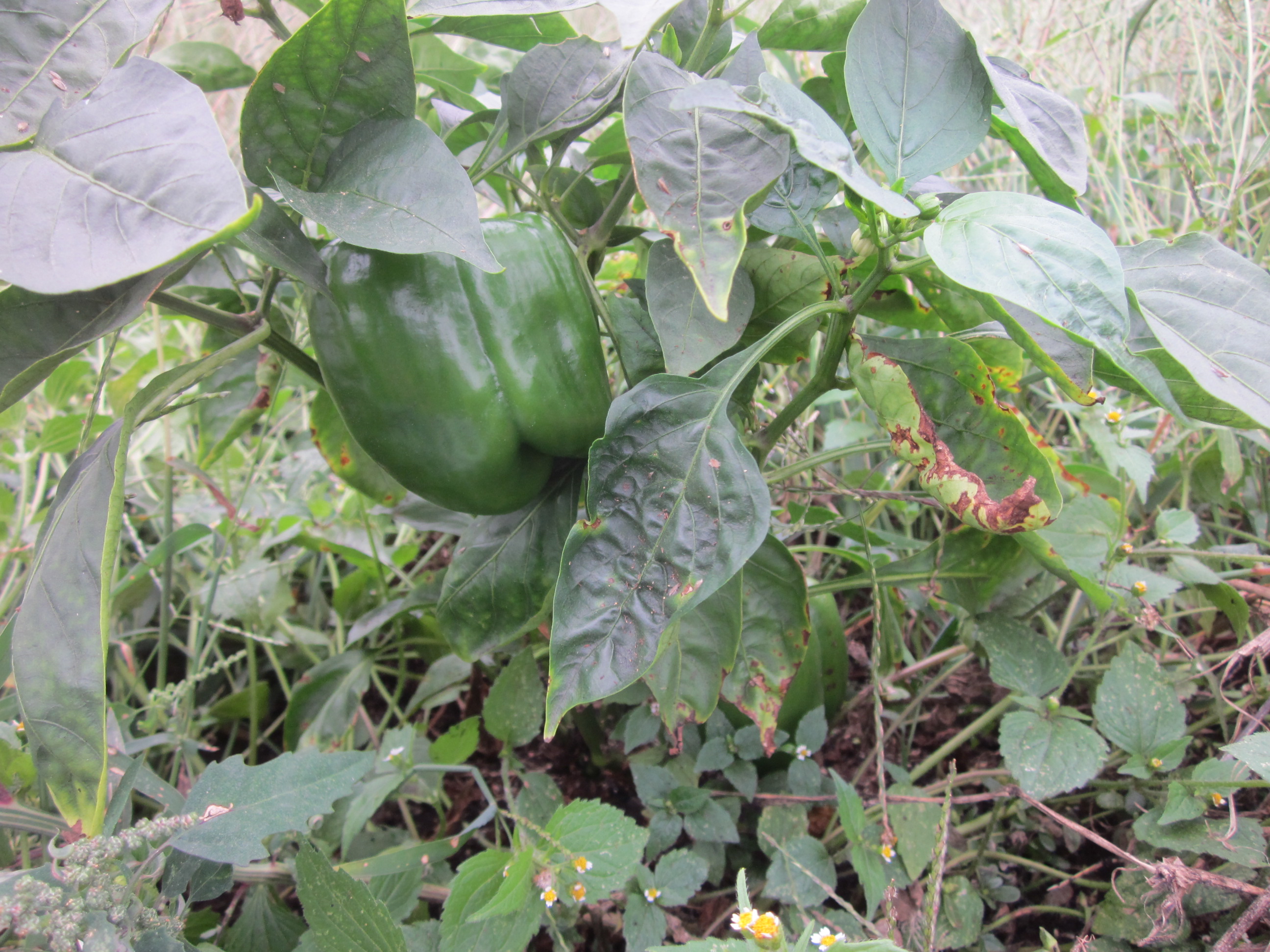
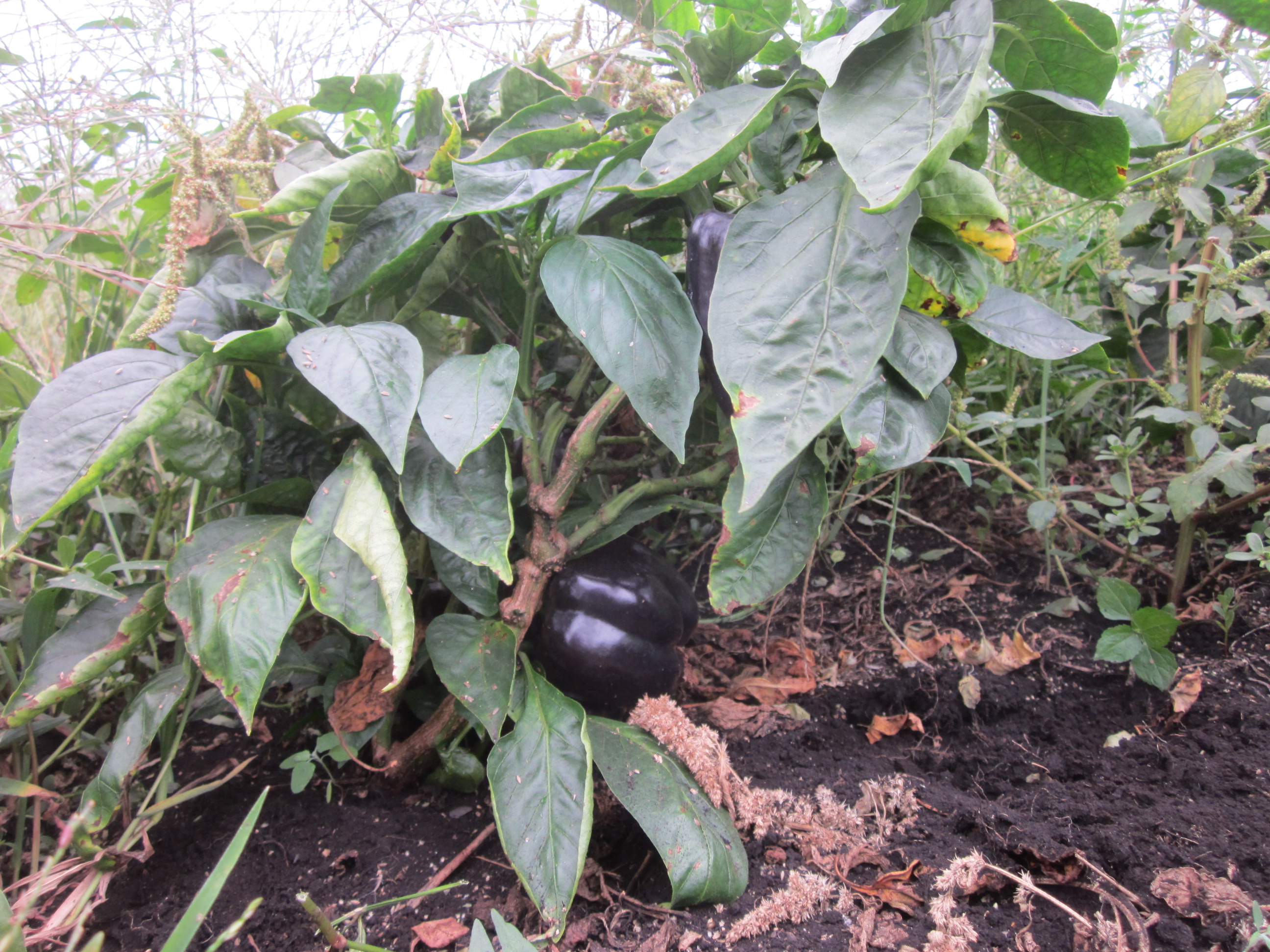
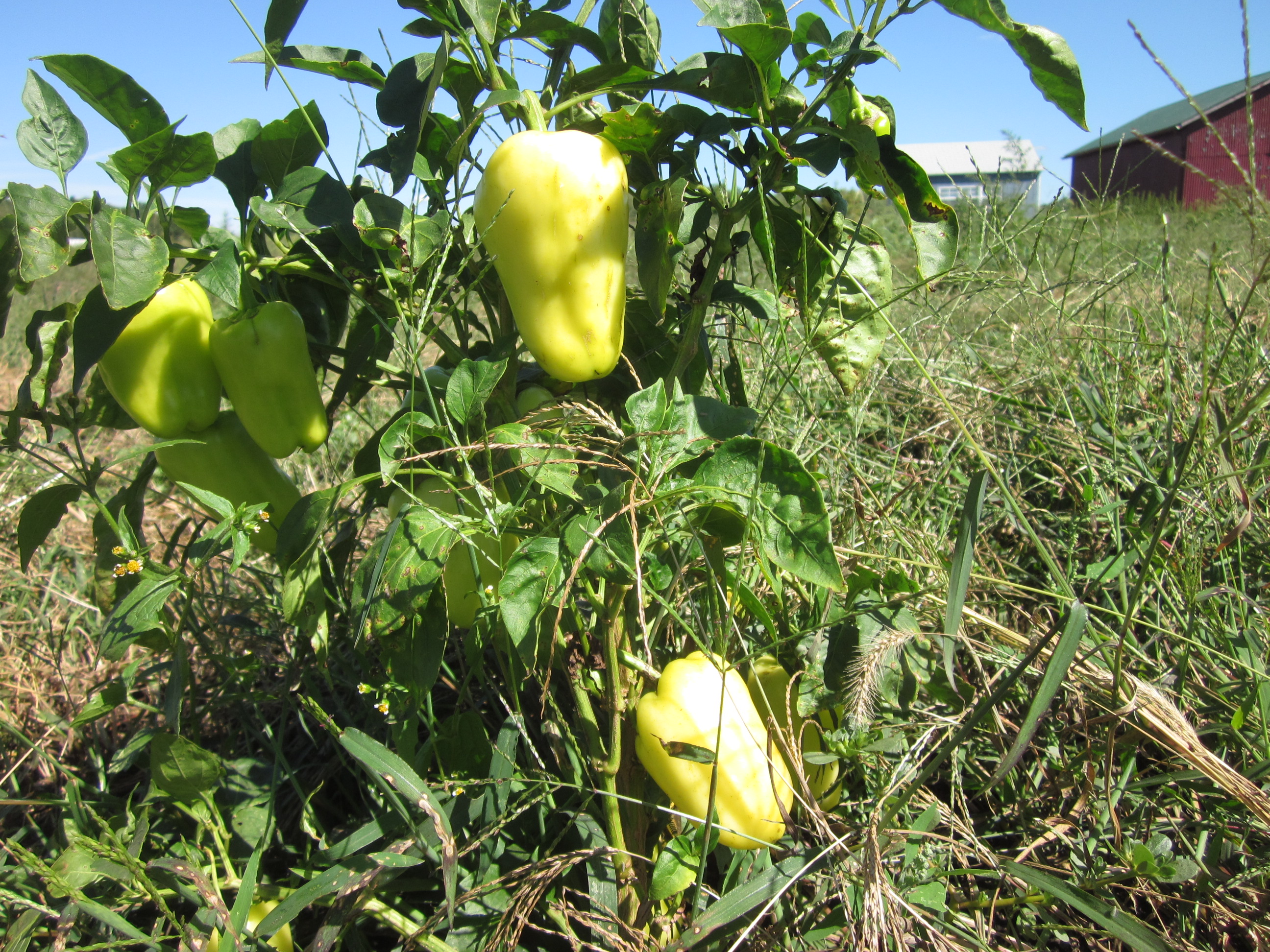
Sweet peppers are also in the same family and were planted behind tomatos. With such a cool summer, the pepper plants never grew well. They are a very tropical plant requiring a long season. I was pleasantly surprised by the fruits that did set.

Sweet Pepper "Lady Bell"

Sweet Pepper “Lady Bell”

Sweet Pepper "Purple Beauty"

Sweet Pepper “Purple Beauty”

Sweet Pepper "Cubanelle"

Sweet Pepper “Cubanelle”

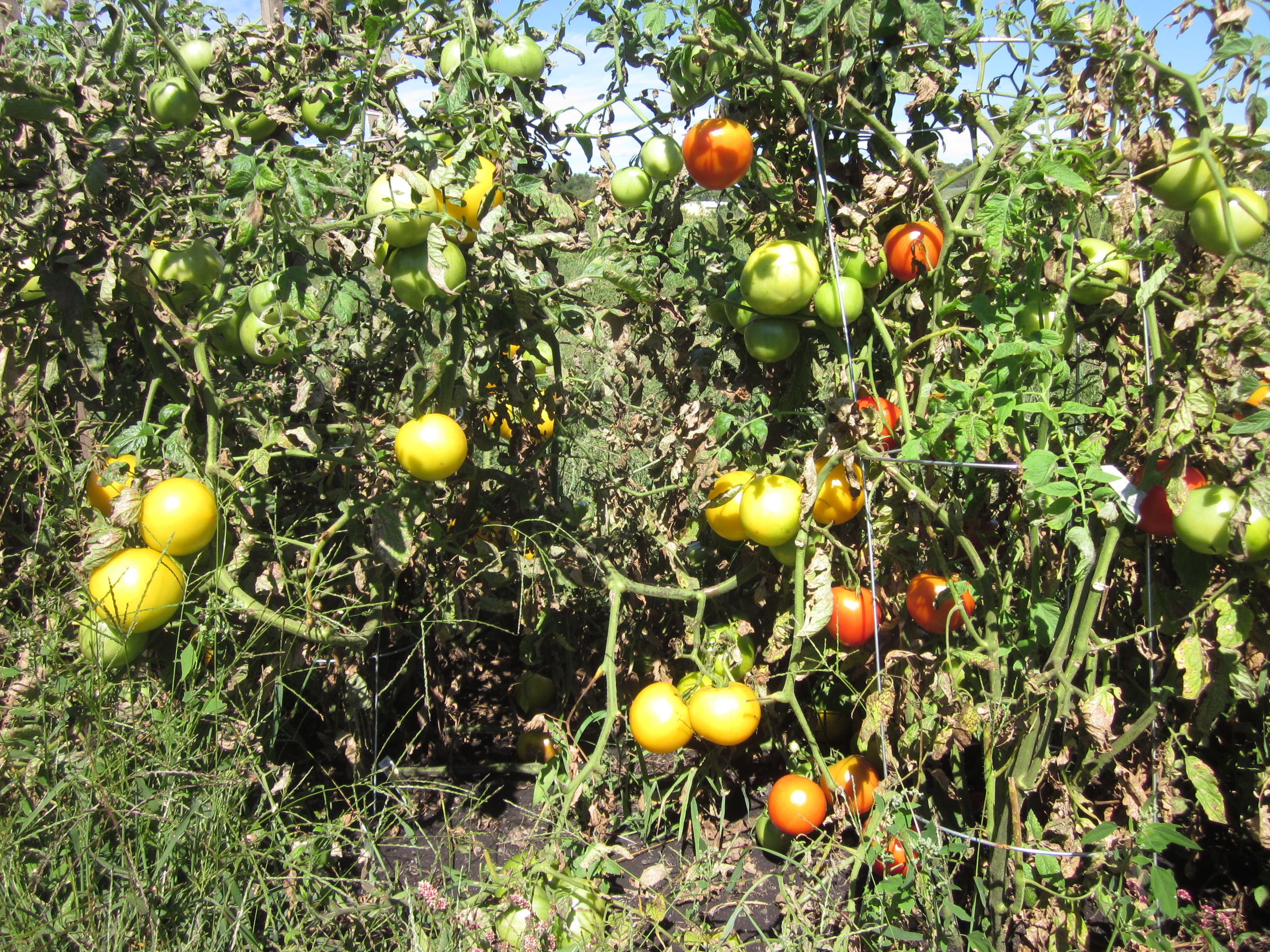
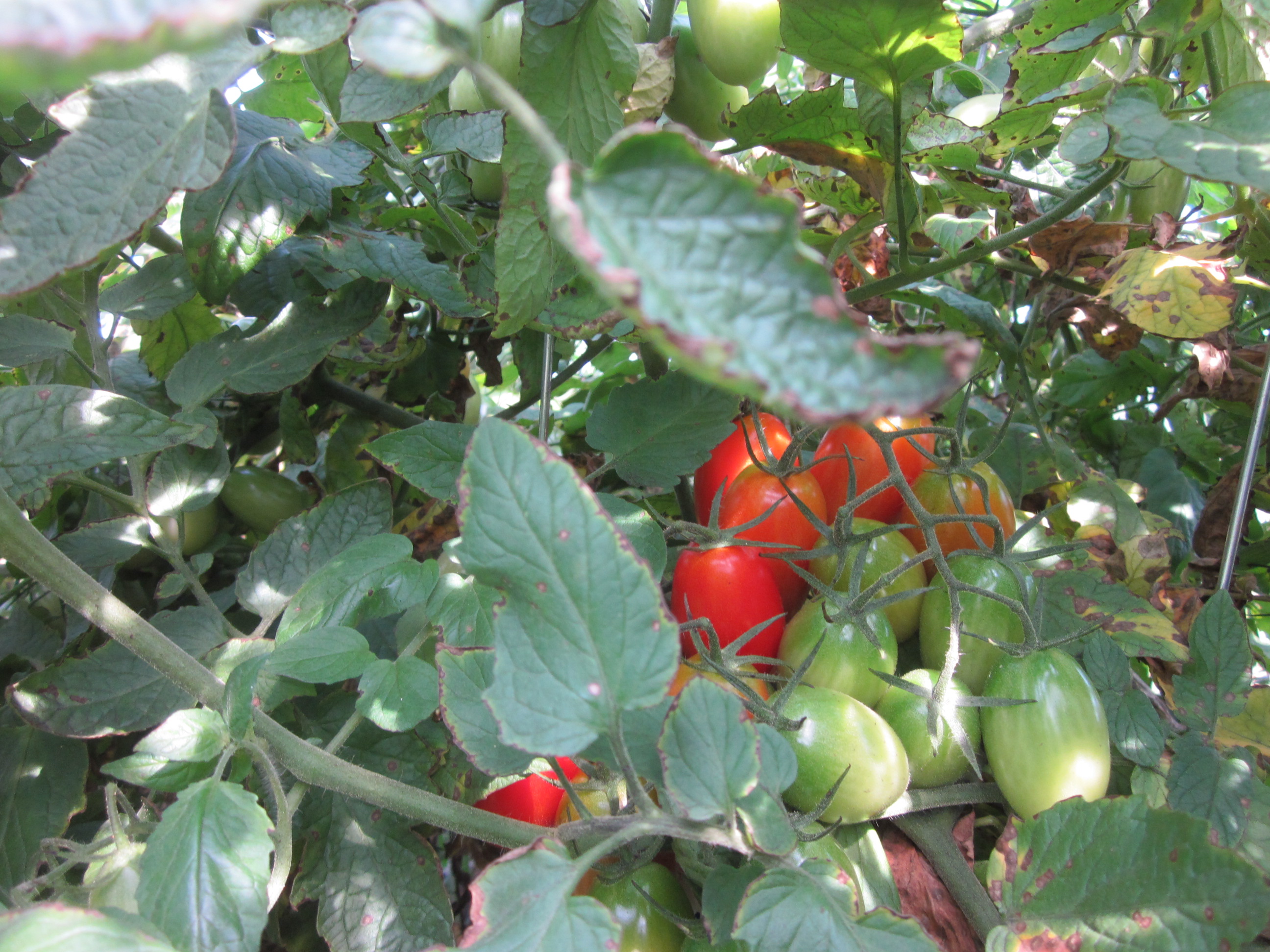
Tomato plants are winding down, with browning leaves and sad vines. The fruits continue to ripen.

Tomato Plants

Tomato Plants

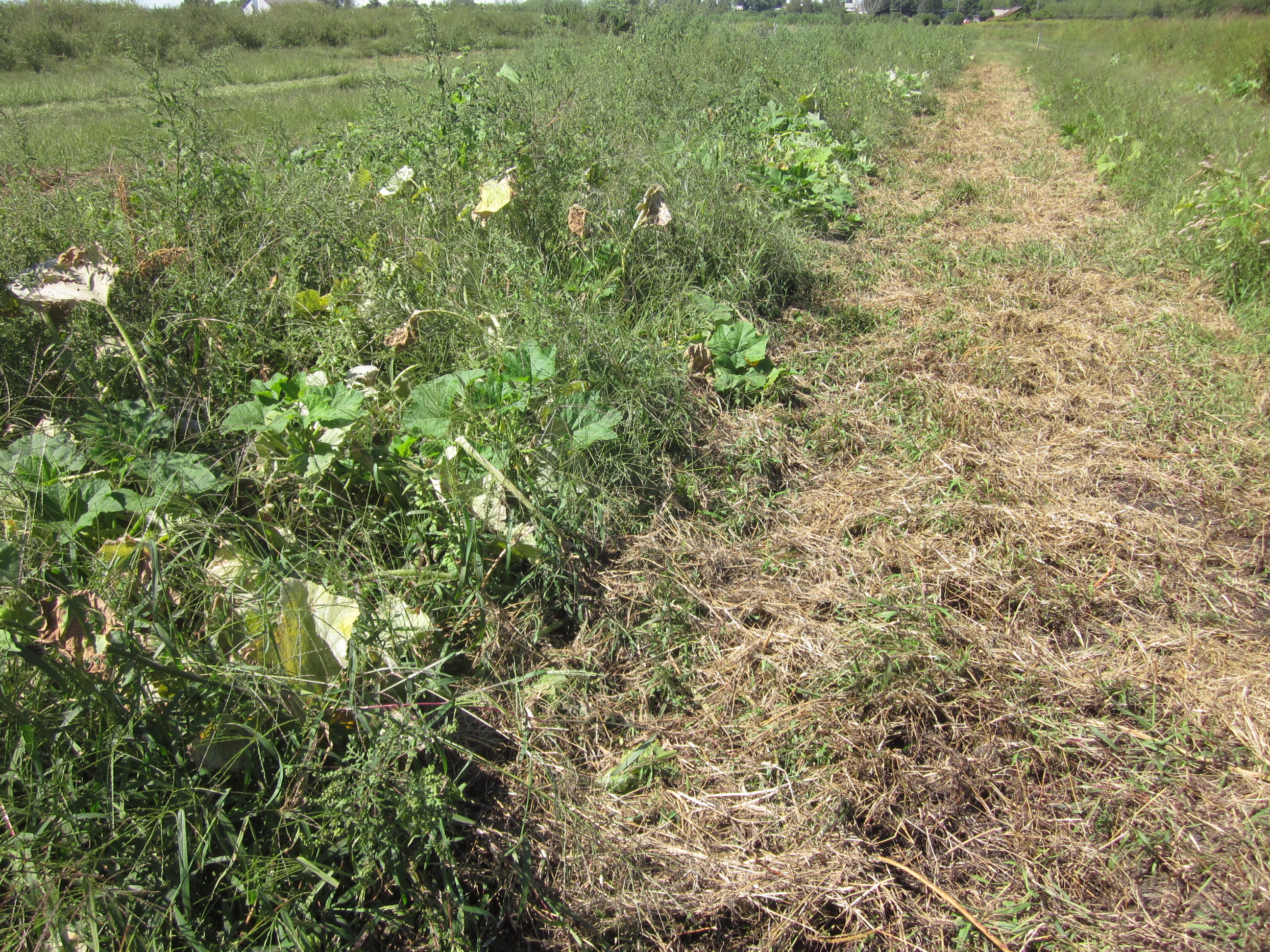
A funny thing happened after I mowed near the summer squashes. They regenerated brand-new, no powdery-mildew leaves. Not that we were in need of more squash, but I felt bad about running over half the plants in order to clear a path through the weeds. Now I see more leaves and blossoms. Oh no, I can NOT have more squash.

Regenerating Summer Squash

Regenerating Summer Squash

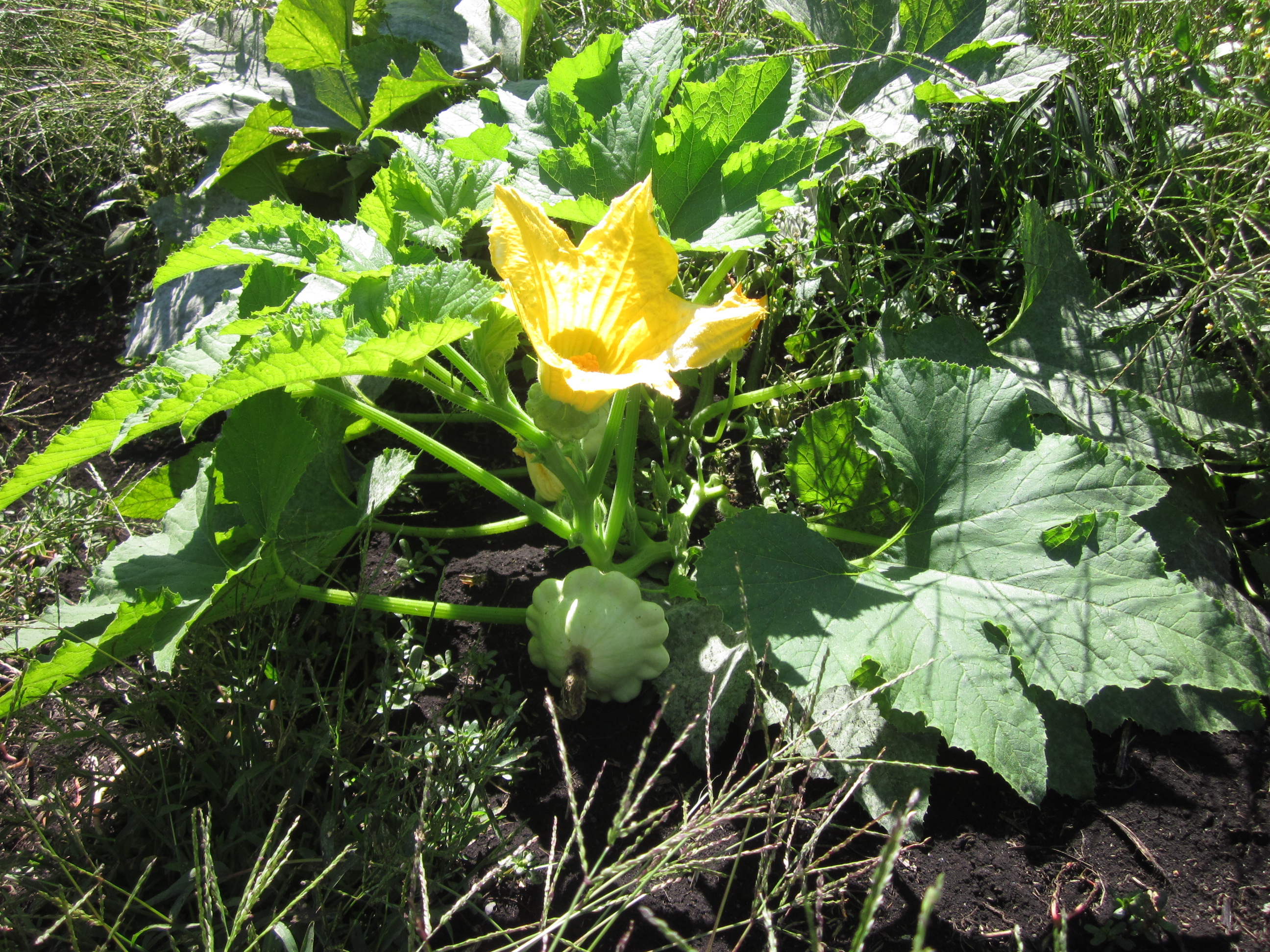
This variety of pattypan squash arrived fashionably late. 5/25 planting with a maturity of 57 days, it napped through late July, and just decided now is the right time. Was it the seed batch? the weather? or were the catalogues lying about how quickly they produce? Might have to re-try next year just for the challenge of it.

Better Late Than Never, Summer Squash Benings Green Tint

Better Late Than Never, Summer Squash Benings Green Tint

Posted in Uncategorized | Leave a comment

Treasure Map Required

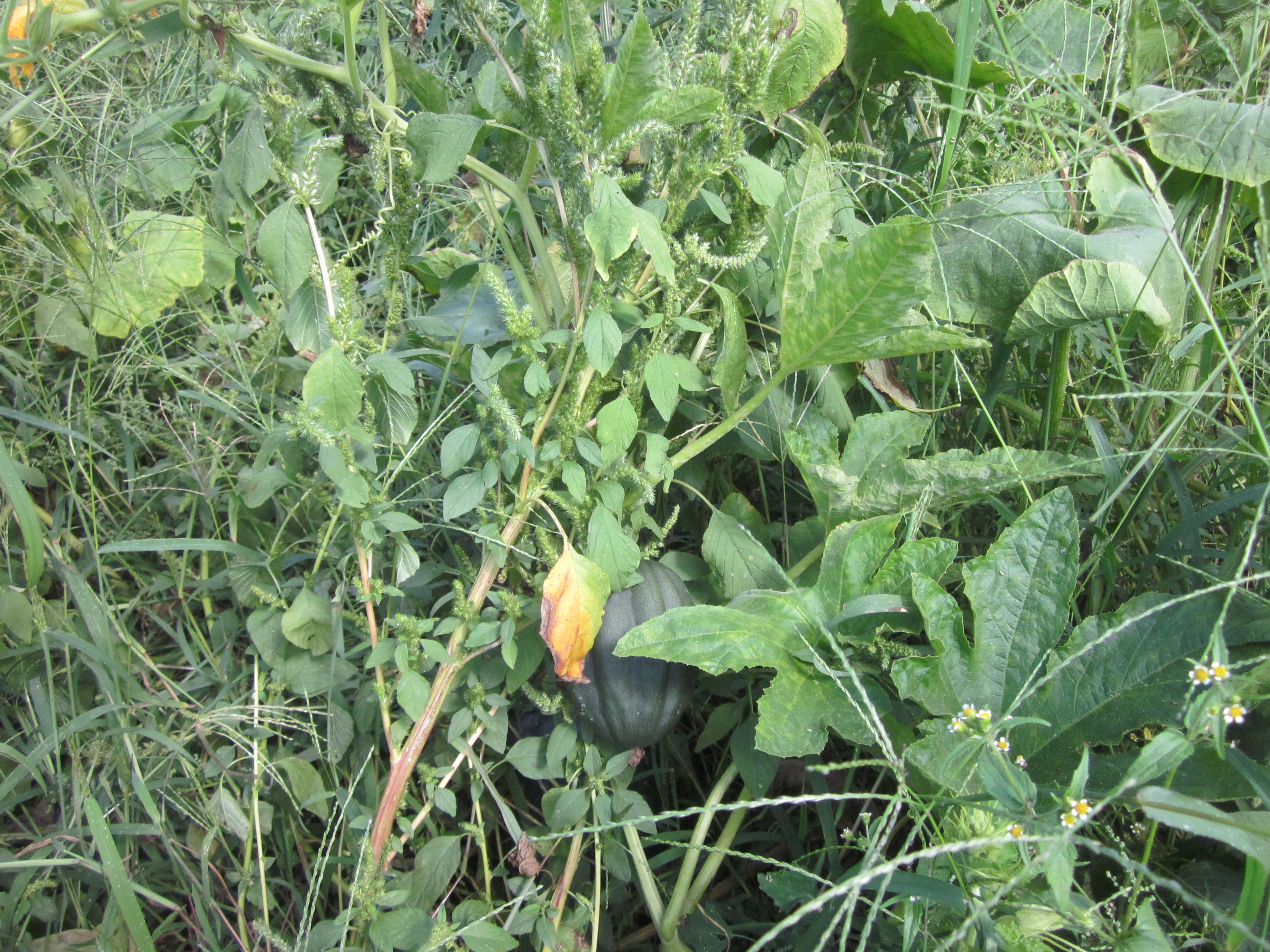
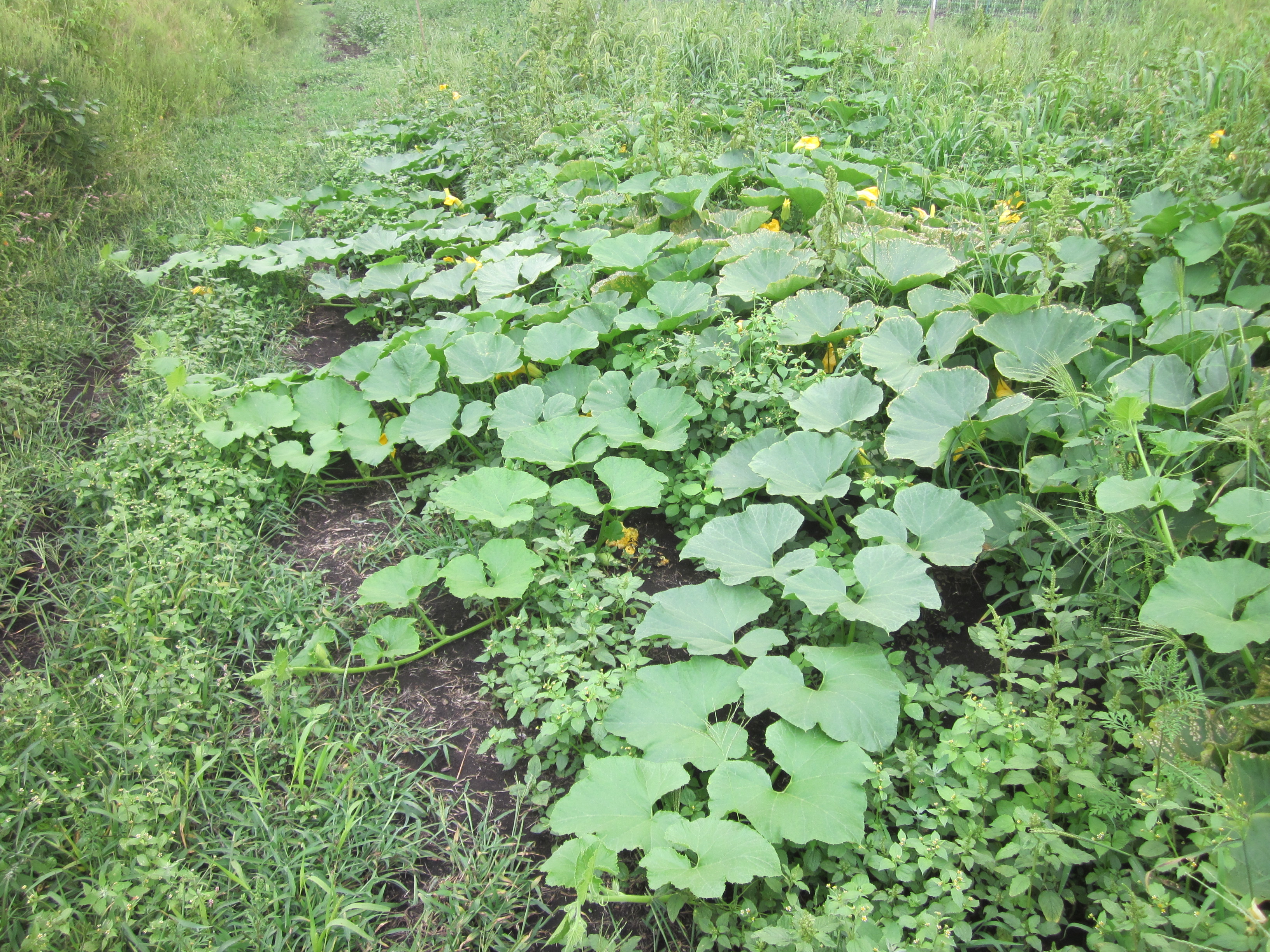
After last week’s pumpkin discovery and subsequent consultation with the almighty but unheeded Excel Master Plan of 2014, we did a winter squash walkthrough. The weeds there were high and mighty (not referring to Colorado, don’t get too excited). But the winter squash are there, rolling under my foot as I trip over extensive vines and leaf.

Acorn Squash

Acorn Squash “Tuffy”, with Giant Amanranth

bluehubbard_0906

Blue Hubbard

I will mow some aisles to allow sunlight in to help the plants a bit. This will run over some fruits and plants, but will help a larger number of plants. Note to self, print large-font map and tape to tractor. Next year, I have 2 options, plant them closer or plant them farther. Closer means less weeds, farther means more tractor maneuverability. Farming is such a dichotomous endeavor.

021

Small Spaghetti Squash?

In these outer fields, groundhogs are free to enjoy on-the-vine feasting without fear of interruption.

kabocha_0906_eaten

Groundhog Diner Now Open

Next time, with the treasure map, I will figure out what this actually is.
kabocha_0906

Tomatoes continue to ripen. We are up to about 30 pounds per weekend. Dan covered the ground beneath these tomatoes with black agricultural plastic to suppress weeds and it is a genius tactic. No weeds, nice soft landing, no excess moisture, no rotting fruit, no molding leaves!

Ripening Tomatoes

Ripening Tomatoes

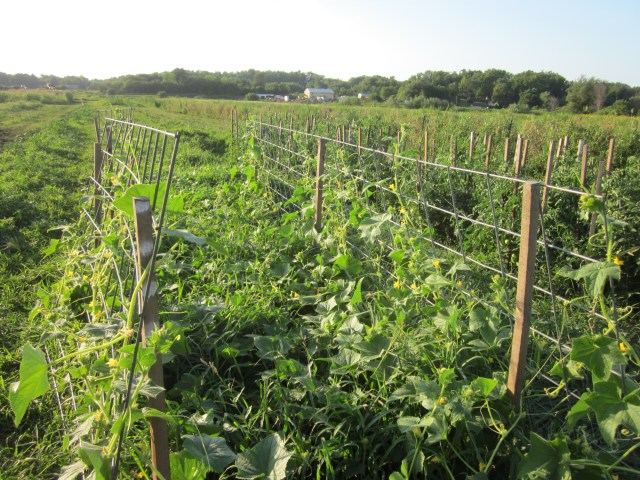
Trellis experiment for cucumbers bearing fruit is turning out well. Next year, I will couple that with black plastic at the base and wider rows, we might be able to have a decent and safe pick-your-own tomatos and cucumbers!

Cucumber Growing Where It Should

Cucumber Growing Where It Should

Posted in Uncategorized | Leave a comment

Harvest Tempo

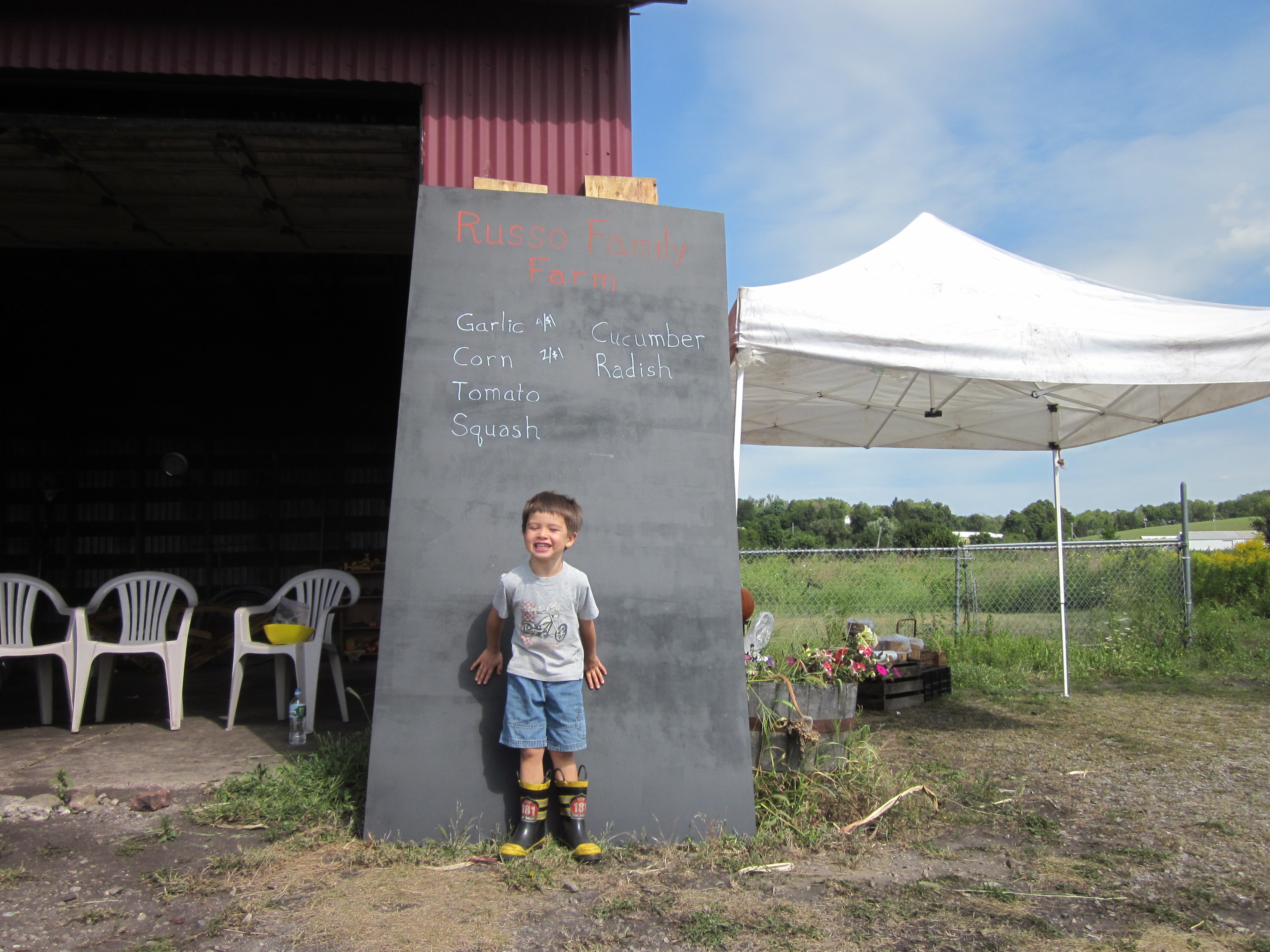
Farm tasks fall into 2 categories- must do now, and should have done earlier. This season we’ve set about as much “must do” as we can, albeit usually late. I finally wrangled a trip to the lumber yard for a hardboard to paint with chalkboard paint and put up a farm sign. Lots to improve upon, but not half terrible (I tell myself that) for having written it freehand sideways, with a young’em whining for the liquid chalk in the background.

Farm Sign, version 1

Russo Family Farm Sign, version 1

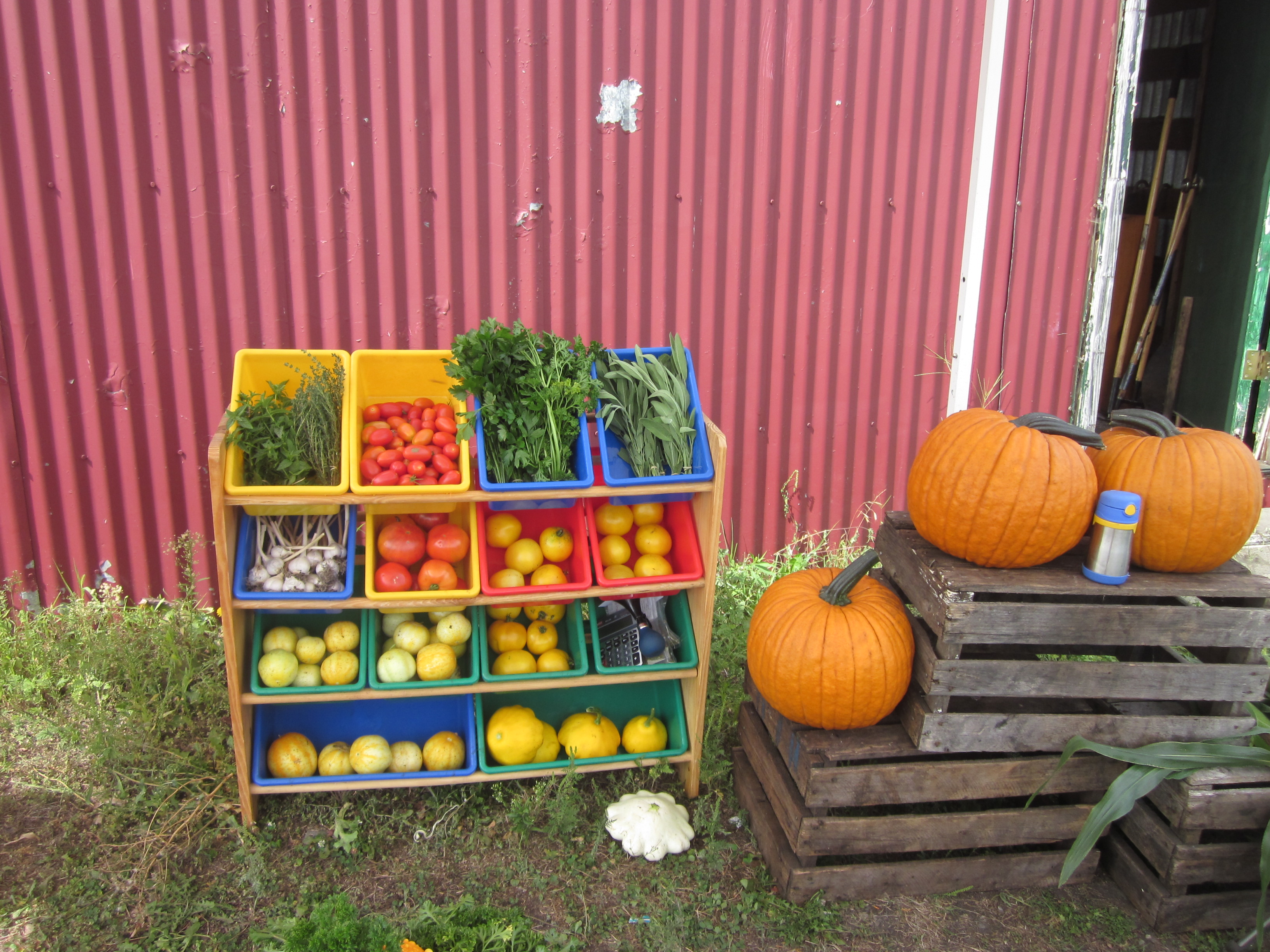
However, said young’em was ecstatic with his market. This one is quite a salesman too, you would be hardpressed to leave without at least buying a tomato. If you have cookies, he will gladly trade you a large pumpkin.

Farm Market, Day 1

Milo’s Farm Market, Day 1

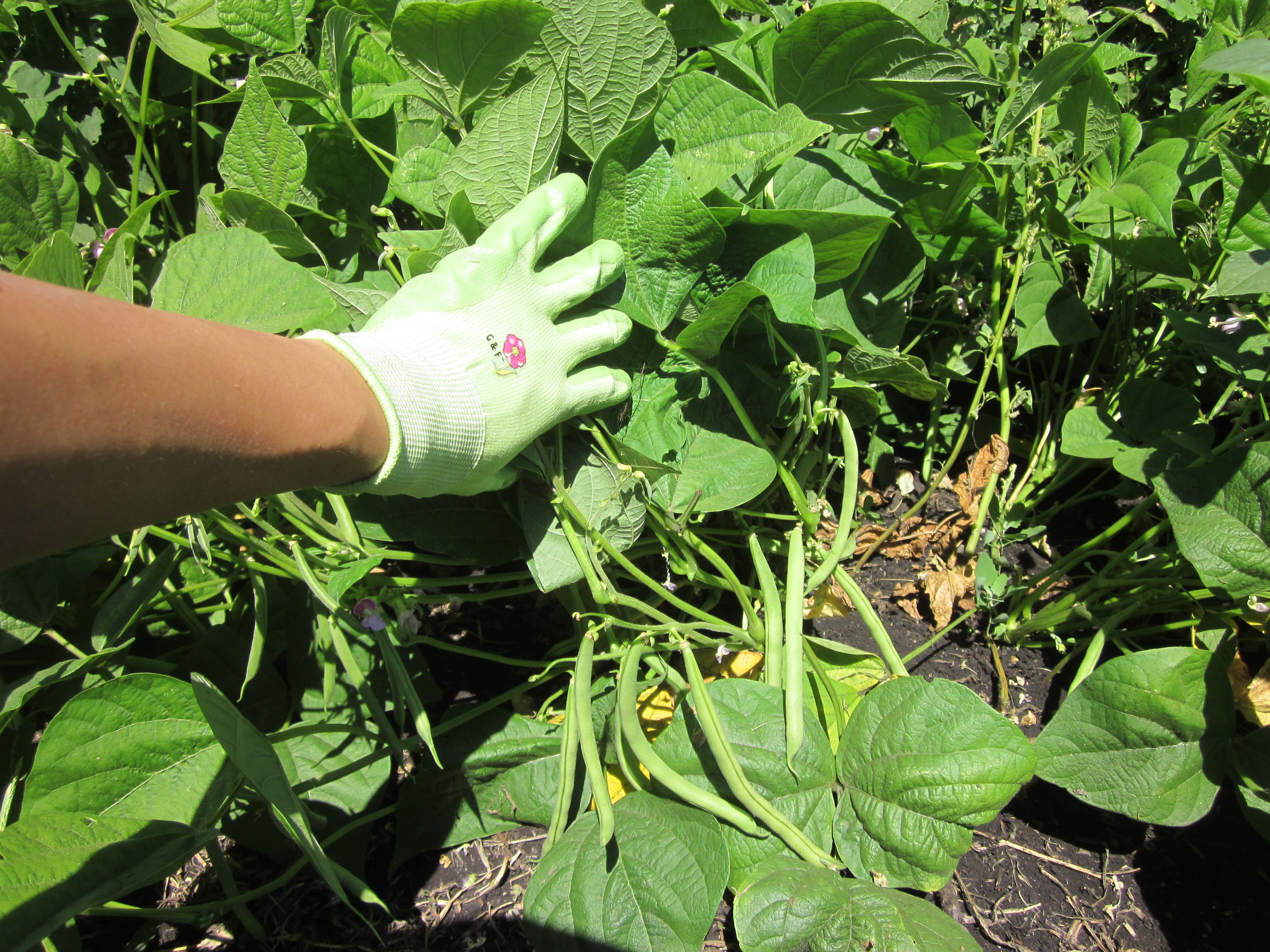
Round two of green beans, planted 7/12, is ready for harvesting. One learns quickly to pick beans often and pick them young so we invited Hesperides Organic CSA members to come for a pick-your-own. After they left, we picked another 40 pounds with help of some friends. These will bear for 3-4 weeks, living up to its varietal name “provider” before the plants tire and leaves yellow.

Round Two

Round Two of Green Beans “Provider”

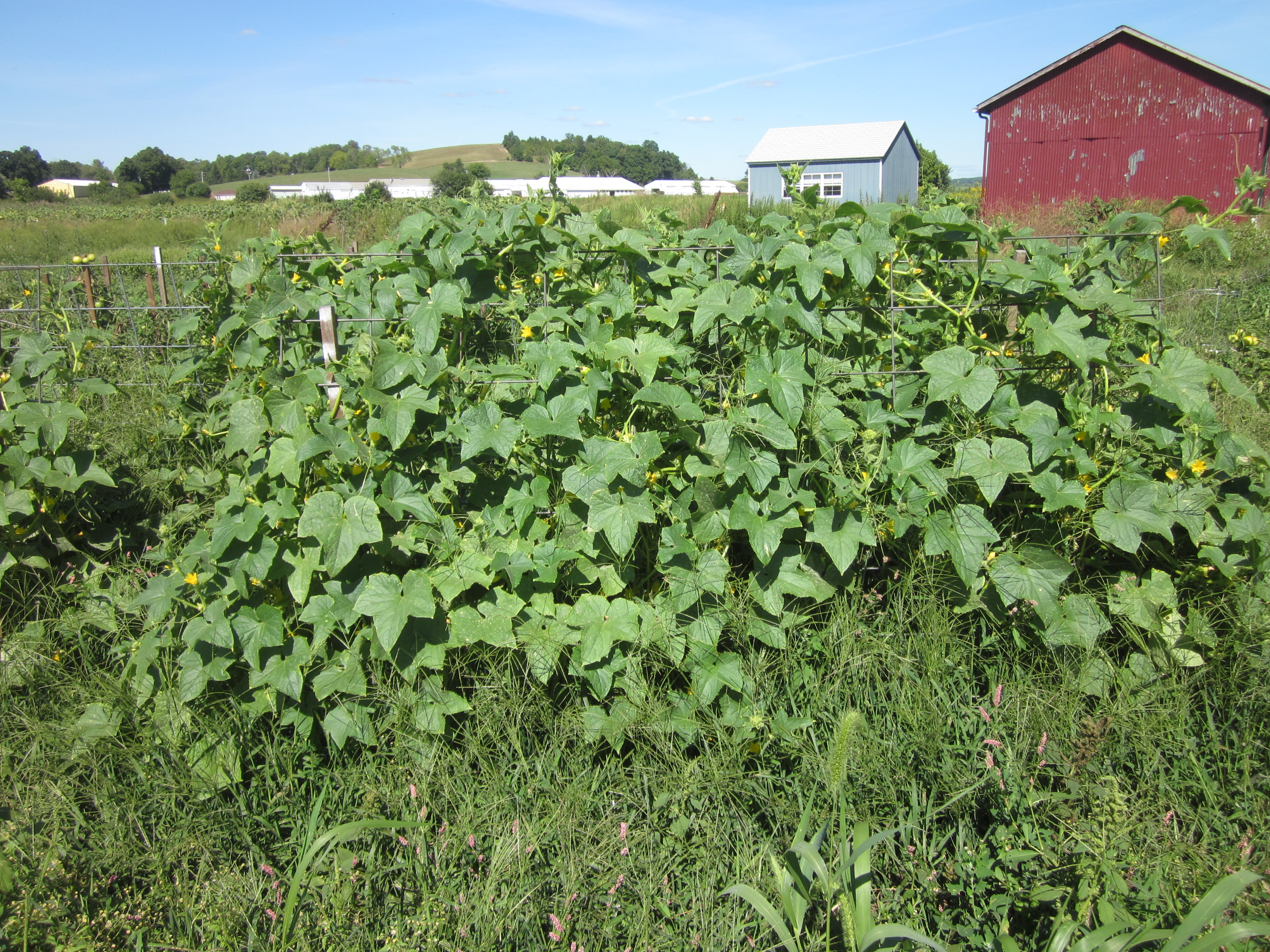
Cucumber vines trellised against cattle fencing are happy, as are the bees buzzing among the flowers.

Happy To Be Vertical

Happy To Be Vertical

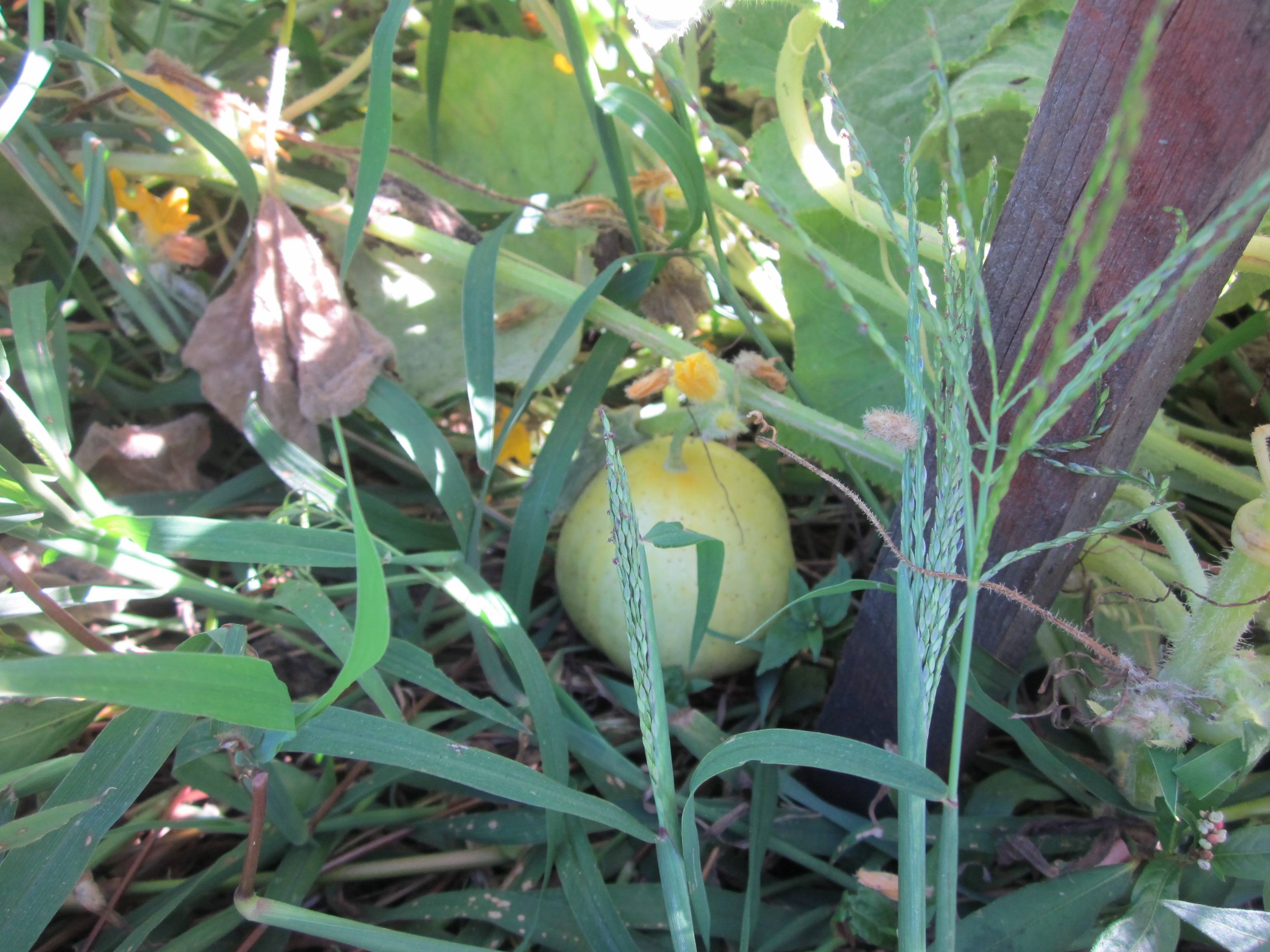
This leaning trellis allows me to check the underside for ripening cucumbers. They are great when the skin is still pale and light. Once they size up to a tennis ball and turn yellow, you would want to remove the seeds before eating. I am already looking up other oddball cucumber varieties for next year.

I See You, Wily Lemon Cucumber

I See You, Wily Lemon Cucumber

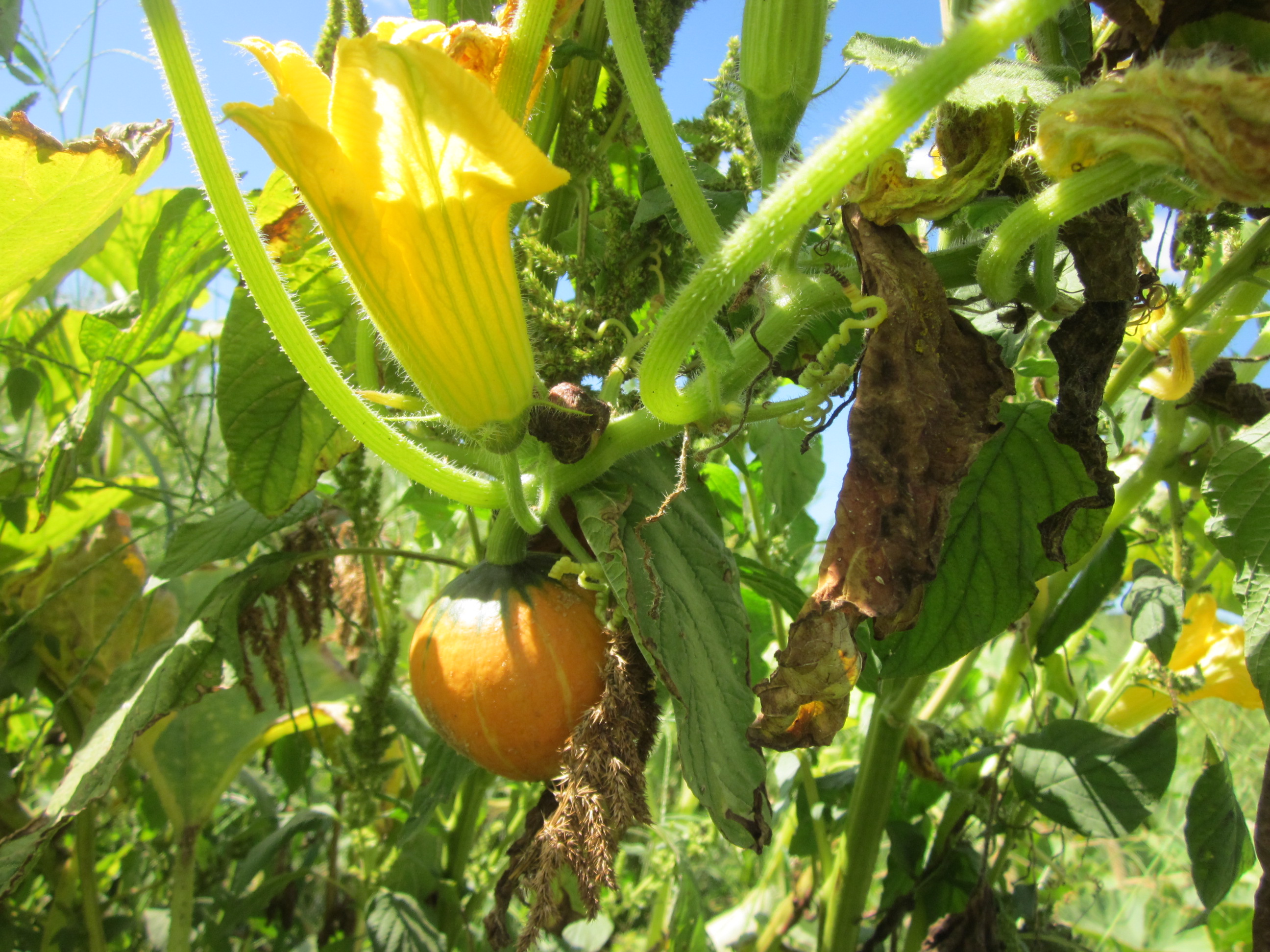
We ventured into a portion of the pumpkin patch to find the baby pam and jack-o-lantern pumpkins ready. I couldn’t find the white pumpkins, but maybe I didn’t wade far enough into the fields. Baby Pam pumpkins average 4lbs and have dry, sweet flesh, great for making pumpkin pies.

Nah, Those Can't Be Ready Yet?!

Nah, Those Can’t Be Ready Yet?!

One squash used in commercial pumpkin pie filling is the blue hubbard, averaging 12-15 lbs. Usually winter squashes are cured in the field, to help it develop a hard skin that allows it store for the winter. When mature, the fruit is cut off from the vine, and left out in the sun for a week. Behind the blue hubbard are 2 Australian Butter Squash, a rare heirloom from Australia.

Do You Know What's In Your Pumpkin Pie?

Do You Know What’s In Your Pumpkin Pie?

I can’t wait for the rest of the winter squashes to mature. Butternut, delicata, kabocha roll off the tongue at farmer’s markets, but wait til I get a dozen other varieties!

Baby Pam vs Blue Hubbard

Baby Pam vs Blue Hubbard

Posted in Uncategorized | Tagged | Leave a comment

A-Maizing Colors

The few stalks of dry corn “painted mountaint” that sprouted, and didn’t get eaten by birds came into the barn today to dry out. The colors range from saturated, intense purples and reds, to soft, hazy shades of blue and pink. Because the stand of corn was so limited, pollination was insufficient and the kernels did not fill out fully. In a consumer environment that dictates conformity, I got a good laugh from a troubleshooting article from Ohio State University on diagnosing corn malformations.

Dry Corn "Painted Mountain"

Dry Corn “Painted Mountain”

We collected the sometimes nubby, sometimes skinny second ear of the Double Standard variety. Where’s the Tim Stark of heirloom corn I wonder? Who will make a market for these oddball corn and elevate it to celebrity chef status? As the plants are mowed down, we can see the Silver Queen variety about to be ready. Next week will be all about corn.

Open Season on Corn

Second Ear of Double Standard Heirloom

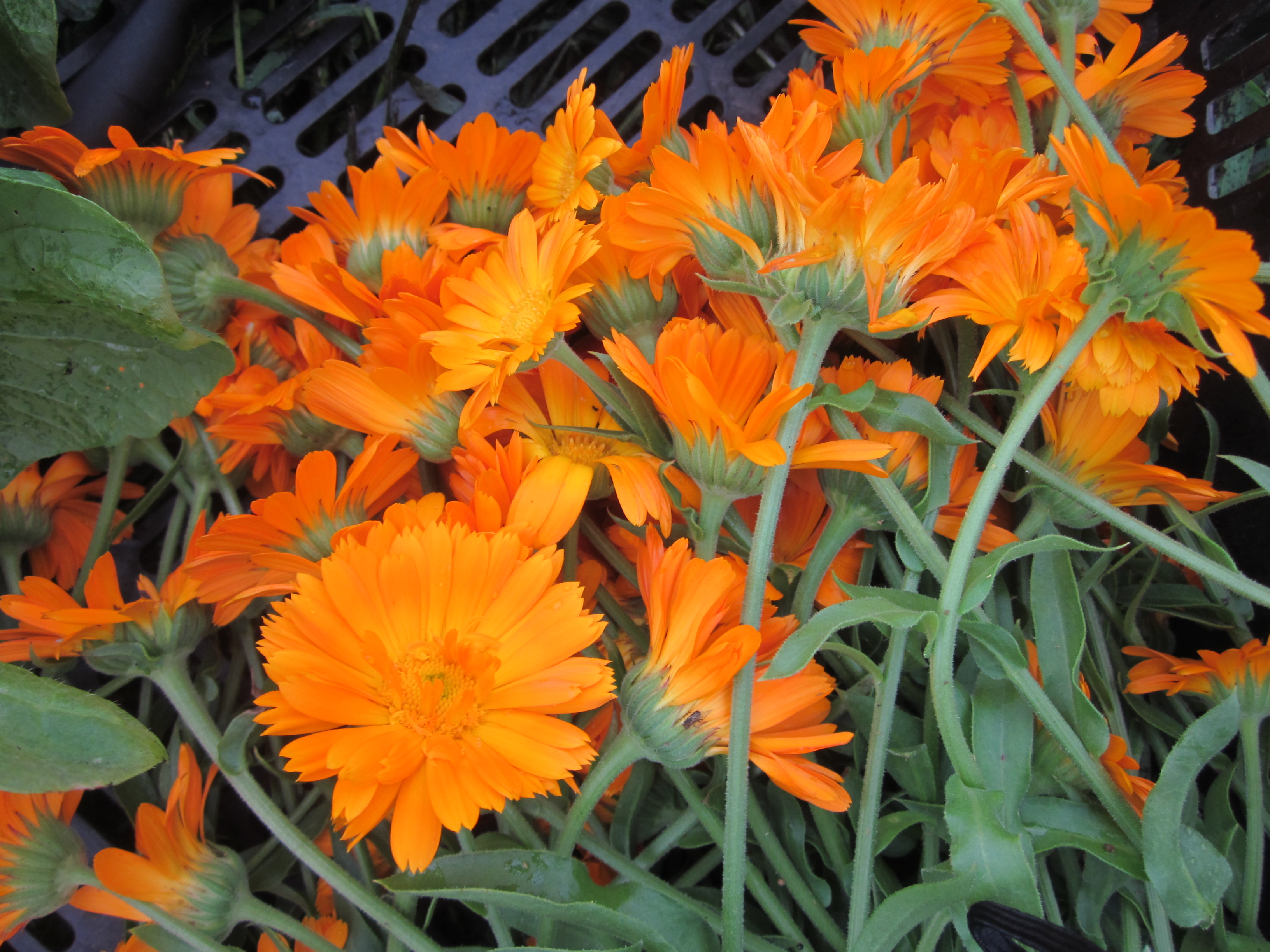
Finally had a chance to stop by the weedy mess of calendulas and harvest some for drying. The plant is high in resins and is sticky to the touch. Once dry, this batch will make its way into a skin salve.

Calendula

Calendula

Easter Egg radishes are ready after 4 weeks. This time I used a seeder so the radishes have more space to grow properly. We harvested about a fifth of the row which translated to 20 pounds of trimmed radishes. Radishes get pithy and too spicy as they age, so much more will come up next week or else I am looking at radish seed pods instead. As I stare down the 250-feet row, I wonder was I thinking at akk when planting this.

Radish "Easter Egg"

Radish “Easter Egg”

Round two of green beans are forming.

Green Beans, Part II

Green Beans, Round II

The blue hubbard squash planted at the border of the winter squash patch was meant as a pest trap crop, to draw squash bugs toward it and away from “main” squashes such as pumpkins. So far, they are doing great, probably better than the main crops. Go figure.

Blue Hubbard, Not A Trap Crop

Blue Hubbard, Not A Trap Crop

Posted in Uncategorized | 1 Comment

Squashing Our Way Through Summer

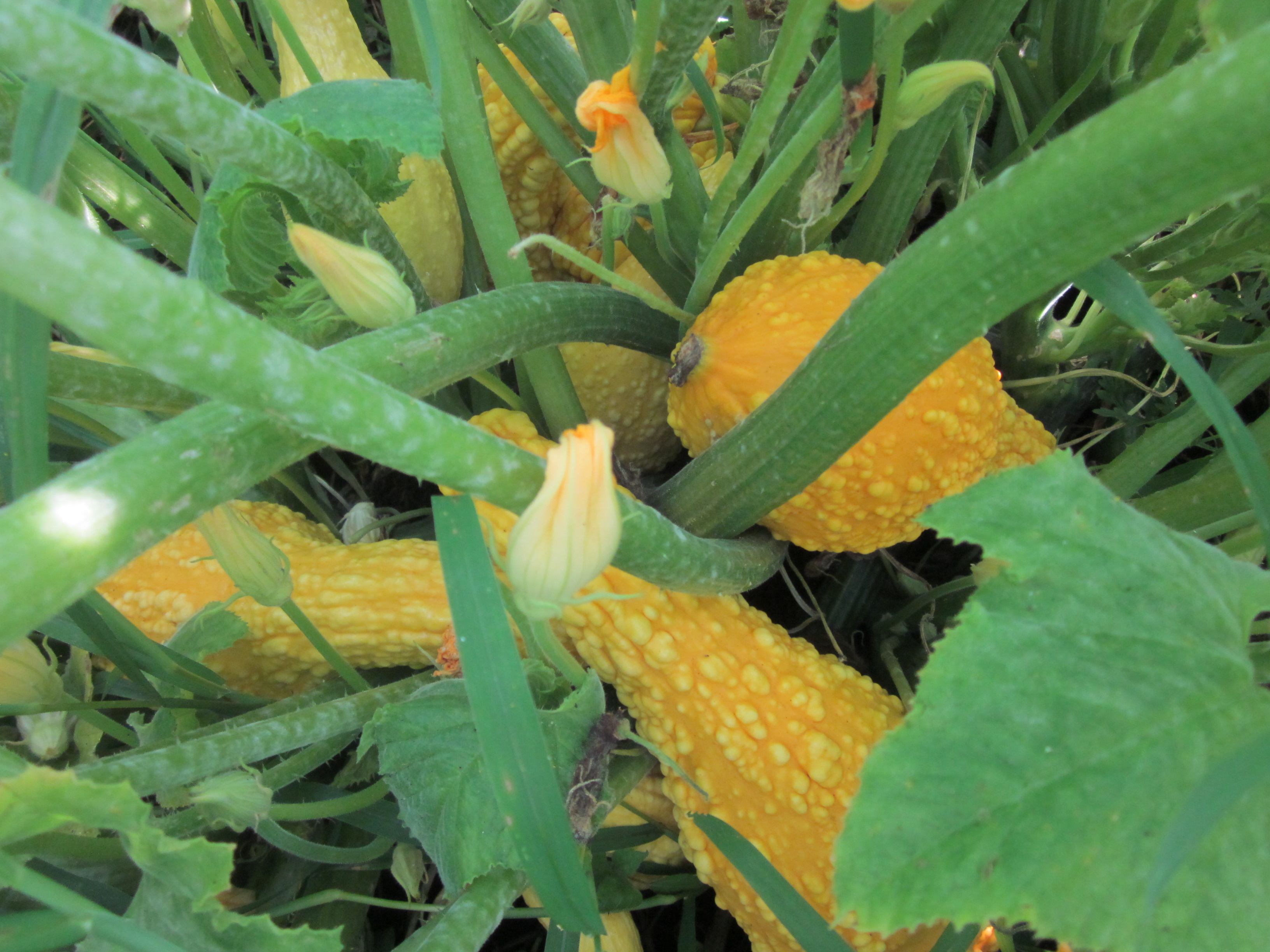
As I suspected, it is powdery mildew on summer squash plants, a fungus that affects a variety of plants in humid and temperate climates. They start as powdery white spots on the leaves, and over time spreads and kills the plants. Apparently, spraying diluted milk on leaves can combat it. No one is sure of the mechanism that milk has, but it is worth knowing for next year. At this 3rd week of squash harvests, I, the restaurants I bring squash to, and all my neighbors are ready for the end of squash. I have yet to make zucchini bread, but it’s about to begin. Did you know Zucchini chips (Snapz) are 2 dollars for less than half ounce?

The Hits Just Keep Coming

The Crooknecks Just Keep On Coming

This pattypan squash is supposed to have a light green tint, but these albinos are almost too pretty to eat. These plants had not grown well from the beginning. Though there are many flowers, not too many formed squashes. The few I found were impressive in taste. Grilled simply with olive oil, they are super sweet, and have a milder flavor than zucchinis.

Pattypan

Long Awaited Pattypan Squash “Bennings Green Tint”

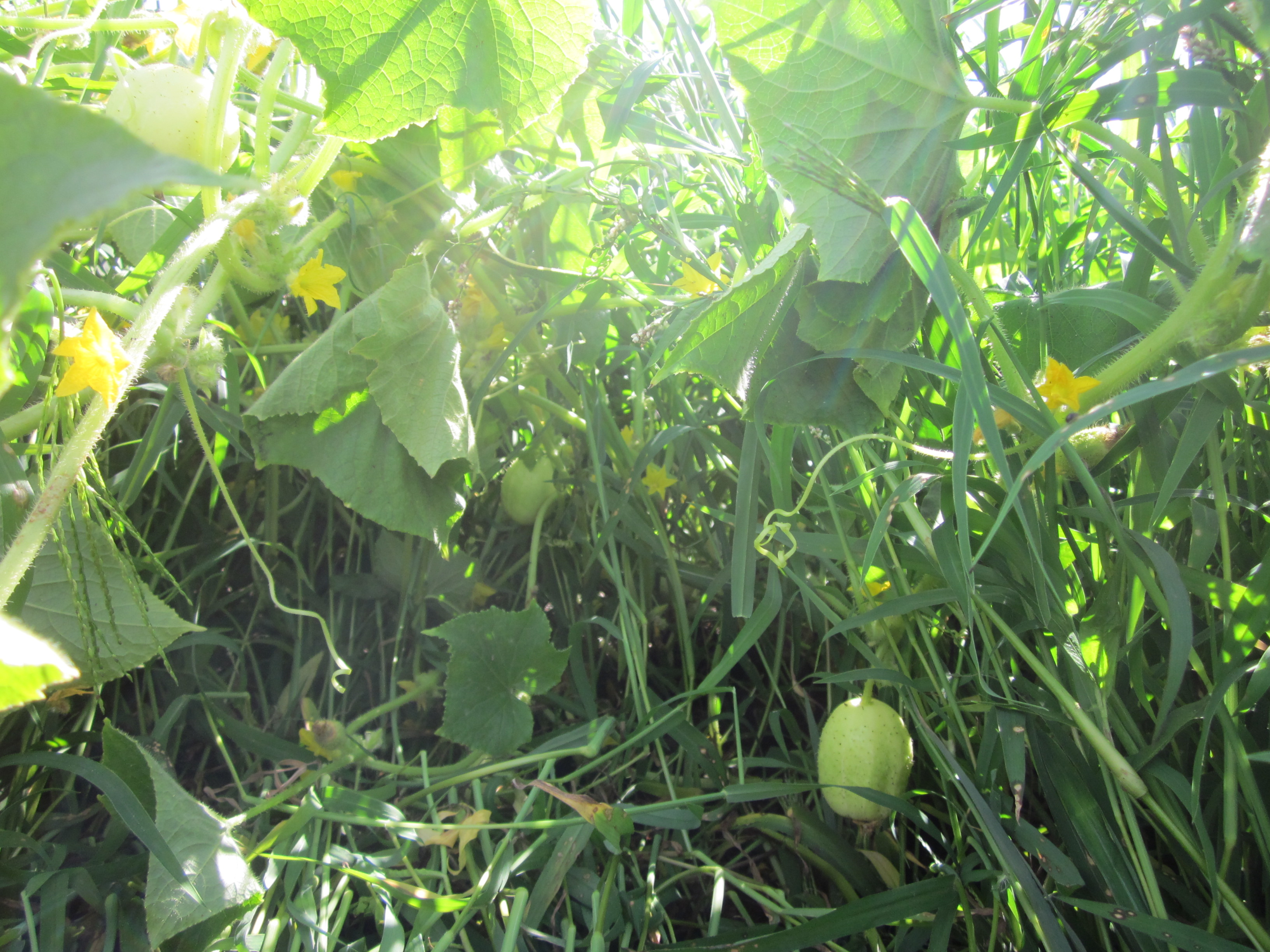
The lemon cucumbers started in earnest. I have taken to leaning cattle fencing (very large wire nets) against several stakes and pulling the vines off the foot-high grass. It isn’t the neatest sight, but it did help me find some hidden fruits. The varietal is shaped like a lemon and when fully mature are yellow as well. They are a mild cucumber with very little of the bitter compound cucurbitacin.

Exposed

Lemon Cucumber Exposed

I can’t believe it is almost time for the second green bean row. Despite some deer damage, I see many flowers developing. I tried out a tractor-drawn implement over the green beans this weekend in an effort to weed on either side of the plants, and damaged a few plants. Note to self, try out new implements on younger seedlings.

Recovering, Sort Of

Recovering Green Beans

Posted in Uncategorized | 1 Comment

Height Requirement

Two weeks ago, I started seeing large balloons meant to deter birds over fields of corn.  Briefly I thought about ordering some, but didn’t. So this is what we found – birds know best when things are ready. We were able to harvest some, and of the ones the birds pecked through, we were able to shuck and save the base portion.

corn_0809

No Corn For You

The “Double Standard” variety is an open-pollinated heirloom, and matures at about 73 days. Planted on 5/30, it matures this weekend (8/11), but with the cool weather it  could have used another week to get bigger. We had a half-ear harvest this weekend. Each stalk has 2 ears, maybe the other ear has enough time to mature too.  Aluminum strips hoisted high on multiple stakes as a bird deterrent for the next several weeks as we wait for the “Silver Queen” variety (8/29).

Scarecrow Up High

Scarecrow Up High

I am fascinated by the size of the sunflowers. They are heavy and droopy, not the peppy flowers you see at the farmer’s market.

sunflower_0809

Sunflower

The seeds are forming, which means more birds are coming.

sunflower_0809_seed

Sunflower Seeds

I never walk near the tomatos and hadn’t seen this tangle of vines and the burden of fruit they carry.

tomato_0809

Untamed Tomato

A whole lot of stakes and velcro ties later, the vines are off the ground. Next year, Dan has an idea to grow them through tiers of metal fencing.

tomato_0809_staked

How To Train Your Tomatoes

Similarly with cucumbers, the mess of vines, leaves, and weeds makes it hard to find the cucumber. It’s beyond late to trellis cucumbers now, at harvest time, but I can’t find them otherwise.
cucumber_0809

Mess of Cucumbers

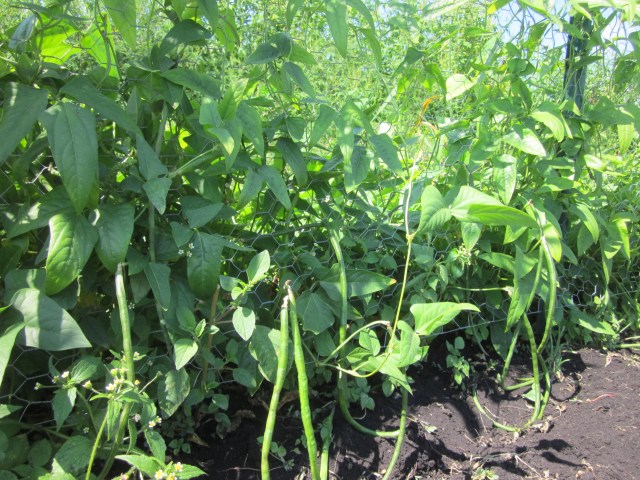
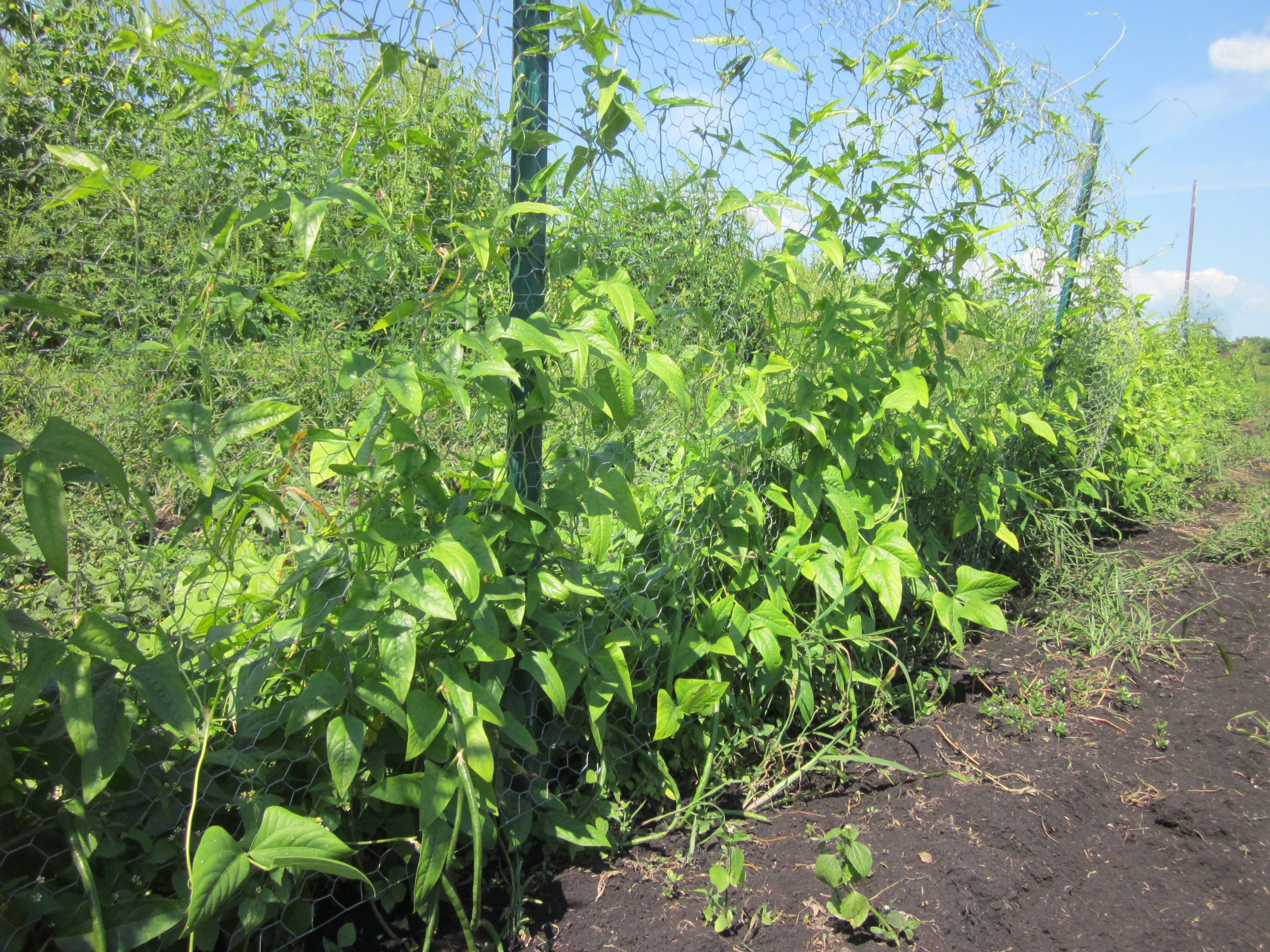
The yard-long beans took seemingly forever to reach for a trellis. Then suddenly they are spiraling out of control. We jerry-rigged leftever trellis, 1-in netting, chicken wire, and old fashioned string, up to the height of the stakes, which is about 4.5 feet. These beans can go to 8 feet… I will need more height.

Yard Long Beans

Yard Long Beans On Various Trellises

longbeans_0809_2

Yard Long Beans

Take a peek at the brussels sprouts forming on the stalk, hiding. Whoever decided to cultivate this strange-looking vegetable would smirk at a new 2014 crossover breed, the brusselkale!

brusselsprouts_0809

Start of Brussels Sprouts

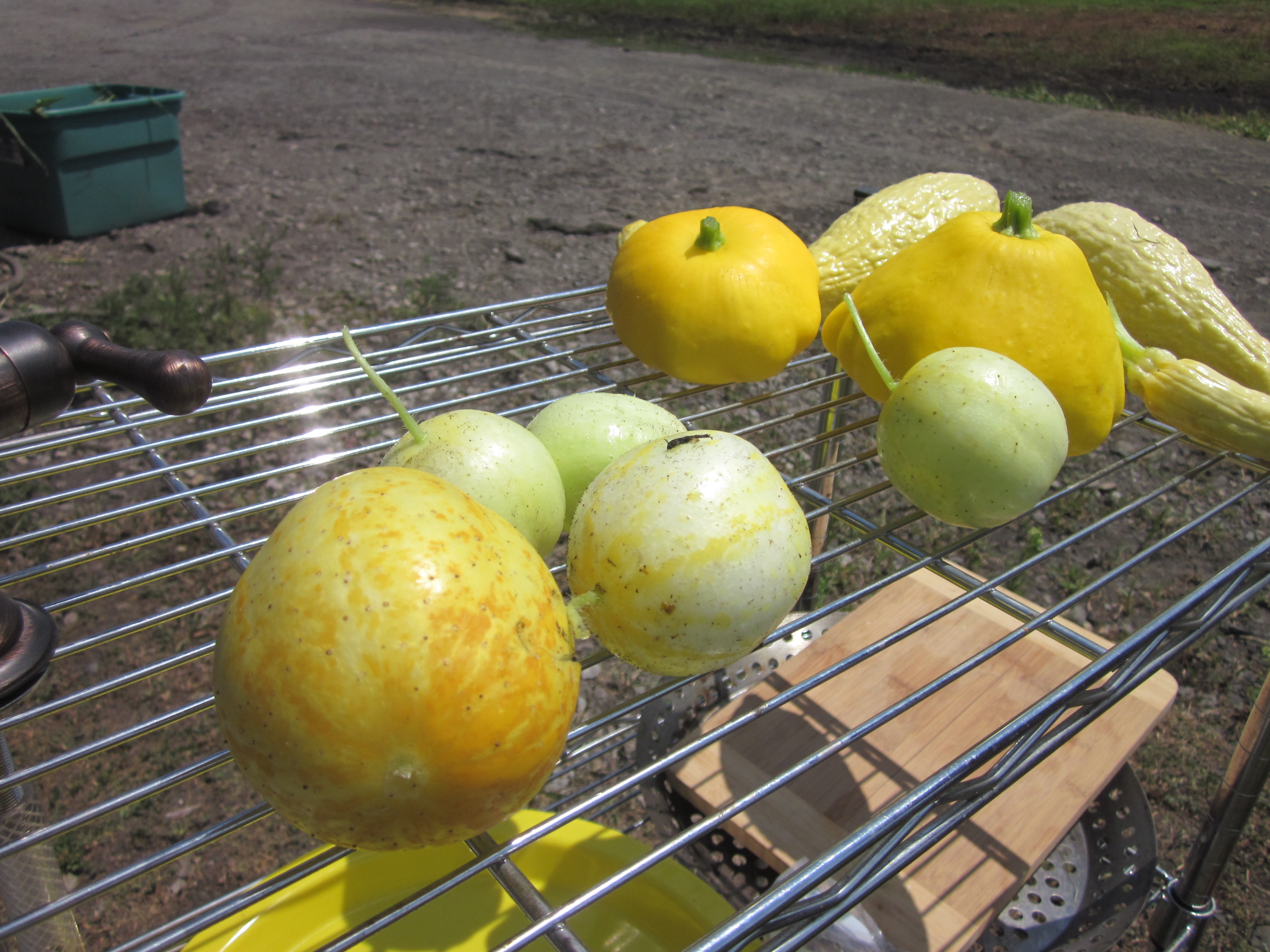
Summer cucurbits ready for eating. Lemon cucumber, in skin color and shape only, it does not taste like a lemon. Pattypan squash and crookneck squash.

yellow_0809

A Golden Harvest

Lots of things from the yellow palette, just a bit of fuschia for fun.
033

Posted in Uncategorized | 1 Comment

Dear Deer

I suppose it was bound to happen at some point, I just didn’t quite know when to expect it. Considering most fields around us are onions, I don’t blame the deer for choosing the Russo restaurant. It hasn’t been catastrophic, yet. There are now 2 worn t-shirts and baseball caps acting as scarecrows in the fields.

Chomped Chard

Chomped Chard

We are gearing up for summer squashes. 5 days ago the small pattypan squashes were about the size of a golf ball. Today, these are about the size of a cantaloupe.

pattypan_0802

Supersized Pattypan Squash

The cute little crookneck squash from last week? Gigantic. Posed here next to a medium tomato for comparison.
Quack

Crooknecked Giant

Harvesting squashes is a prickly proposition. Everything is covered with spiky hairs that go through clothes. The stem is inevitably twisted in an awkward to cut position. Despite their size and color, you never see them all while harvesting from one perspective, making you think they grow every 5 minutes.

crookneck_0802

Tis truly a pain in the balls. (Sorry, couldn’t resist).

Most snap peas vines are done and yellowed. These are probably the late-seeded peas where I filled in gaps. Considering they weren’t weeded and fussed over, they are performing remarkably well. Must be the cool summer.

Snappy Happy Summer

No Heat Summer = Happy Snap Peas

There were warnings about severe floods and thunderstorms for the weekend, but it never came. We thought the row of radishes might need a little water… so we tinkered with a gas-powered water pump.

water_0802

Water Pump

Countdown to corn!

corn_0802

Corn

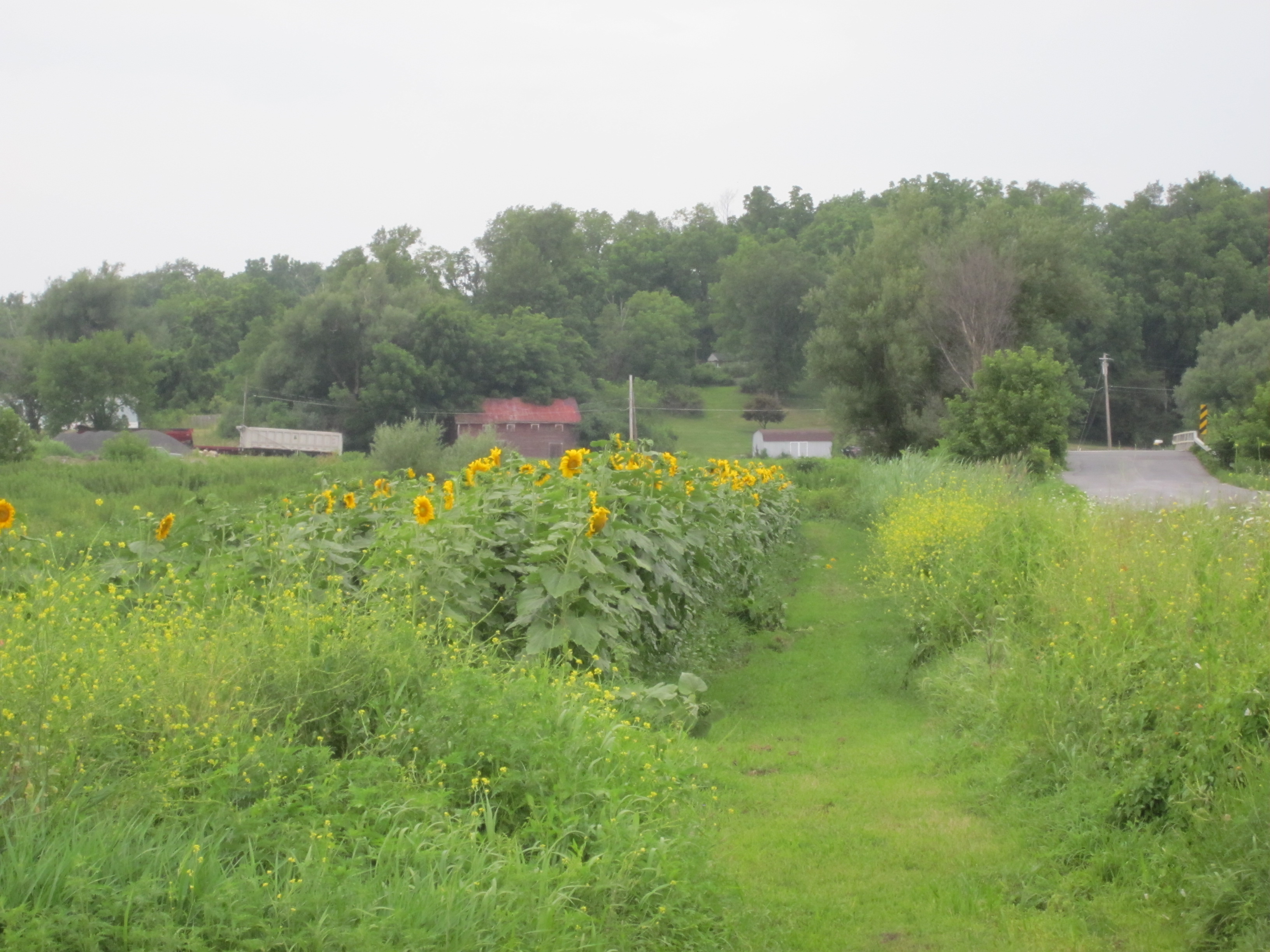
Most of the sunflowers are open! I’ve heard about sunflowers following the sun, but it doesn’t seem to happen on the farm. They point at the road, all day long. It’s like they realize it’s great marketing and serve as greeters for us.

sunflower_0802

Sunflower Greeters

russofarm

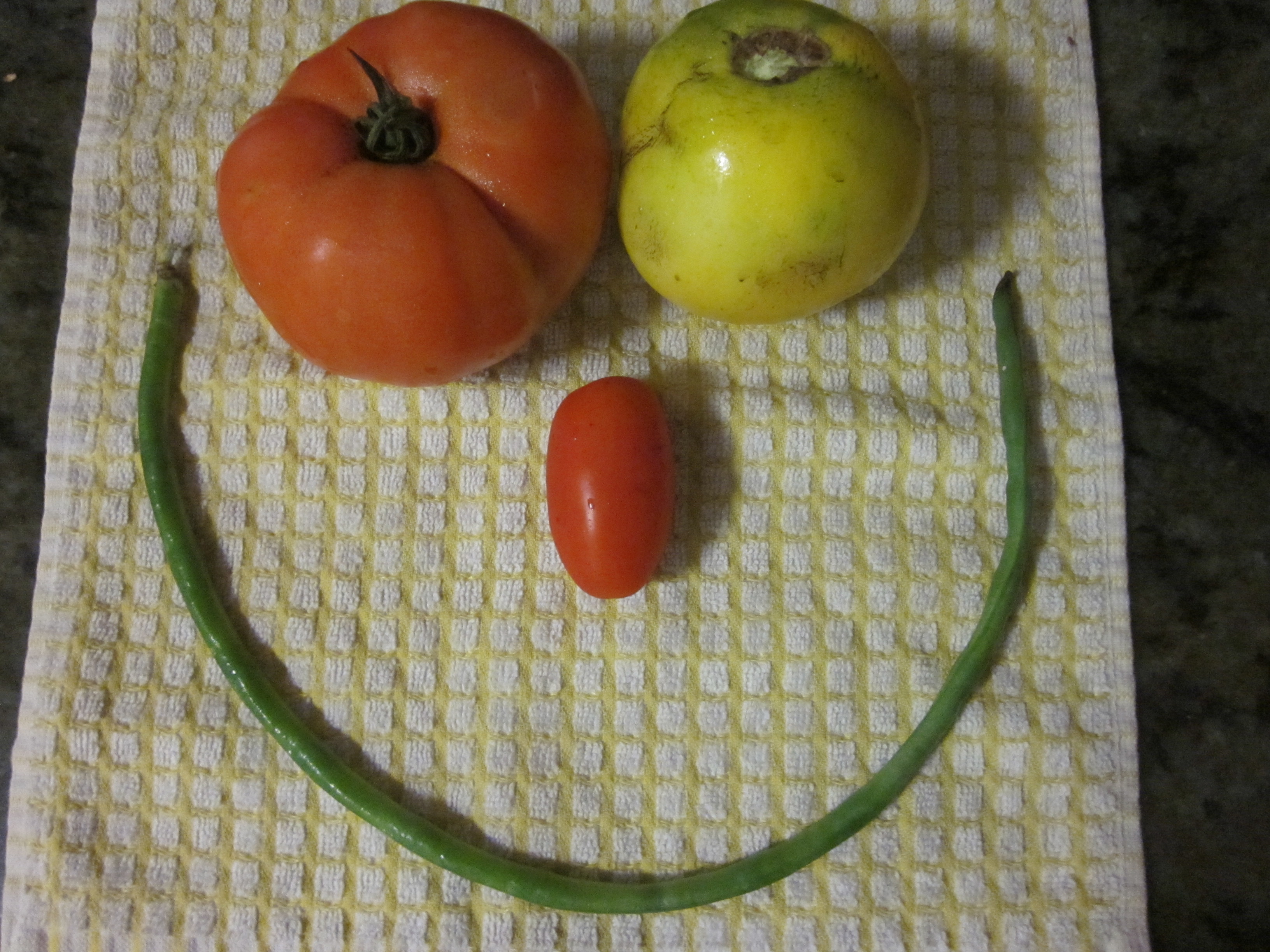
Tomatoes are coming in at an alarming rate. The large variety, brandywine, are mostly green or with streaks of orange. They are so large that we can’t always let it ripen on the vine without putting the rest of the plant in jeopardy. The long beans are also starting to produce heavily.

Tomato Art

Tomato Art with Long Beans

Posted in Uncategorized | Leave a comment