Sizing Up

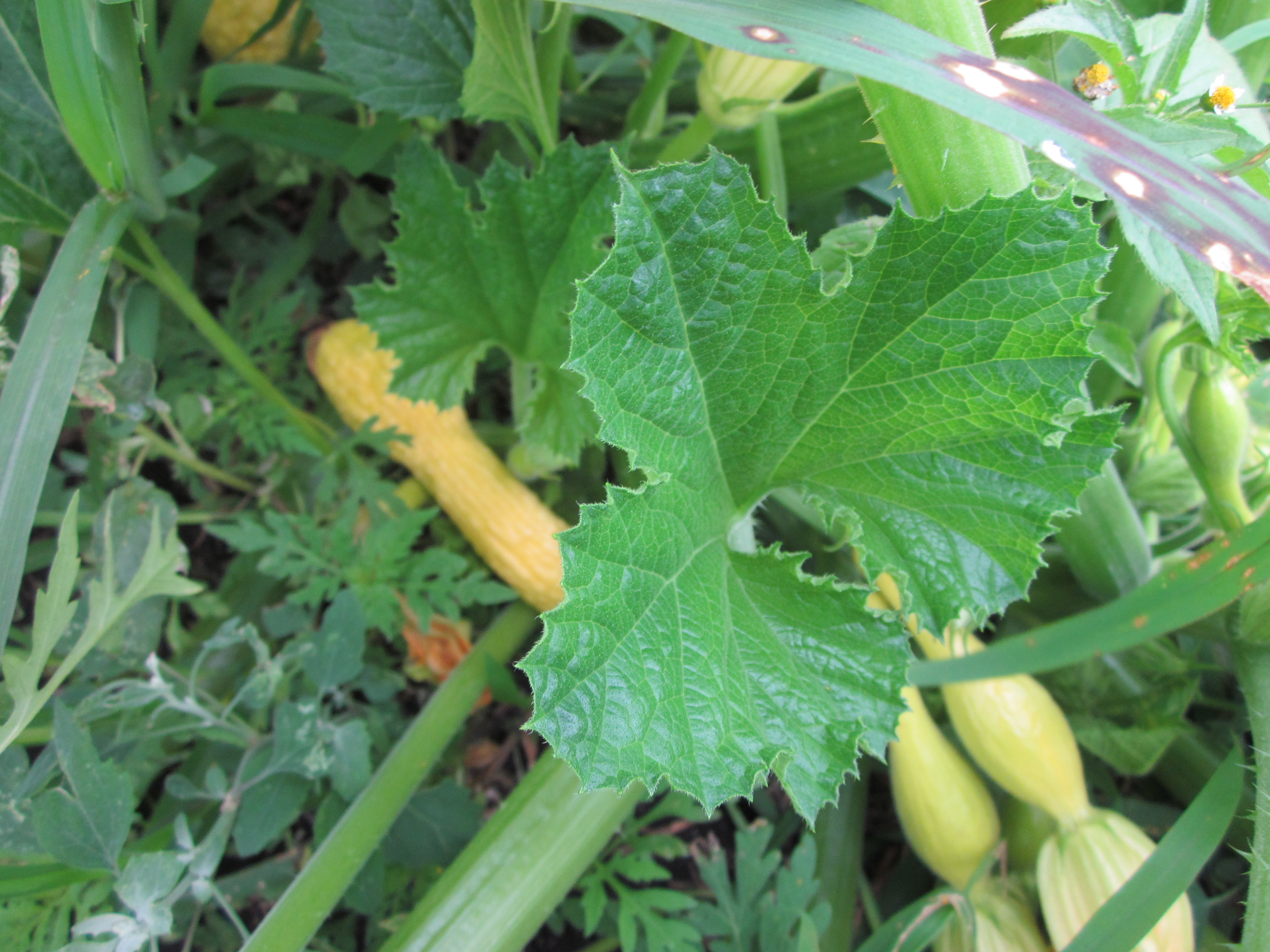
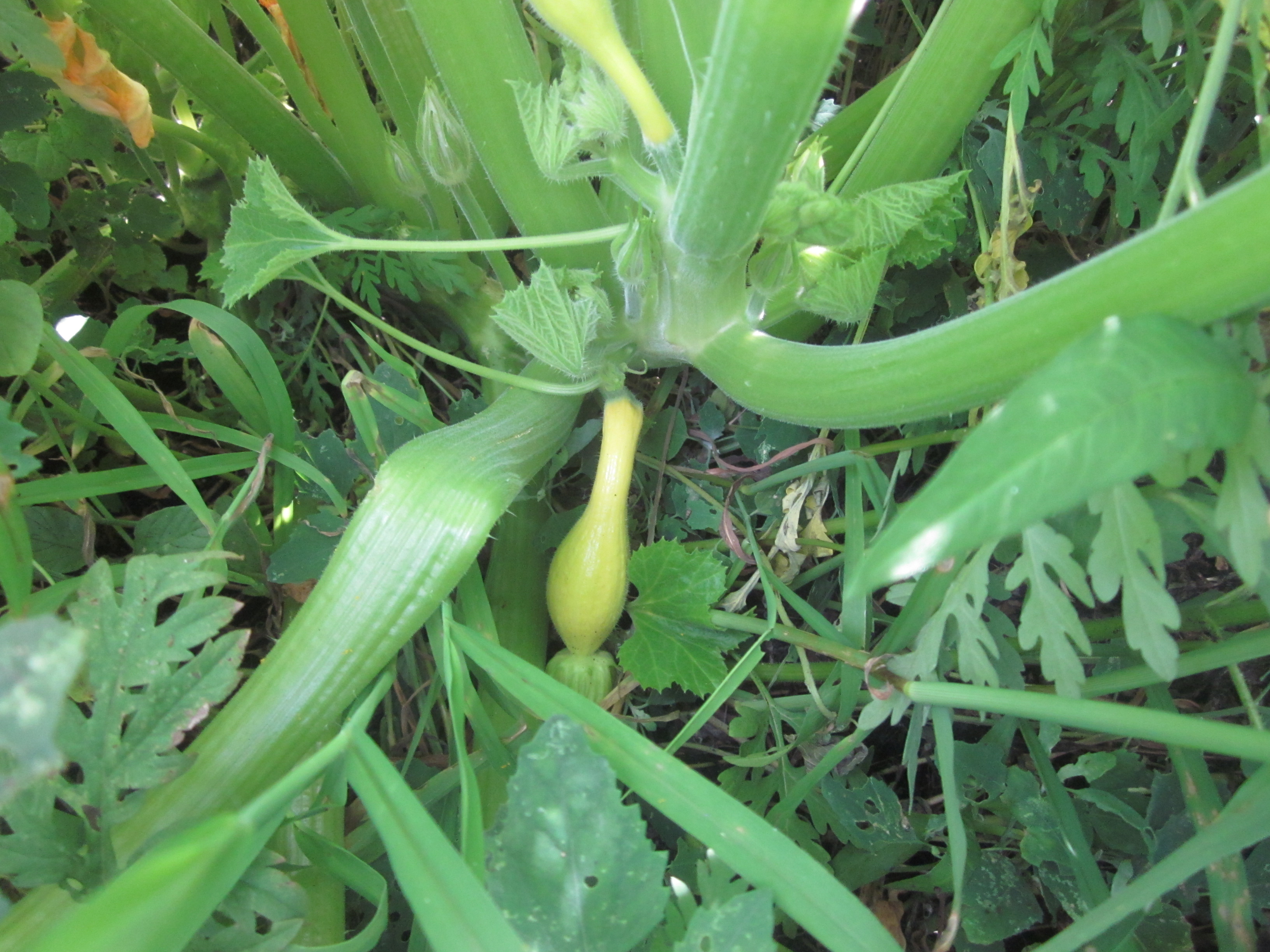
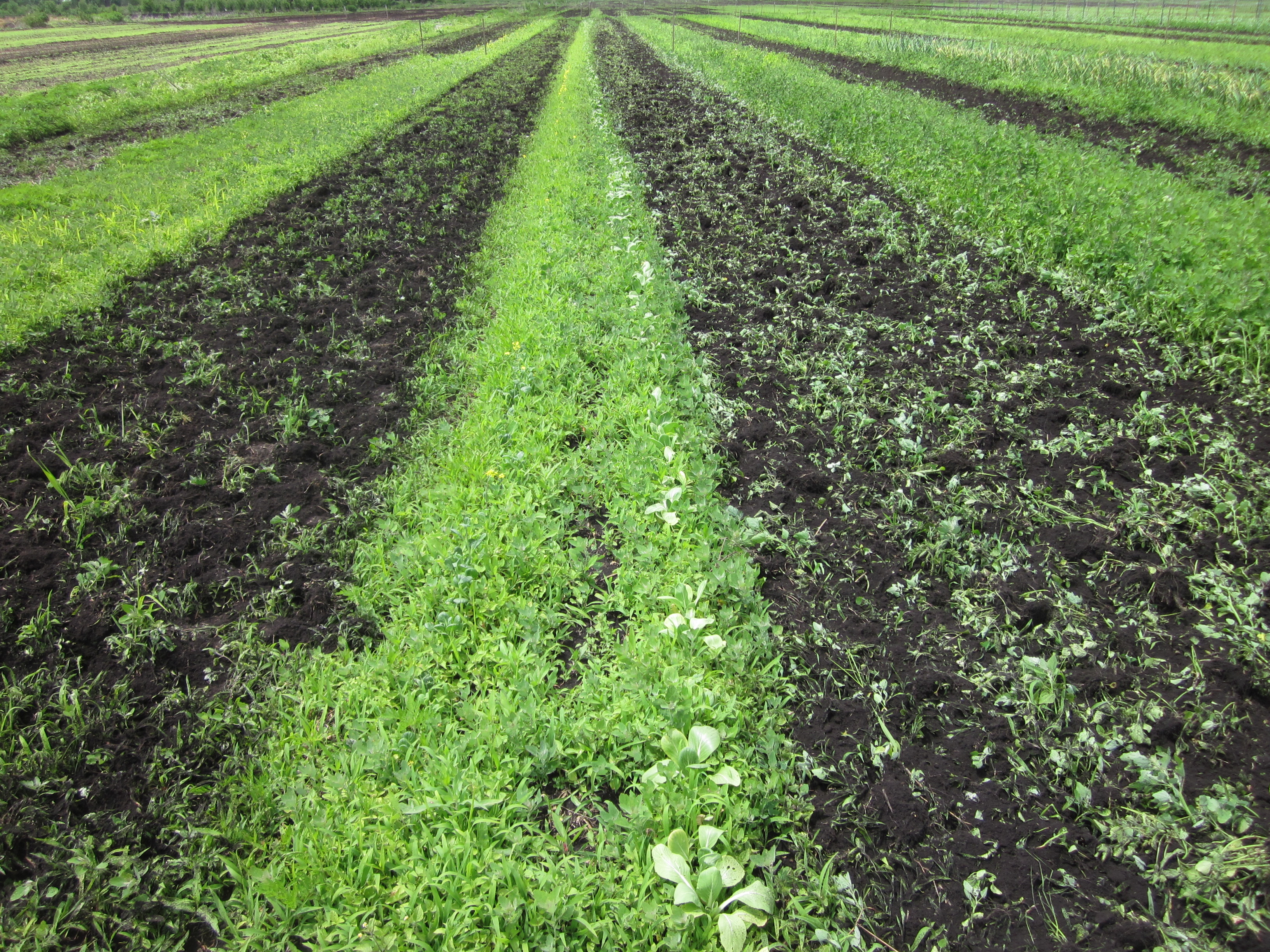
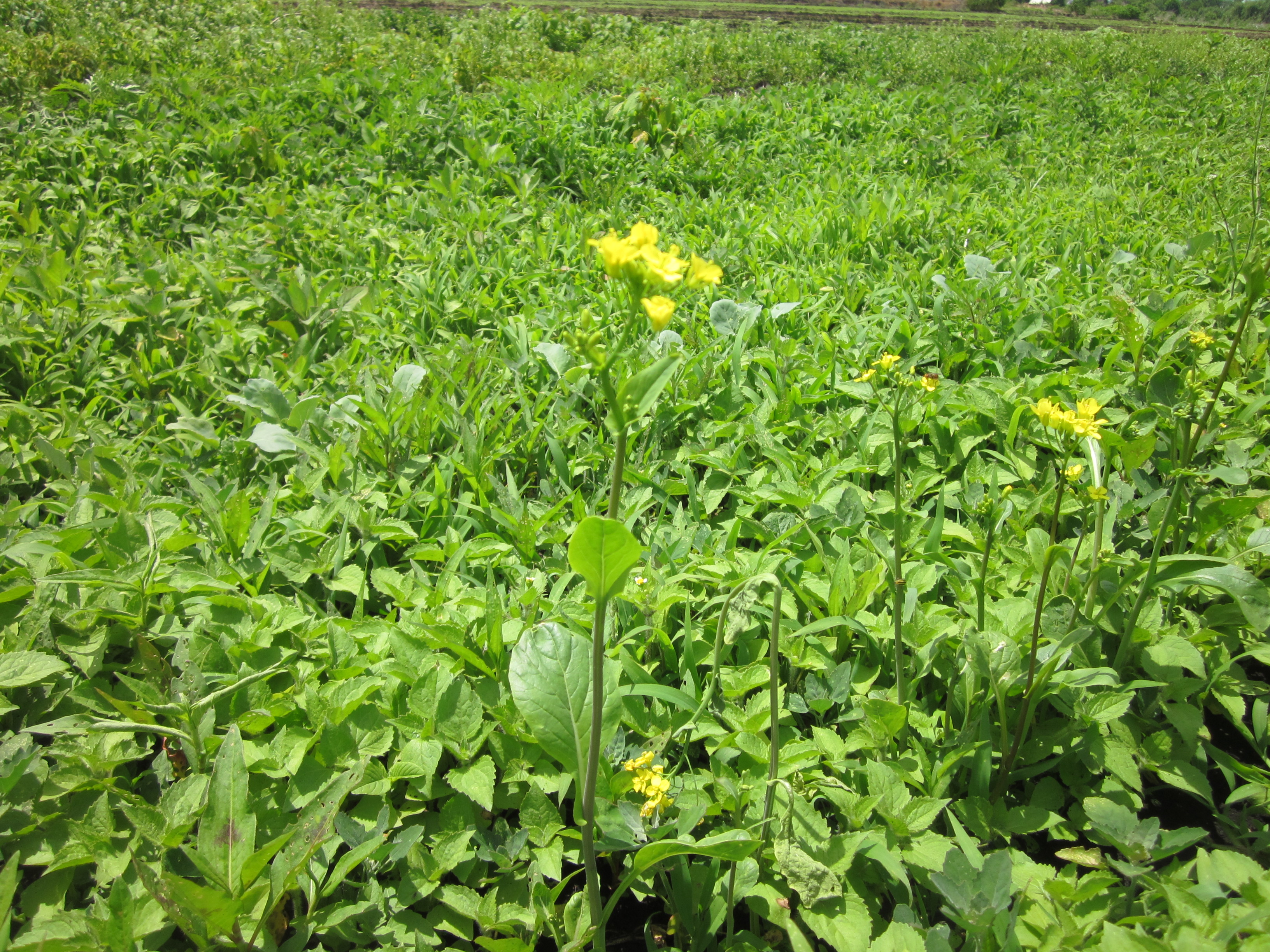
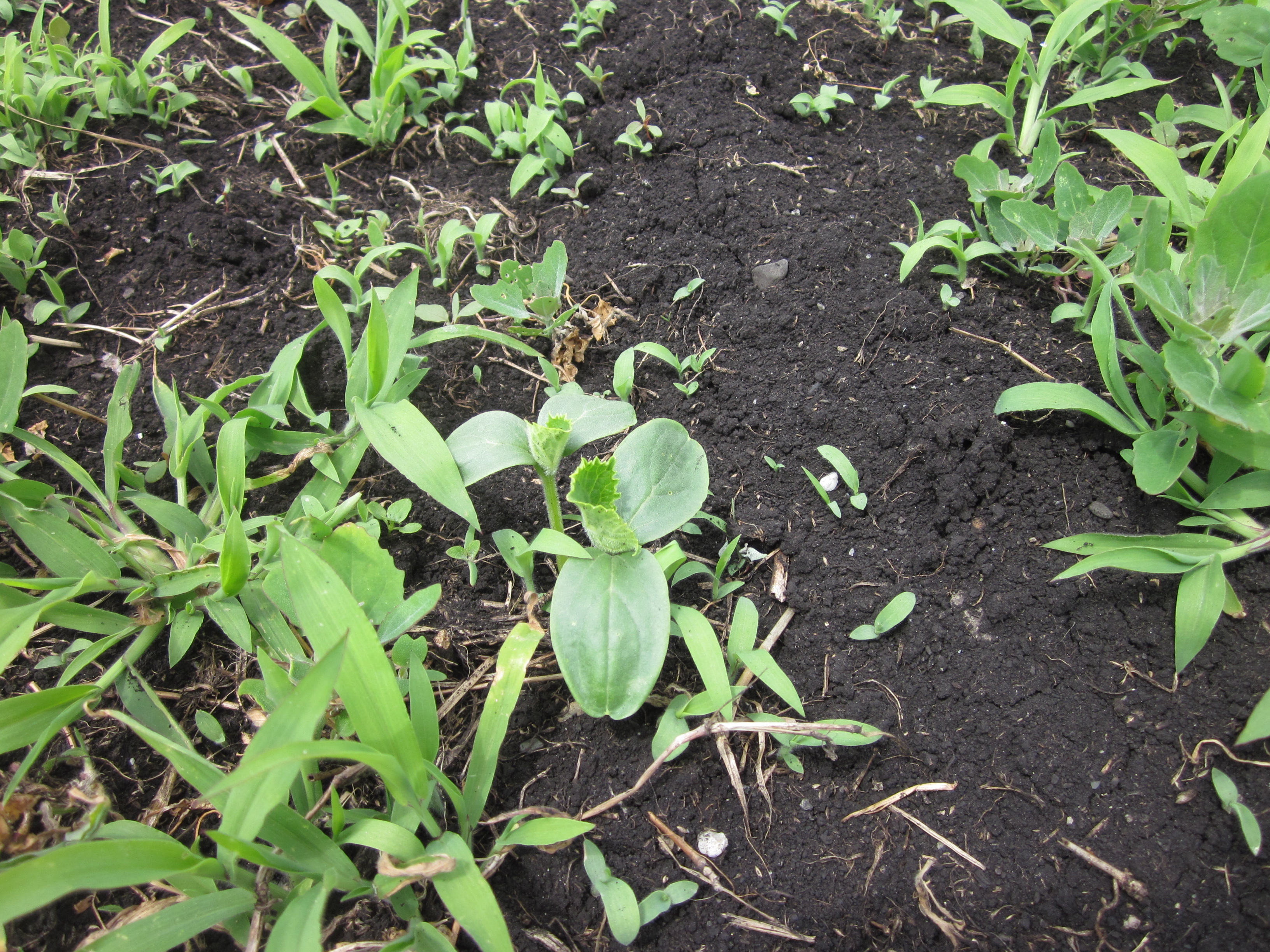
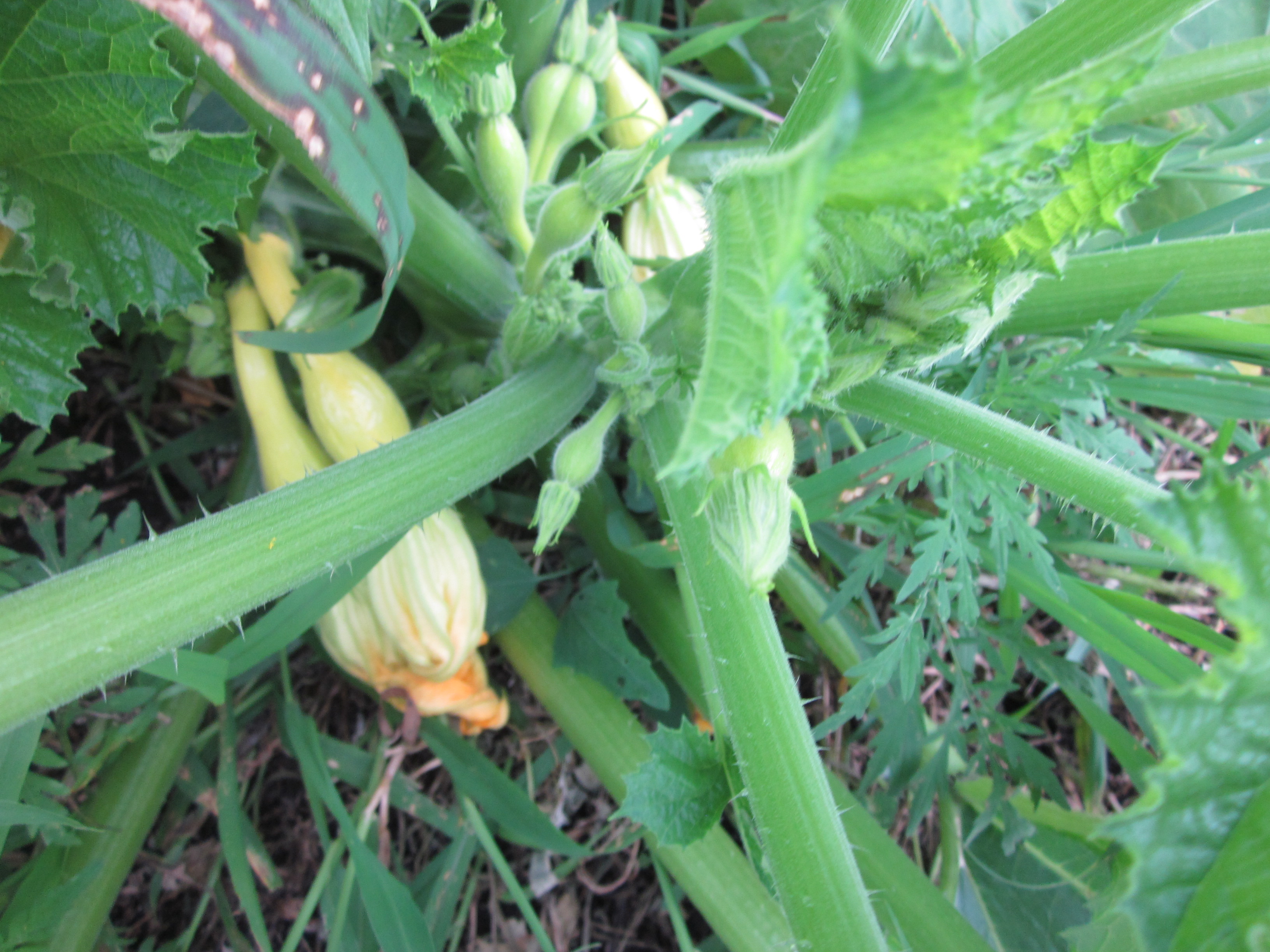
The summer squash “Yellow crookneck” greeted me with plenty of flowers and only half a dozen fruits. From the look of the immature plants, they will surely greet me next weekend. The yellow pattypan squashes are also blooming well, however the green pattypans are looking a bit gangly, possibly due to excessive weed pressure.
Summer Squash

Summer Squash Forming

sumsquash_0722_2

Along with summer squash, the cucumbers flowers are in full bloom and we should be nearing a nice harvest.

Lemon Cucumber

Lemon Cucumber

Tomatillo plants are prolific and setting fruit with reckless abandon. The old saying about zucchini bounty is nothing compared to this.

Tomatillo

Tomatillo Setting Fruits

The tomato plants are rather small in stature, but producing lots of fruit. Given how much nitrogen is in the soil, I was expecting plenty of foliage and not too much fruit. It is blasphemy to admit not being much of a tomato lover, but they are the summer top 3 so we planted some. Maybe a roadside sign that says “Honk for a Free Tomato” is in our future.

Tomato Haul

Early Tomato Haul

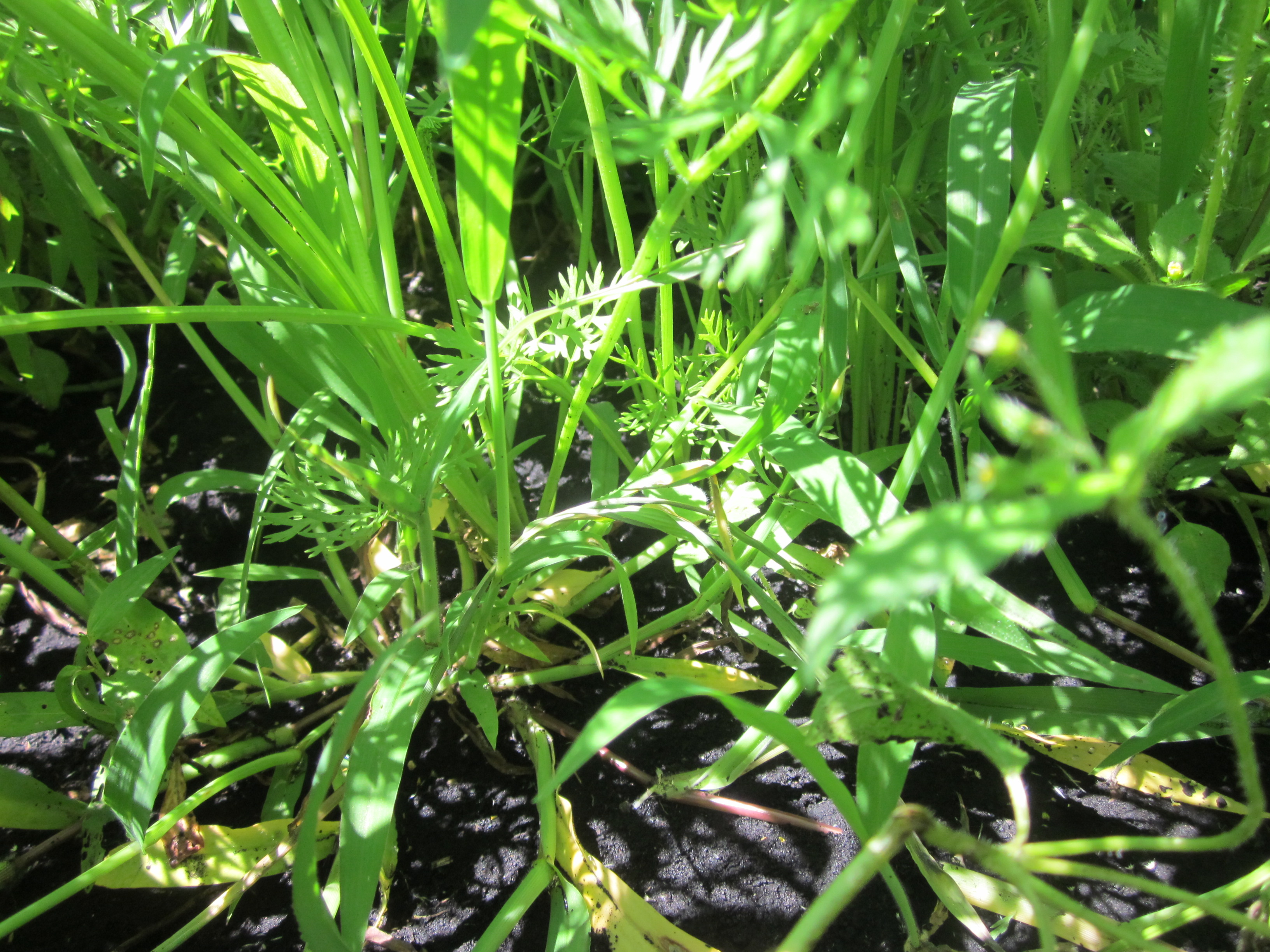
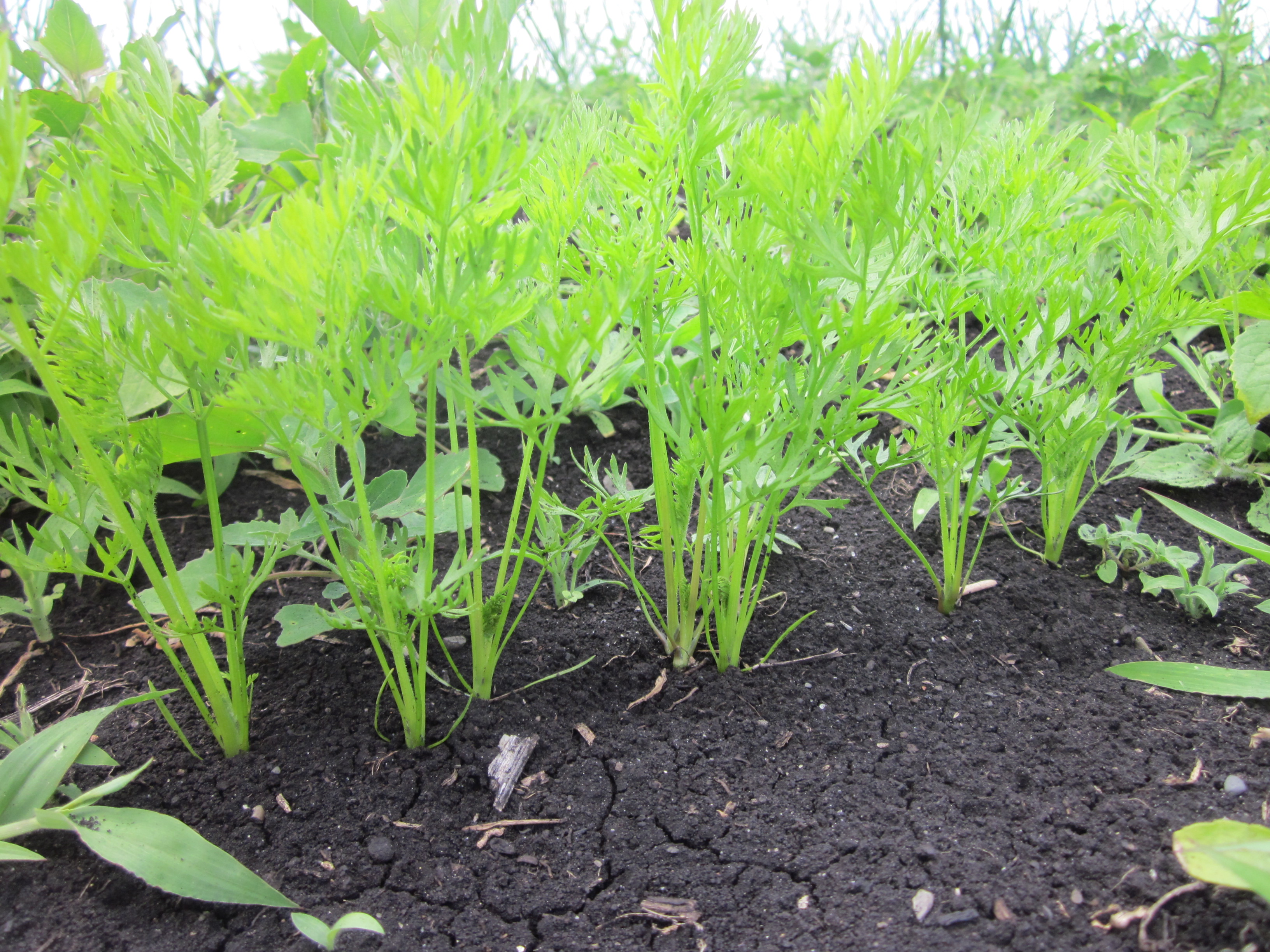
Carrots still in the ground from 4/19 and still tasty. The second planting of carrots were planted with better spacing in between, and better weeded. I was dismayed to find that some deer had chomped the plants and dug up a dozen roots. I guess Dan will lose some stinky old t-shirts as I put up some scarecrows next week.

Carrots

Carrots

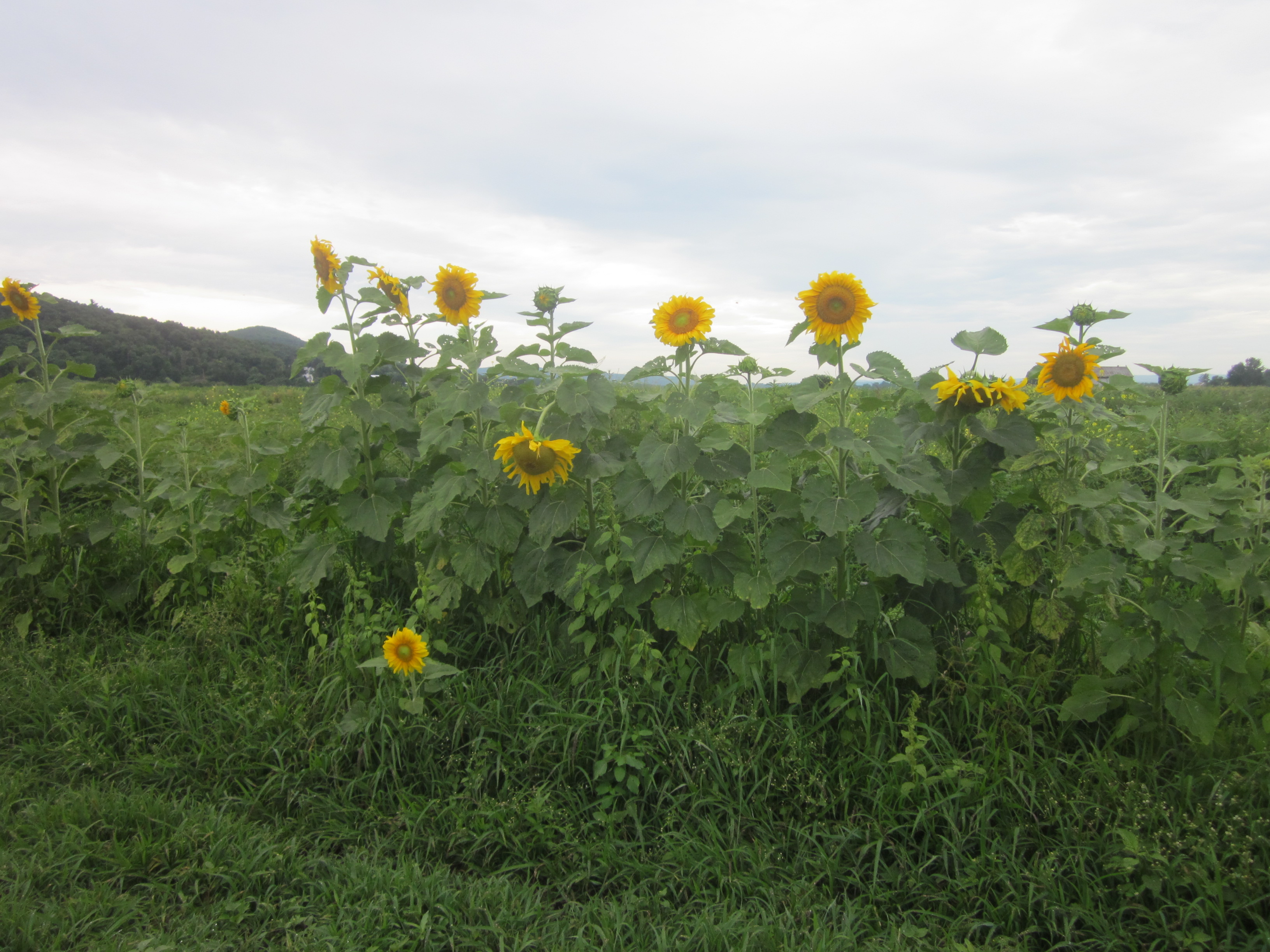
A short row of sunflowers bloomed, and many more are coming. These require 70 days to flower, 110 days for seed. Sunflowers can be used as a cover crop and tilled into the soil to build biomass anytime. But, we will attempt to let most go to seed and see if we can beat the birds and the rodents.
Sunflowers

Bees Love the Sunflowers

Posted in Uncategorized | Leave a comment

Prime of Summer

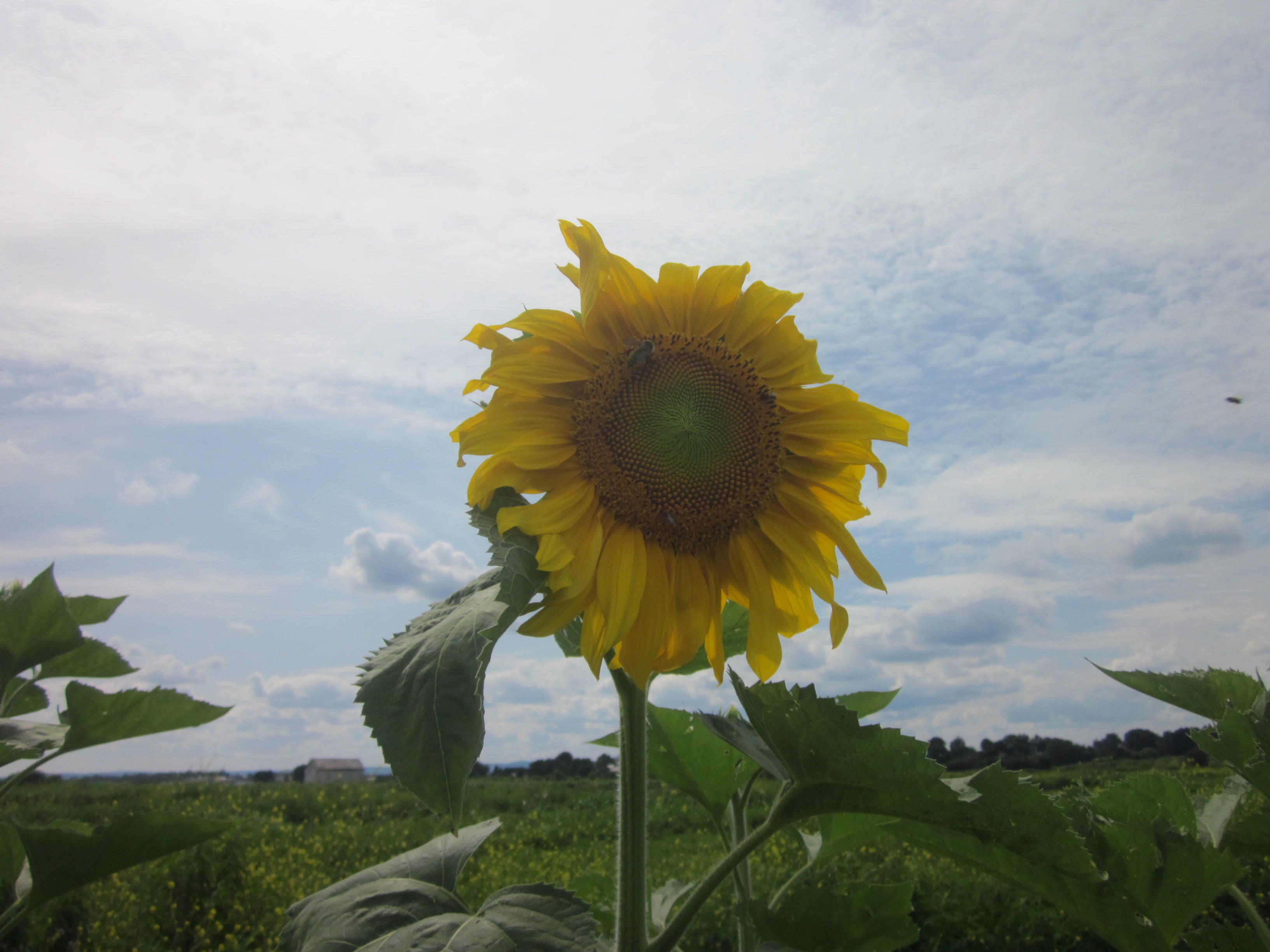
Every week brings surprises. The unwieldiness of the weeding tasks every weekend is punctuated by this bright, gigantic sunflower, whose stalk is far stouter than I would ever expect.

Hello Sun

Hello Sun

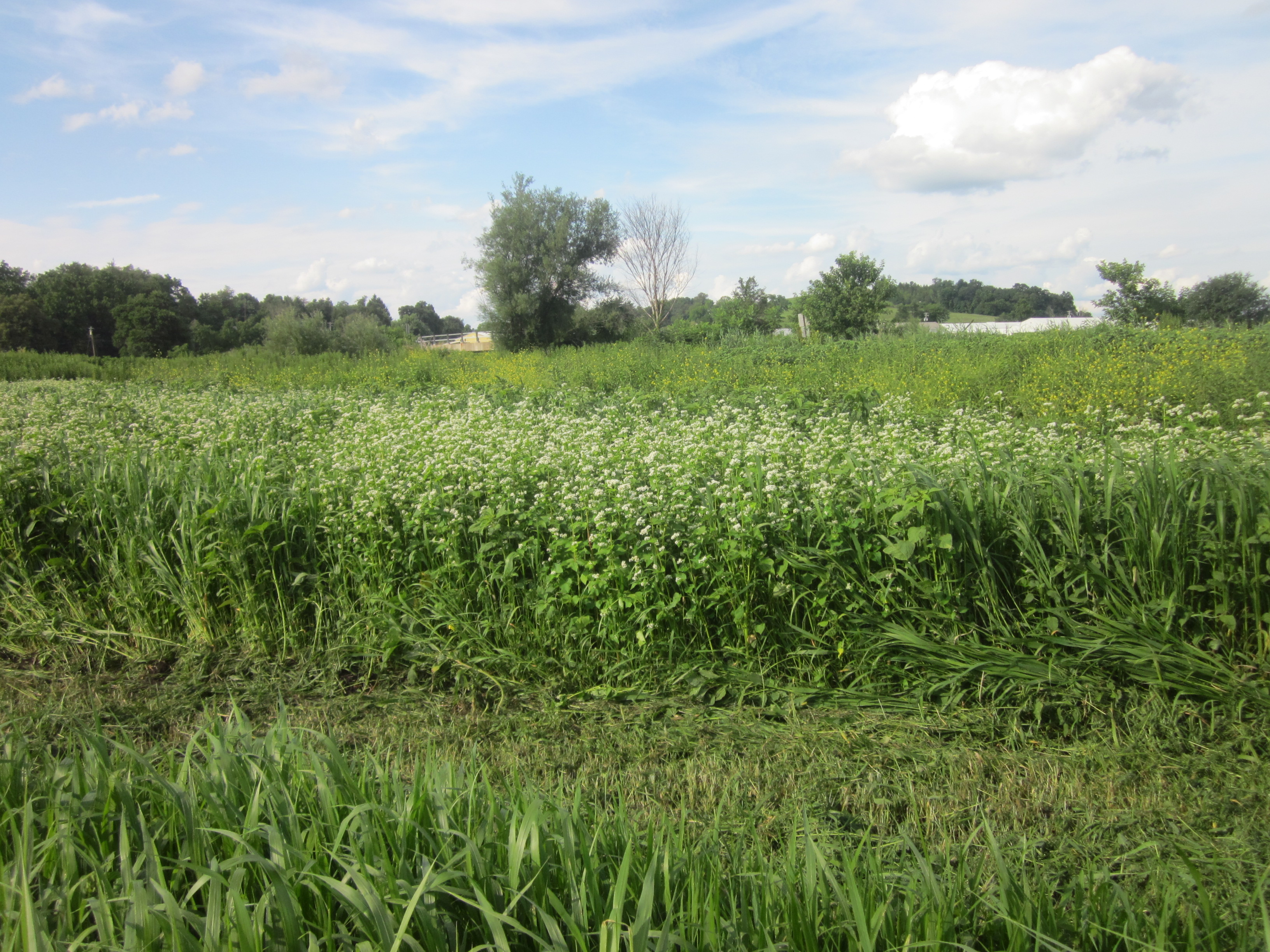
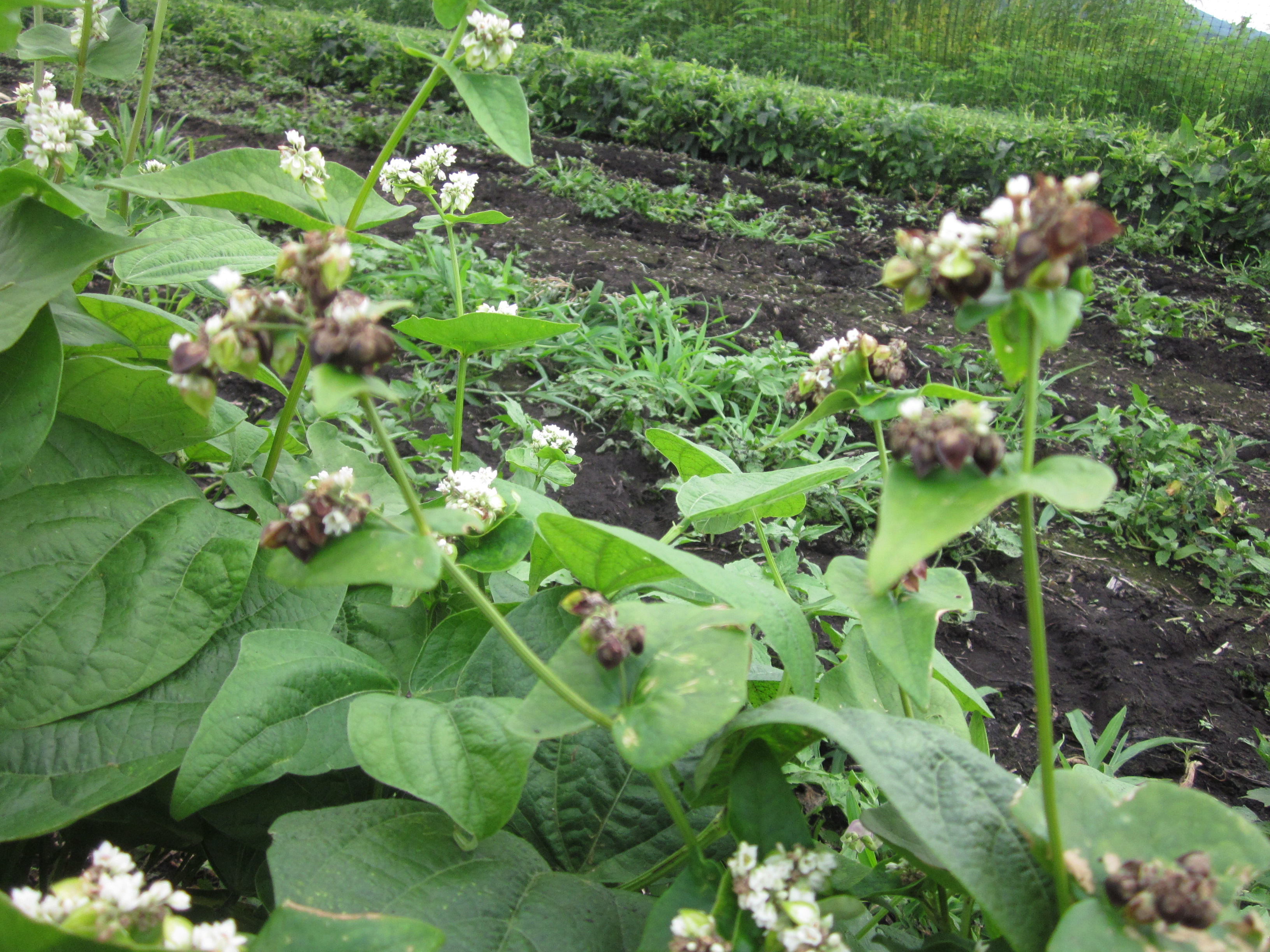
The 50 pounds of buckwheat seeded an area of the farm that is prone to flooding, though that was not a concern for this season. It’s flowering and about 4 feet tall. In a few more weeks, the seeds will set. Shall we attempt a low-tech grain harvest?

Fields of Buckwheat

Fields of Buckwheat

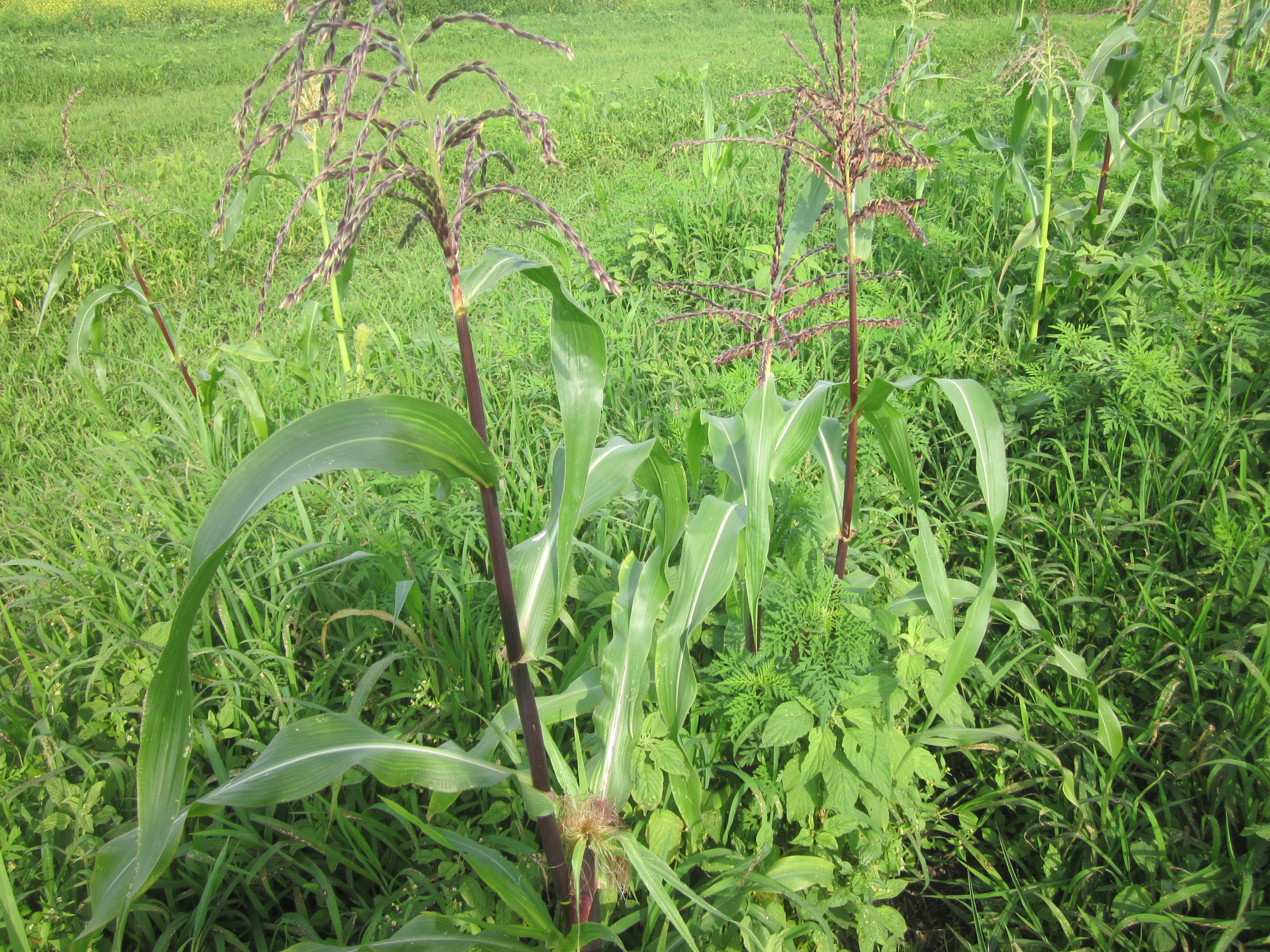
A-Maizing color on these dry corn! The “Painted Mountain” variety produce kernels in all shades, red, purple, organe. While using the corn planter, the dispensing mechanism kept getting clogged with dirt, so we had to go back over the short rows by hand. Needless to say, the rows are a bit spotty, and sad looking. We should hand pollinate the 50 plants – the top of the plant holds rice-like pollen, which needs to fall on the corn silk. Each silk results in a kernel!

corn_0722

Dry Corn “Painted Mountain”

Summer squash season is about to begin. The pattypan squashes had weed competition and have not matured as quickly, but these crookneck squash are looking great. All I can say is, zucchini bread, zucchini muffin, zucchini noodle, grilled zucchini, fried zucchini, zucchini a la mode.

crookneck_0722

Crookneck Squash

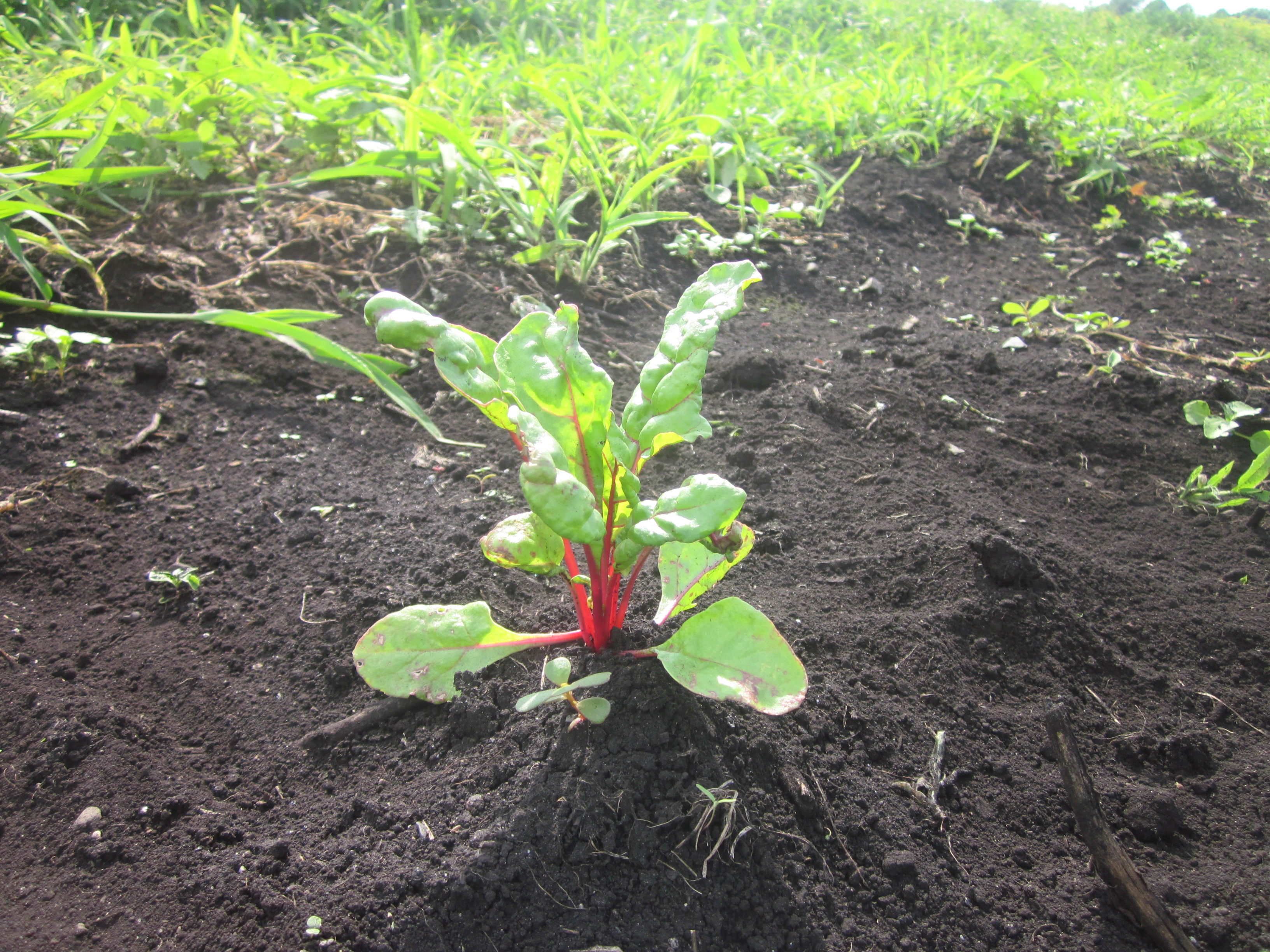
Rainbow chard regaling in hand-weeded row.  Dan claimed he couldn’t tell the weeds from the chard, but after 10 minutes, he gained his vegetable eyes!

chard_0722

Rainbow Chard

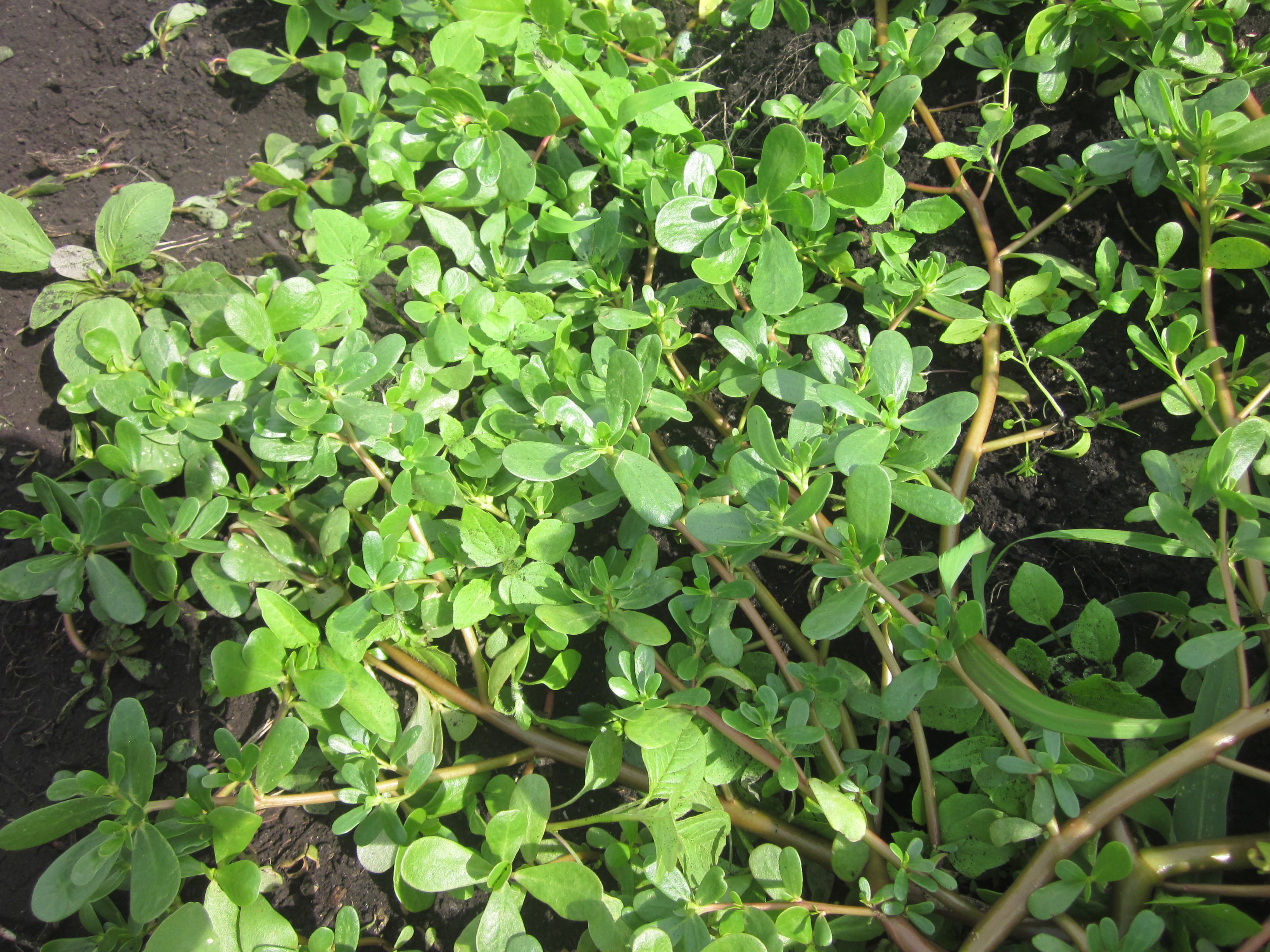
Mid-july is prime purslane season. They hug the weeded soil and spread out 2 feet in all directions. In weedy areas, they grow vertically and leverage other weeds to gain access to sun. At this point, they are everywhere near a cultivated vegetable row. I’ve eaten a few in the field, but have heard they become mucilaginous when cooked, almost like okra. It’s gaining favor in certain circles as a super food high in omega 3.

purslane_0722

Purslane, Eat it or Weed it

Posted in Uncategorized | Leave a comment

Suddenly Garlic

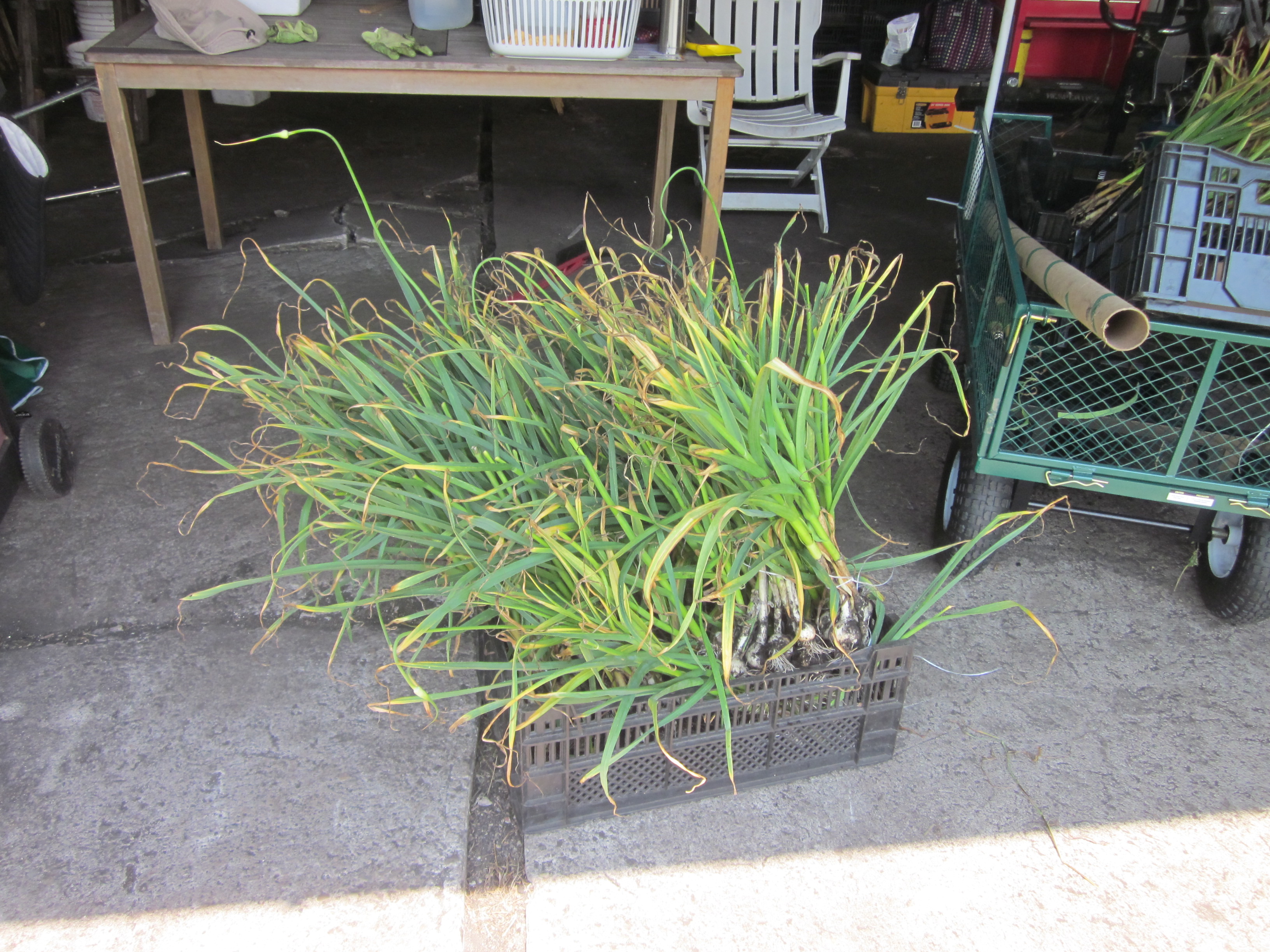
The fall-planted garlic suddenly seems ready for harvest. The scapes were harvested several weeks ago and the top leaves are yellow and brown. If they stay in the ground too long, the stem breaks off when you pull the bulb.

Garlic Leaves Yellowing

Garlic Leaves Yellowing

Then you cure the bulbs by hanging them up to dry out for 6 to 8 weeks. The paper skin forms so that they can be stored and used throughout the next season. In our case, we will use some, and leave the rest as seed garlic for next season. I can’t wait for mid-October!

Collected For Curing

Garlic Harvested

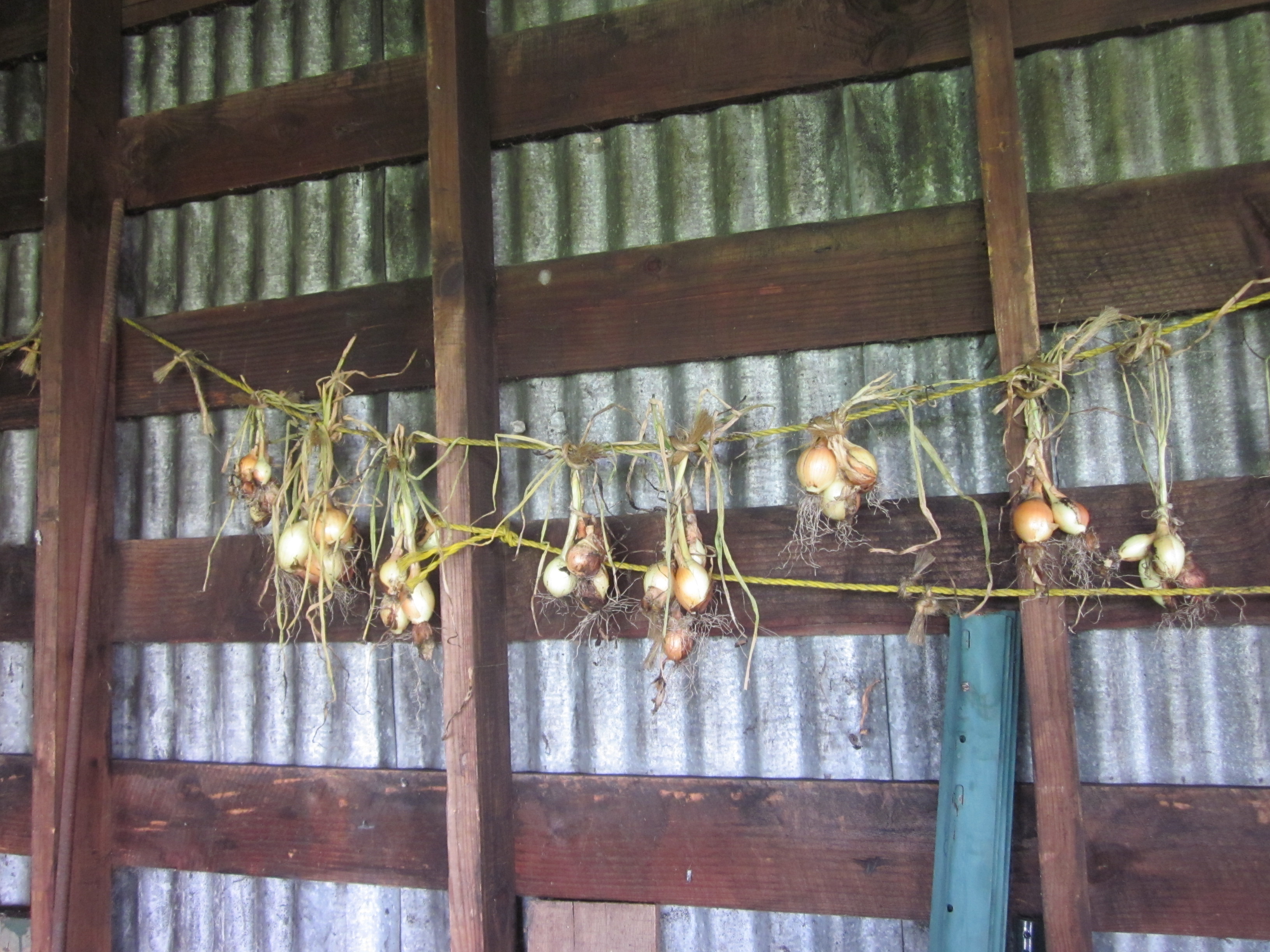
In this black dirt region, famed for its onions, you can begin to smell onion wafting in with the breeze. You see flattened fields of disarrayed yellow and green, in contrast to the normally blue-green fields of soldier-straight onion plants. The onions collected last week were hung up to cure and are coming home this week. The green tops have yellowed and dried out and a thin paper wraps around each bulb.

onion_0707

Onions Curing

Remember the radish that had been planted too closely and underharvested and bolted? We didn’t even have time to mow or till it under. I looked some alien-looking seedpods and wondered, but is it edible? Turns out they are and quite a delicacy at that! They have a more subtle radish flavor, with less of the radish bitterness. There’s even a variety that is primarily grown for its pods, albeit with a less appealing name “Rat tail radish”. Each plant can produce up to hunds of pods. I can already see specialty pickles somewhere on a menu.

Radish Seed Pods

Radish Seed Pod Surprise

Some of the buckwheat plants that came up early are setting flowers and seeds. I am curious to try making kasha, which is a toasted buckwheat. When a plant is 2/3 brown, you cut the plant and let it dry. When dried, thresh the seeds by beating bunches of it against a screen.
007

Buckwheat Setting Seed

008

Buckwheat Flower and Seed

Last weekend I took to macheting away the weeds that were suffocating the flowers. Yes, macheti-ing is a new word just made up. It seems the plants like it. These flowers are all edible and can be added in small amounts to salads. I’ve read about freezing them inside ice cubes for a pretty drink garnish – even for me that is way too much work (do you know what I’d have to do to wrangle that much freezer space just to make pretty ice cubes?)
016

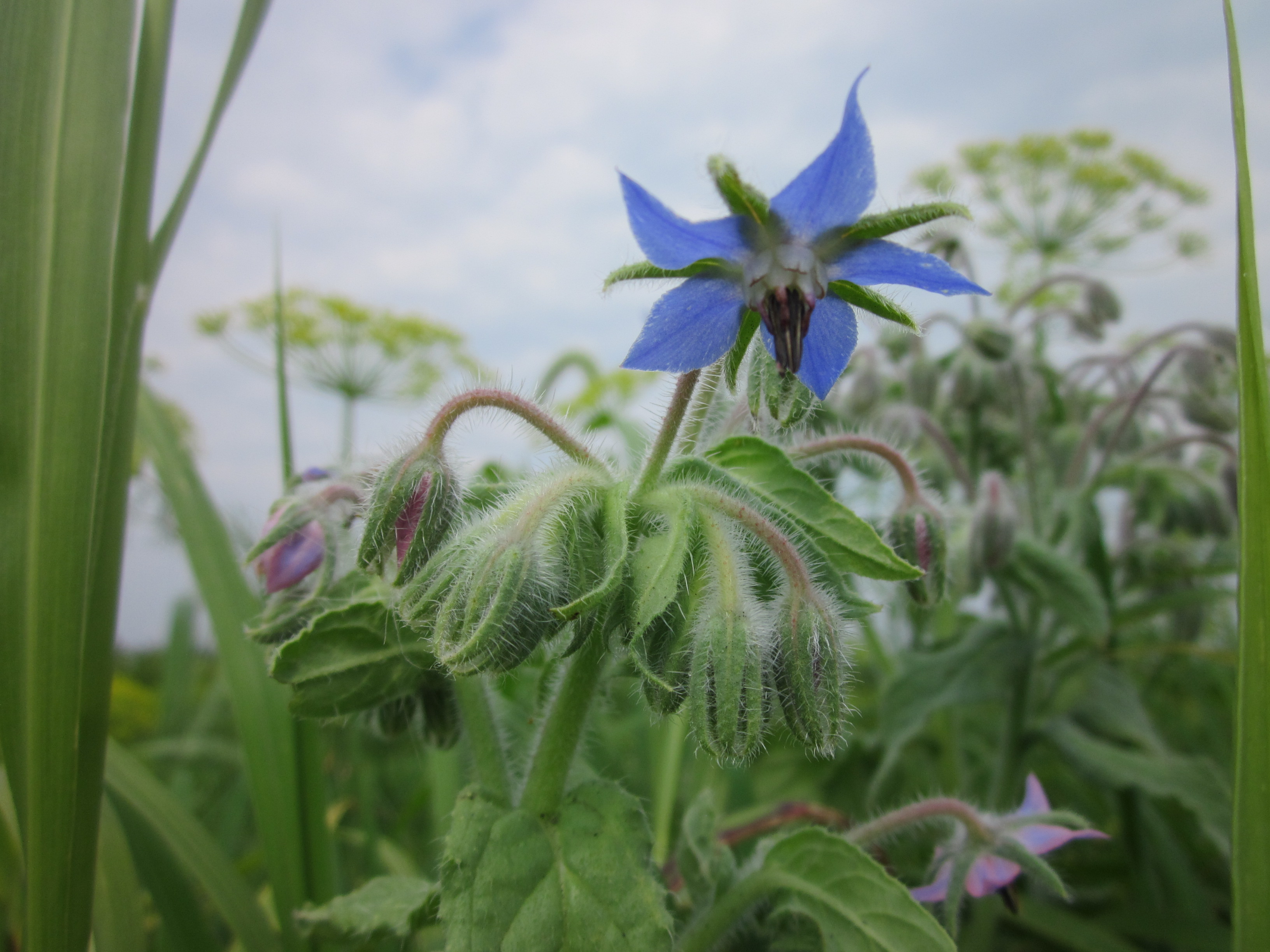
Borage, Blue and Pink

013

Nasturtium, Empress of India

014

Marigold

Some spots are showing up on cucumber plants, and some varieties of winter squash and pumpkins. It’s some kind of blight. I can’t claim ignorance since a long-time farmer told me that’s how it starts. Maybe I need to explore fungicide preparations and look into compost teas and neem oil.

009

Cucumber, Oh Oh Is That Blight?

Posted in Uncategorized | Leave a comment

Beans Beans They Make You …

… no no not that. They make you work because when they are ready and you’d better be picking.

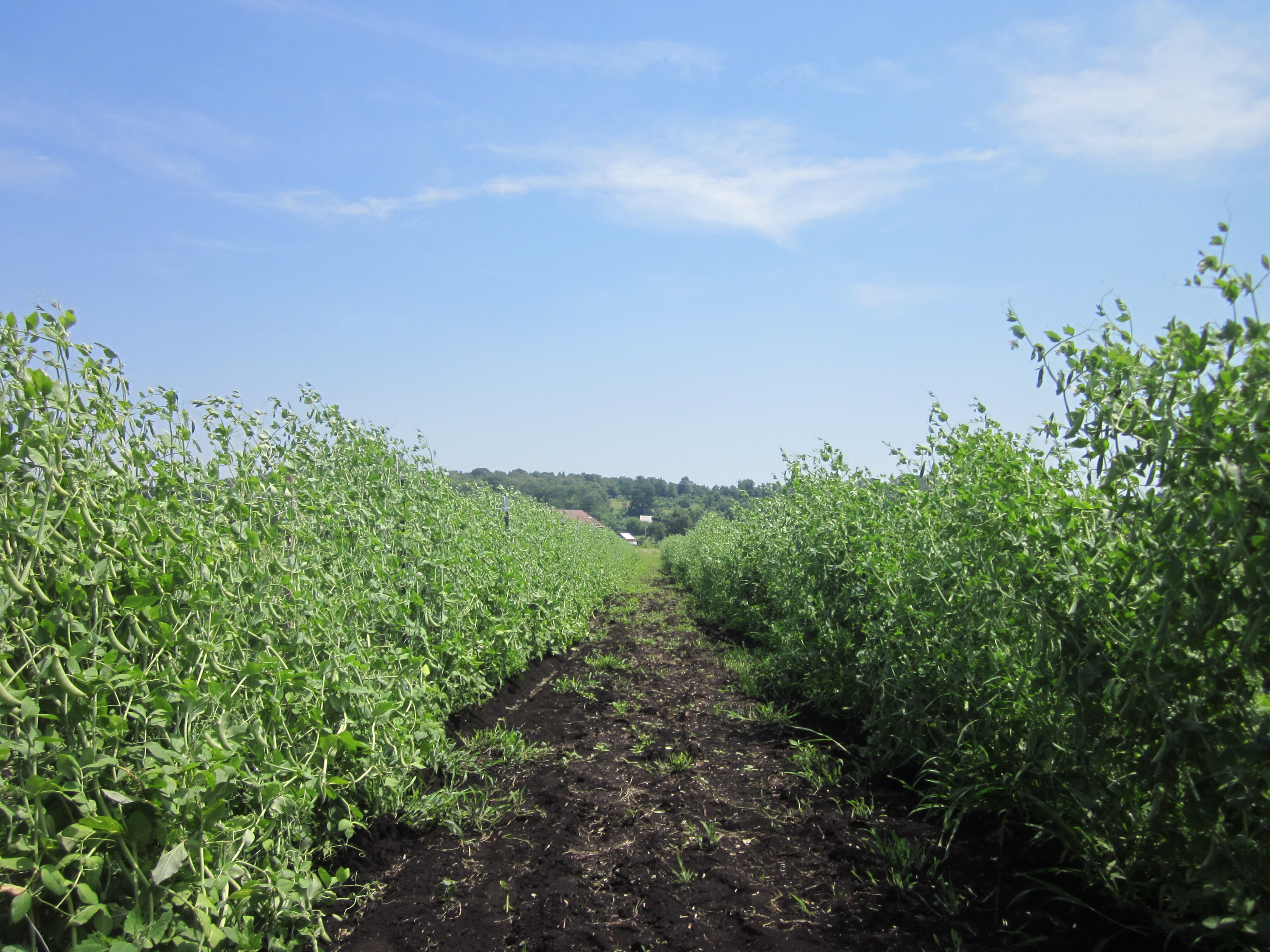
Snap Pea Rows

Snap Pea Rows

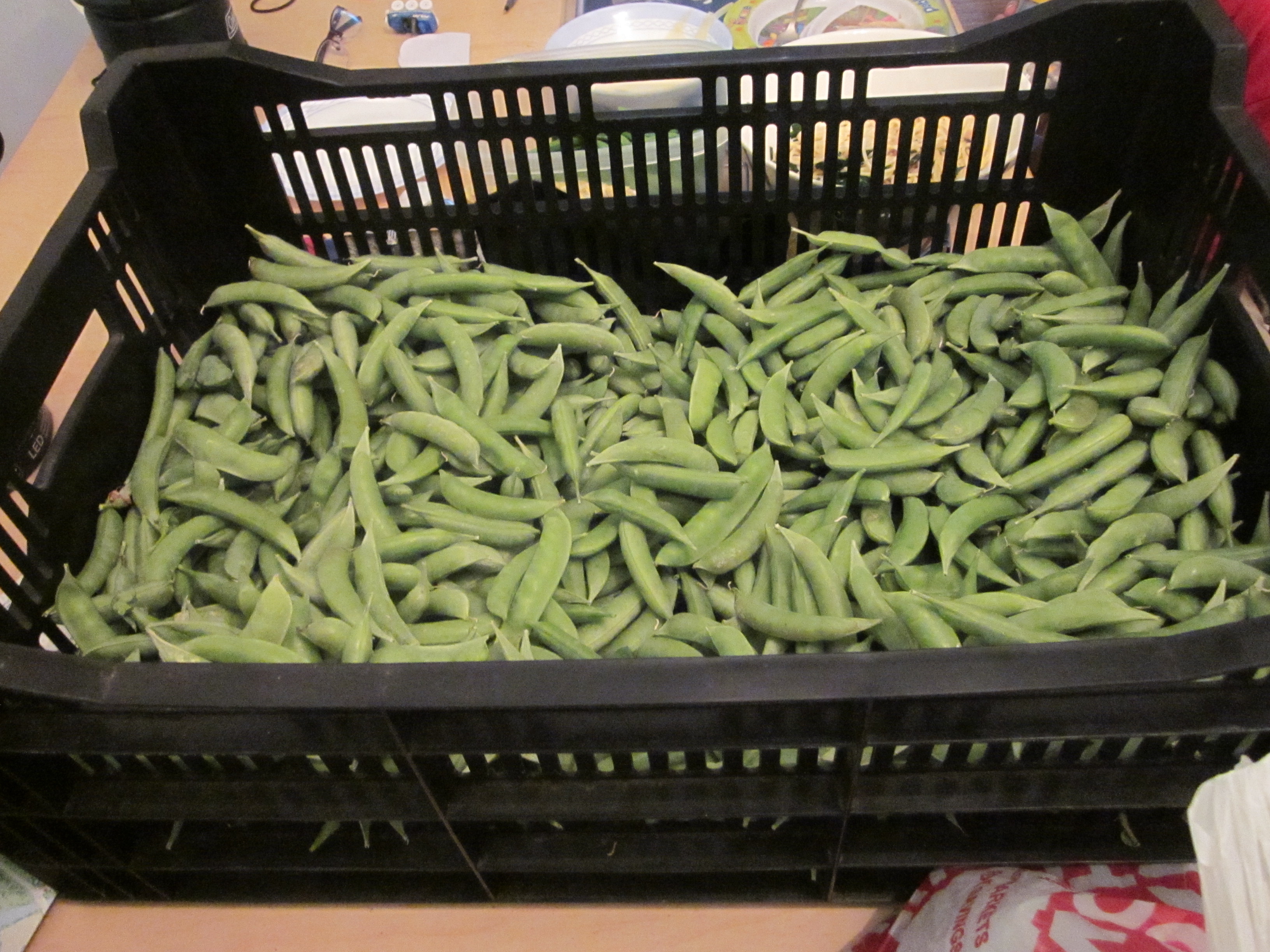
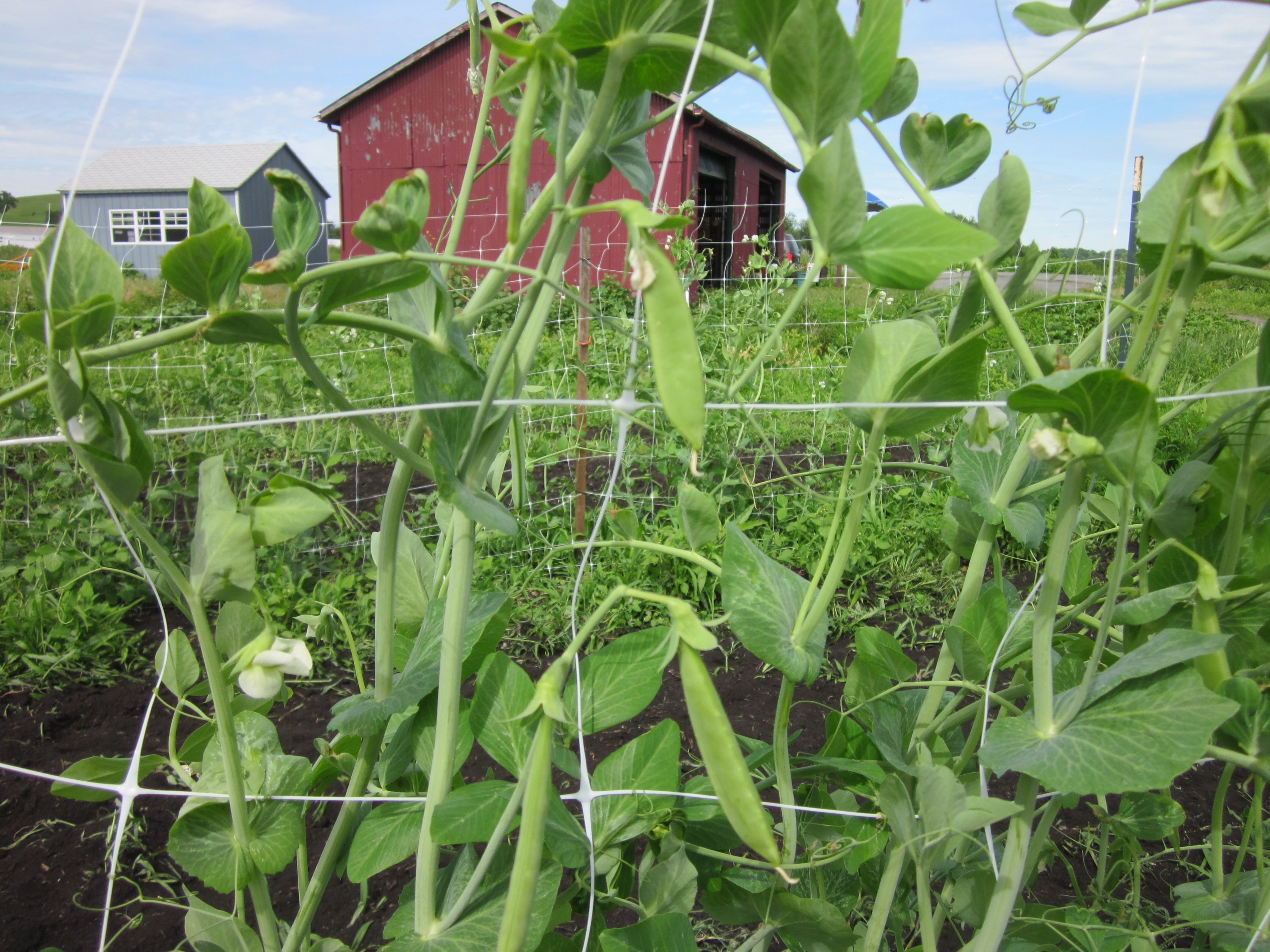
The sugar snap peas are at their peak. They have climbed to about 6 feet tall and are producing abundantly.

Snap Peas

Snap Peas

At end of this weekend, I collected 30 pounds from one side of a row, just to remove the large pods and encourage more growth. First task next weekend is to pick more!

30 pounds

30 pounds

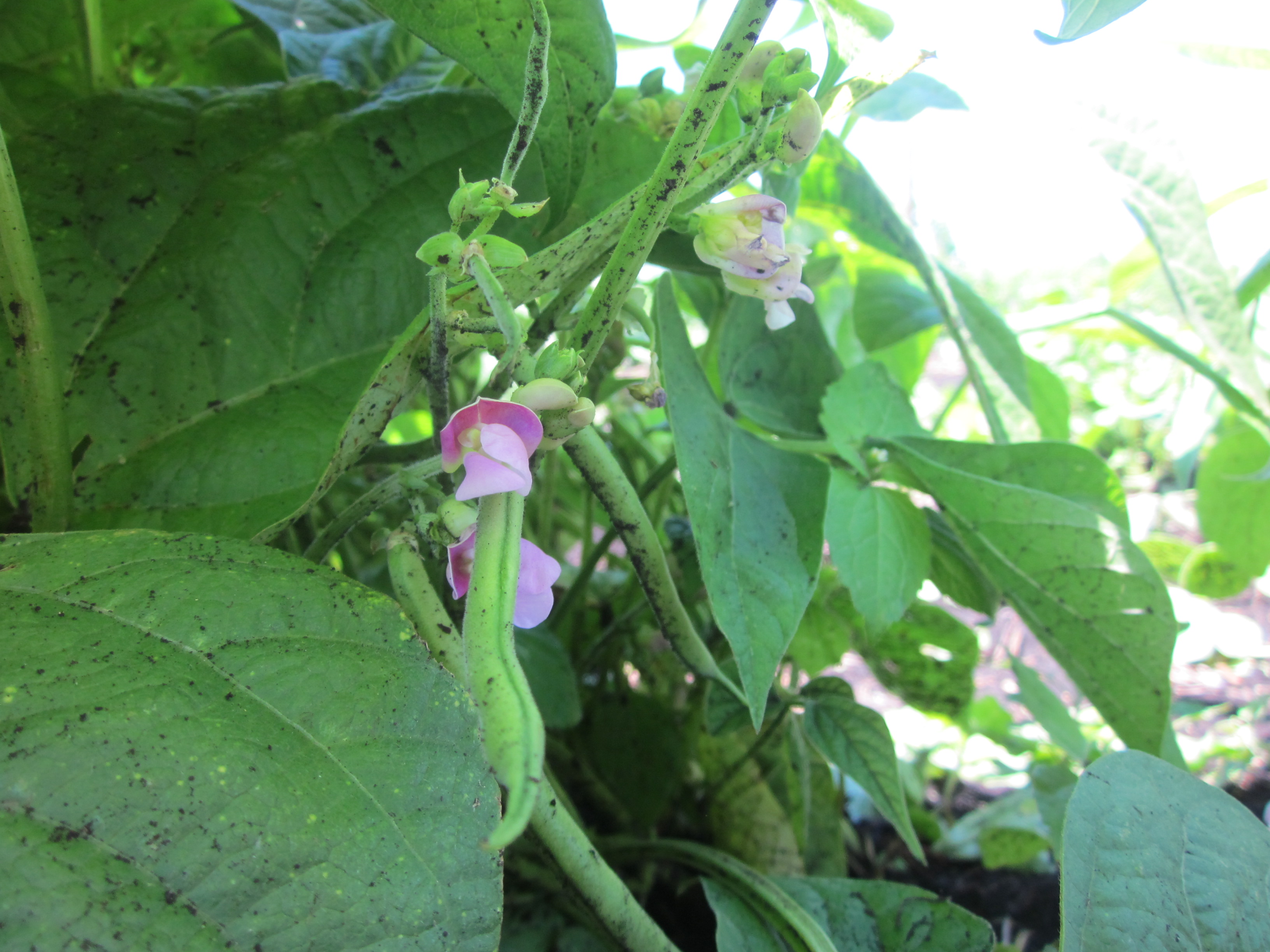
When I first checked, the green beans were very thin. 24 hours later, they are ready!

Green Beans

Green Beans

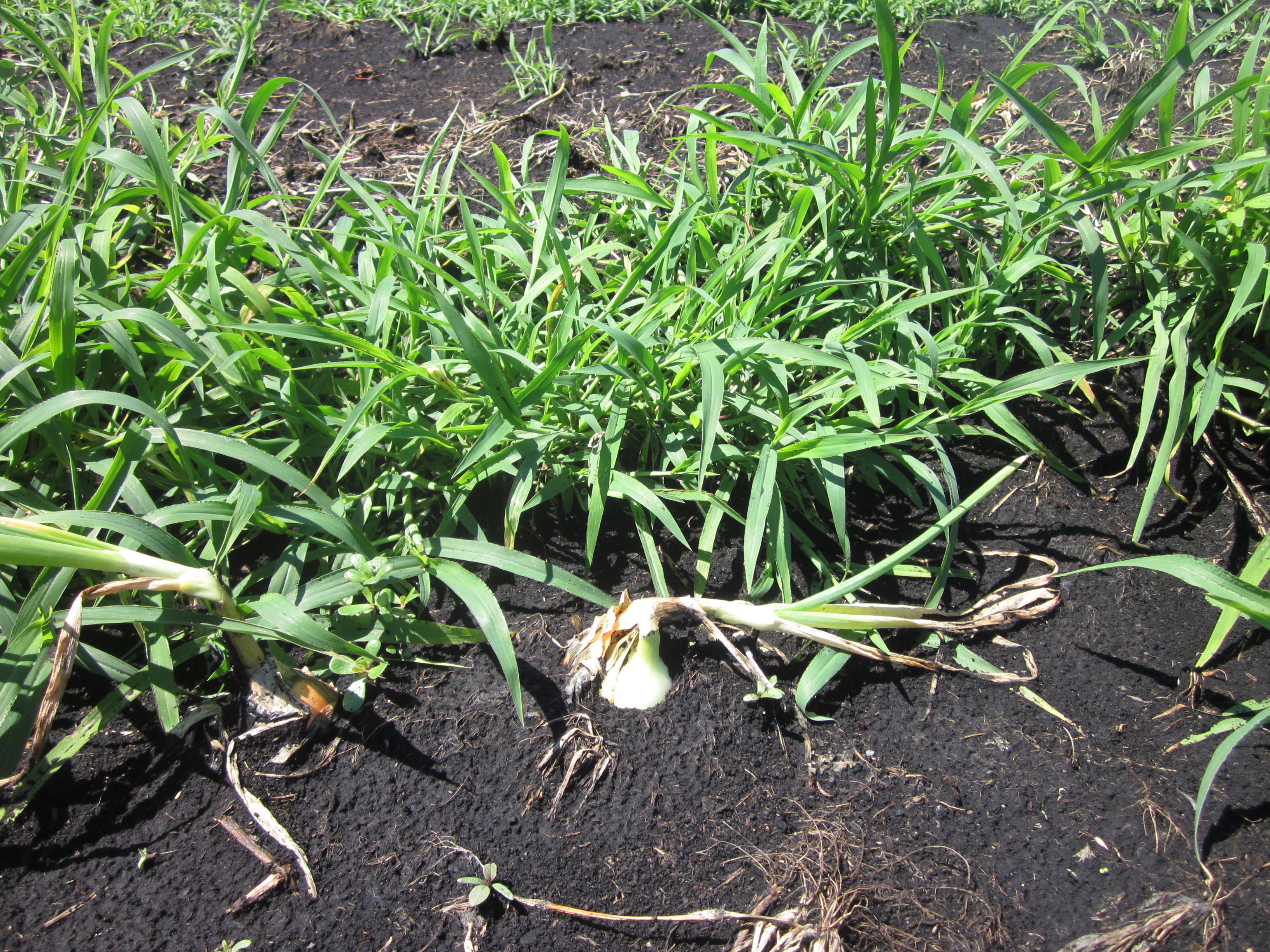
The tops of the onions have fallen over, which means its time to collect them. Those we seeded in the early days, in rows 6 inches apart, never made it. First, it was a cool spring and they sprouted very slowly. Once sprouted, I had not yet discovered some of the weeding tools. When I did figure out how to weed, I realized those 6 inch rows are not hand-weeding friendly. They are basically designed for large farms that spray herbicides, or large farms that have very expensive equipment. These were planted in a single row, from plants and sets, and were visible and accessible when we needed to get rid of weeds. Lesson learned? don’t grow onions. Maybe next year I can grow shallots properly.

Onions Are Ready

Onions Are Ready For Dinnner

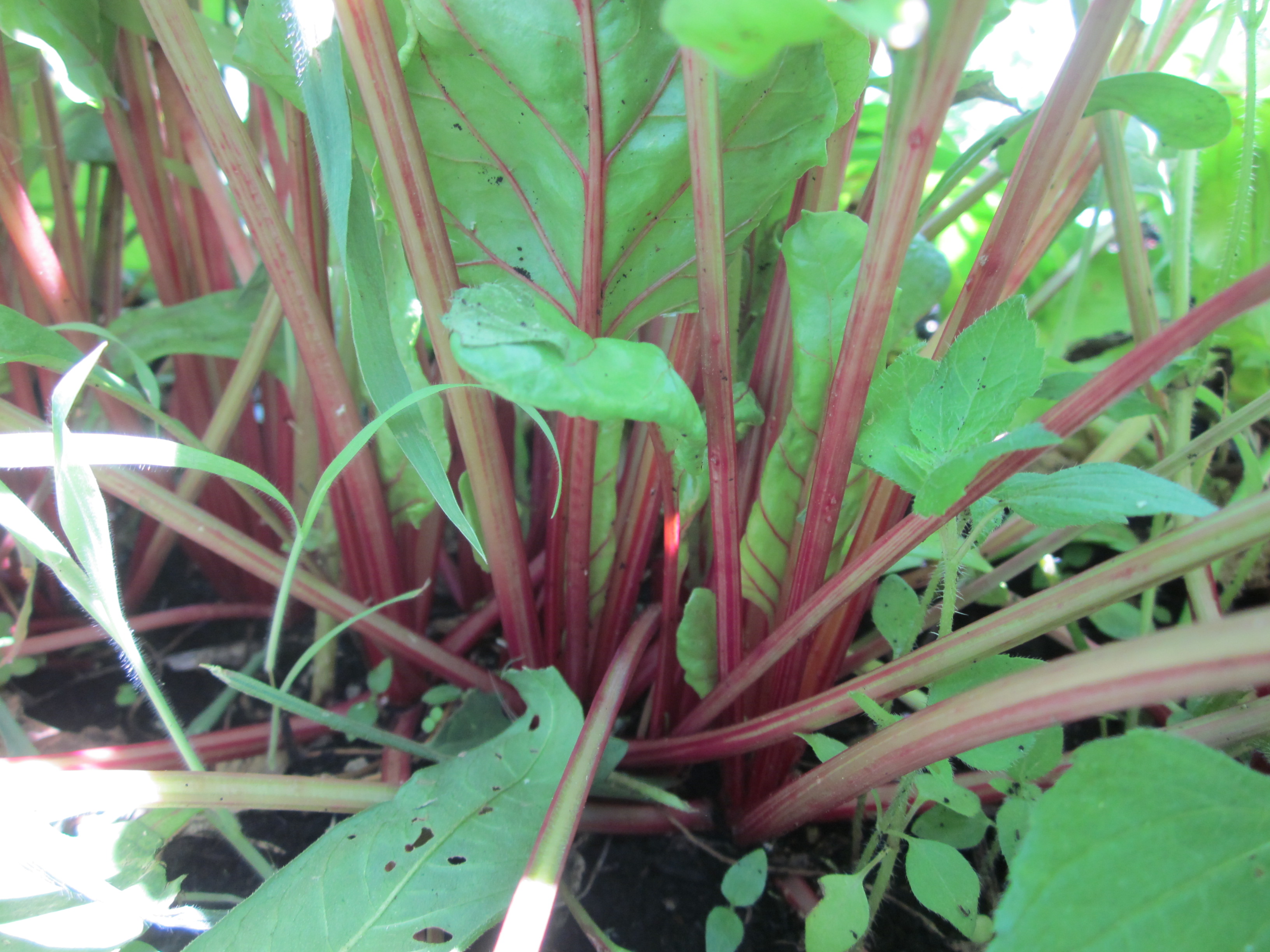
With last week’s harvest, the remaining chioggia beets may have a chance to size up. They were seeded on 4/19, so at 77 days, their time is about up. Lesson learned? use a seeder which will give the right spacing for growing seedlings.

Beets

Beets

Carrots are just about ready. They were seeded by hand and didn’t get weeded much, but they still came up. There is a technique called flame weeding, and it works for carrots because the seeds take so long to germinate.  We now have a torch, maybe I can try that for the fall planting of carrots.

Carrots

Carrots

Posted in Uncategorized | Leave a comment

Understory

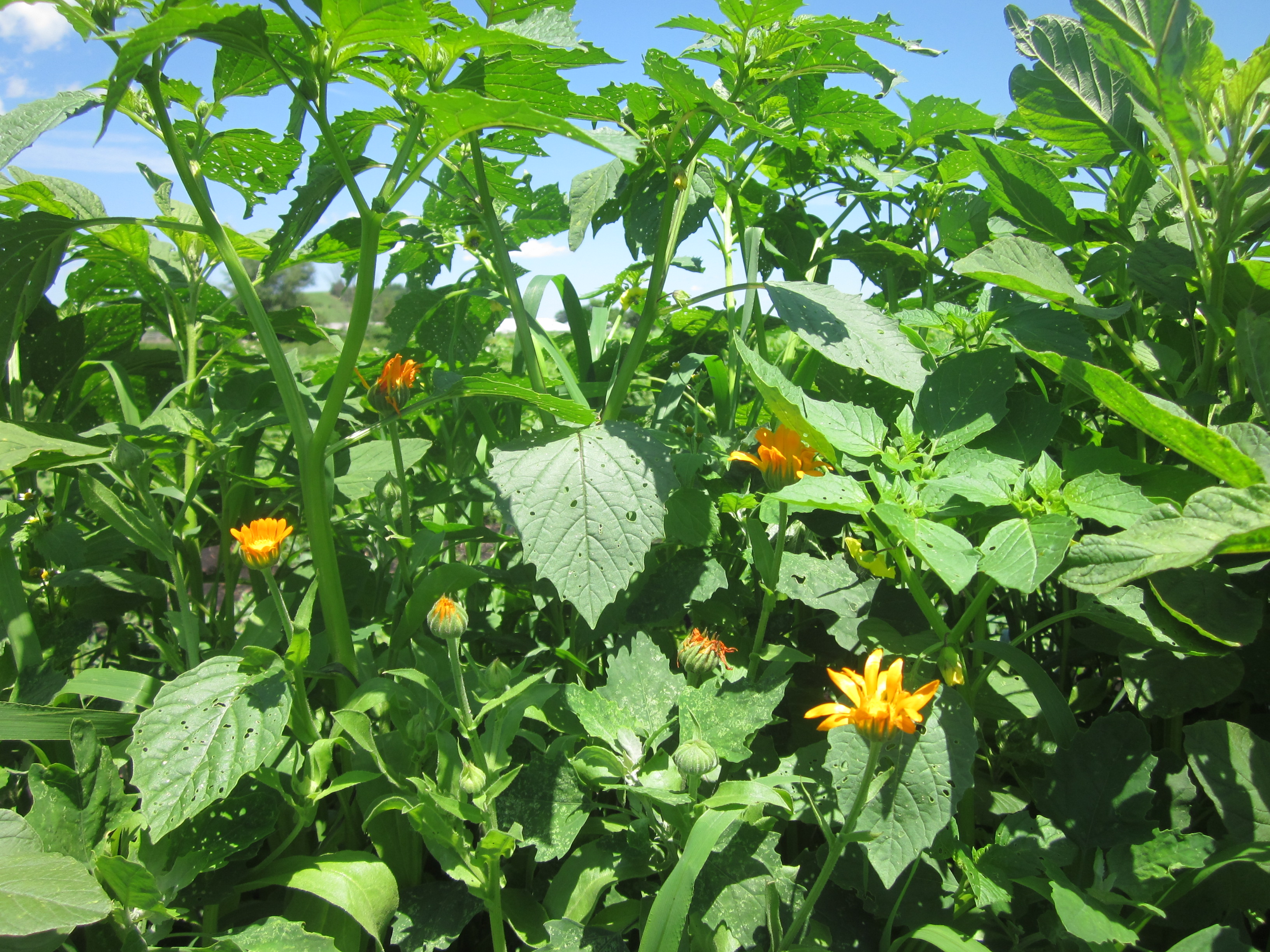
Several humid days and a shower last week and the weeds are clearly winning. Some of the vegetables nearing its harvest date I am no longer weeding. Flowers I had started are nowhere to be seen. But when I leaned in closer, there were some surprises in the understory. The calendula flowers made it despite its short stature.

Calendula

Calendula

The towering plants surrounding the calendula included 2 foot high grass, green amaranth, and tomatillo plants that started from last year’s leftover fruits! Most of the suspected tomatillo plants were in tractor lanes or inconveniently located near sugar snap peas, and have been pulled or mowed. Since we never had enough time to weed the flower rows, these plants thrived. Nature did some bonus planting for me.

Tomatillo Surprise

Tomatillo Surprise

Nasturiums also made it in the understory of towering weeds. I spent some time chopping away some weeds, the sun should do them some good in the next week.

Nasturtium

Nasturtium

Marigolds also made it in the shade.

Marigolds

Marigolds

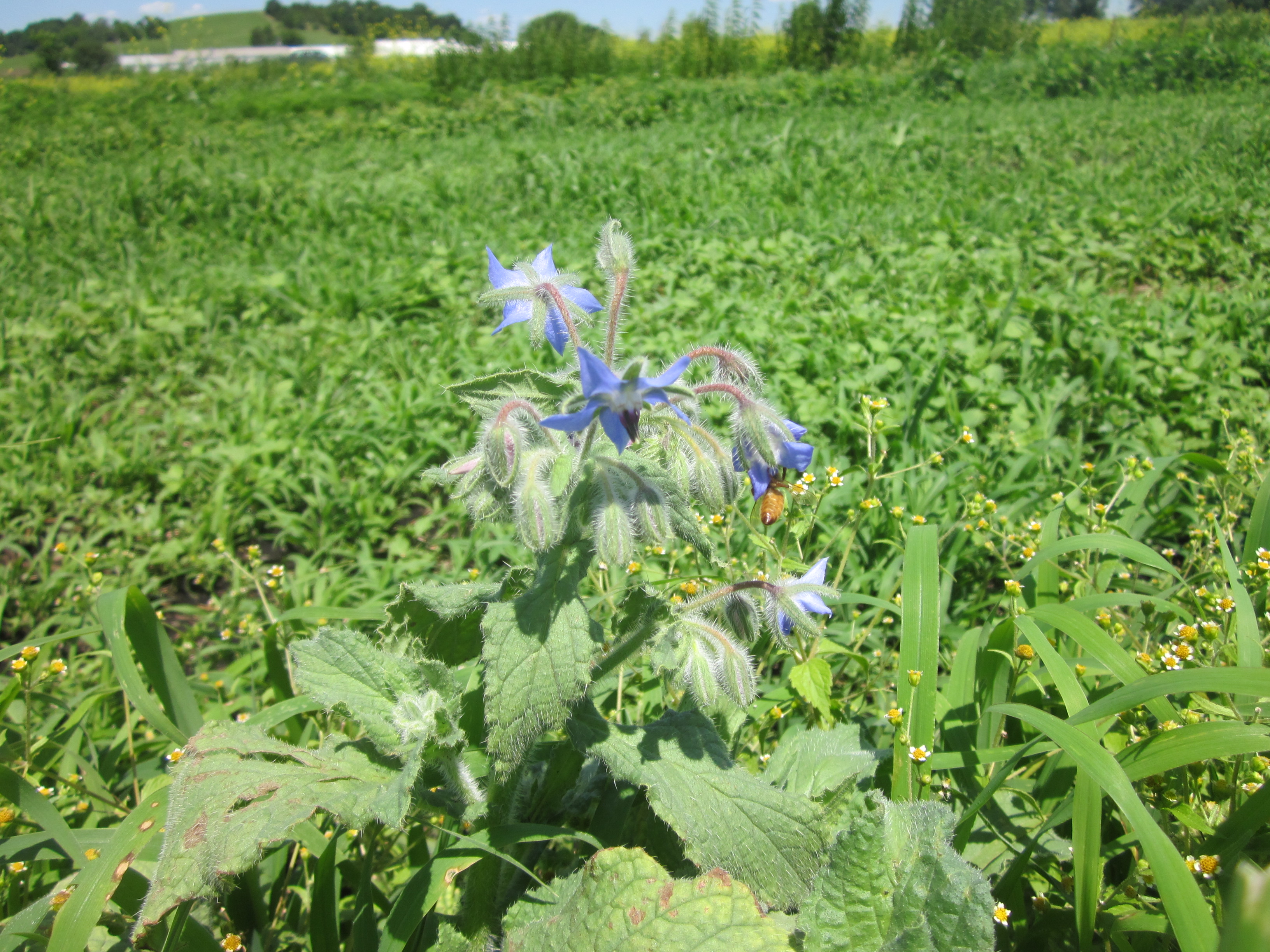
Borage is an annual herb with edible blue flowers. It is supposed to be a good companion plant to tomatos.

Borage

Borage

Posted in Uncategorized | Leave a comment

Beet Me To It

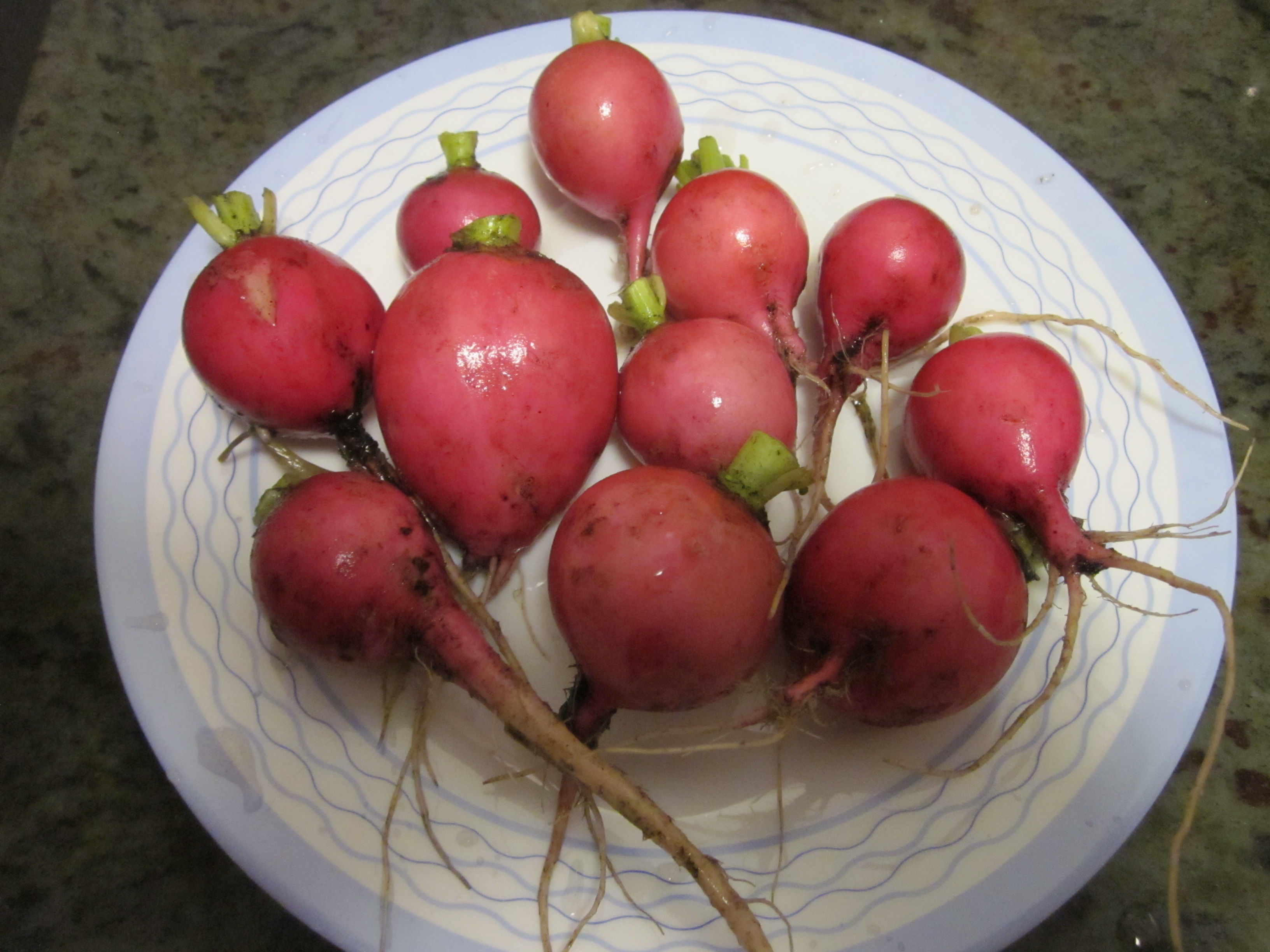
Ironically as most people are starting their summer season, we are on the downward slide out of the growing season. The radish and asian greens have way too much time in the ground and are done. As the weather heats up, cool-weather crops begin to bolt and go to flower.

radish_0614

Radish “Pink Beauty”

Radish Flower

Radish Flower

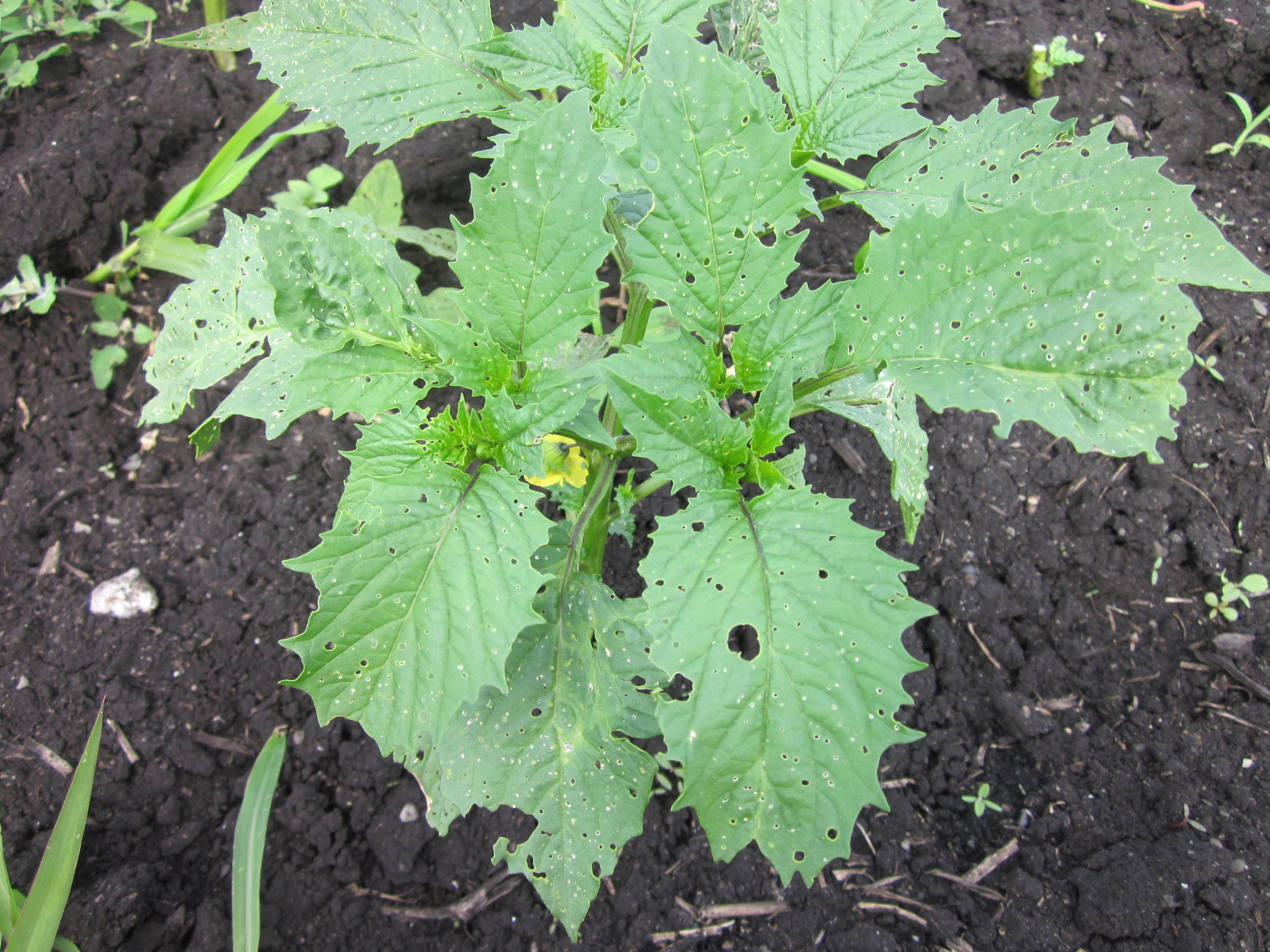
Most of the hot-season crops, such as squashes and corn, have been planted. There were leftover pumpkin seeds that I’d been meaning to plant, but had not, won’t make it into the ground in time to mature. I’m just a tad late on tomatillo, and additional cucumbers, but think I can get them in the ground next week. These might in fact be volunteer tomatillo plants from last year’s seeds, but I can’t be sure the leaves are supposed to be this jagged. Well, Dan ran over it with the tractor, so maybe I don’t have to worry about figuring out which type of nightshade plants these are. (Nightshade family of plants include potato, tomato, eggplant, peppers but also poisonous plants such as belladonna.)

Volunteer Tomatillo?

Volunteer Tomatillo?

Toward mid-summer, we can begin planting for cool fall-season crops that are quick to mature (such as radish, asian greens). Calculations now revolve around the expected frost date in October for frost-hardy plants such as kale and leeks.

I remembered to check on the beets before finishing up and found some golf ball sized beets. These Chioggia beets are an italian heirloom from the Venice area, and show beautiful concentric rings of red and white. They were seeded on 4/19 and were supposed to be ready in 55 days, about 6/13. 2 weeks late seems about right for this season.

001

Chioggia Beets with Beet Greens

I removed the leaves and sauteed them with onions. The roots were boiled, peeled, and sliced crosswise. Delicious and beautiful. Next time you are at a farmer’s market… oh nevermind, just sign up with me and I’ll plant accordingly for the fall.


Posted in Uncategorized | Leave a comment

We Made The Menu

Image

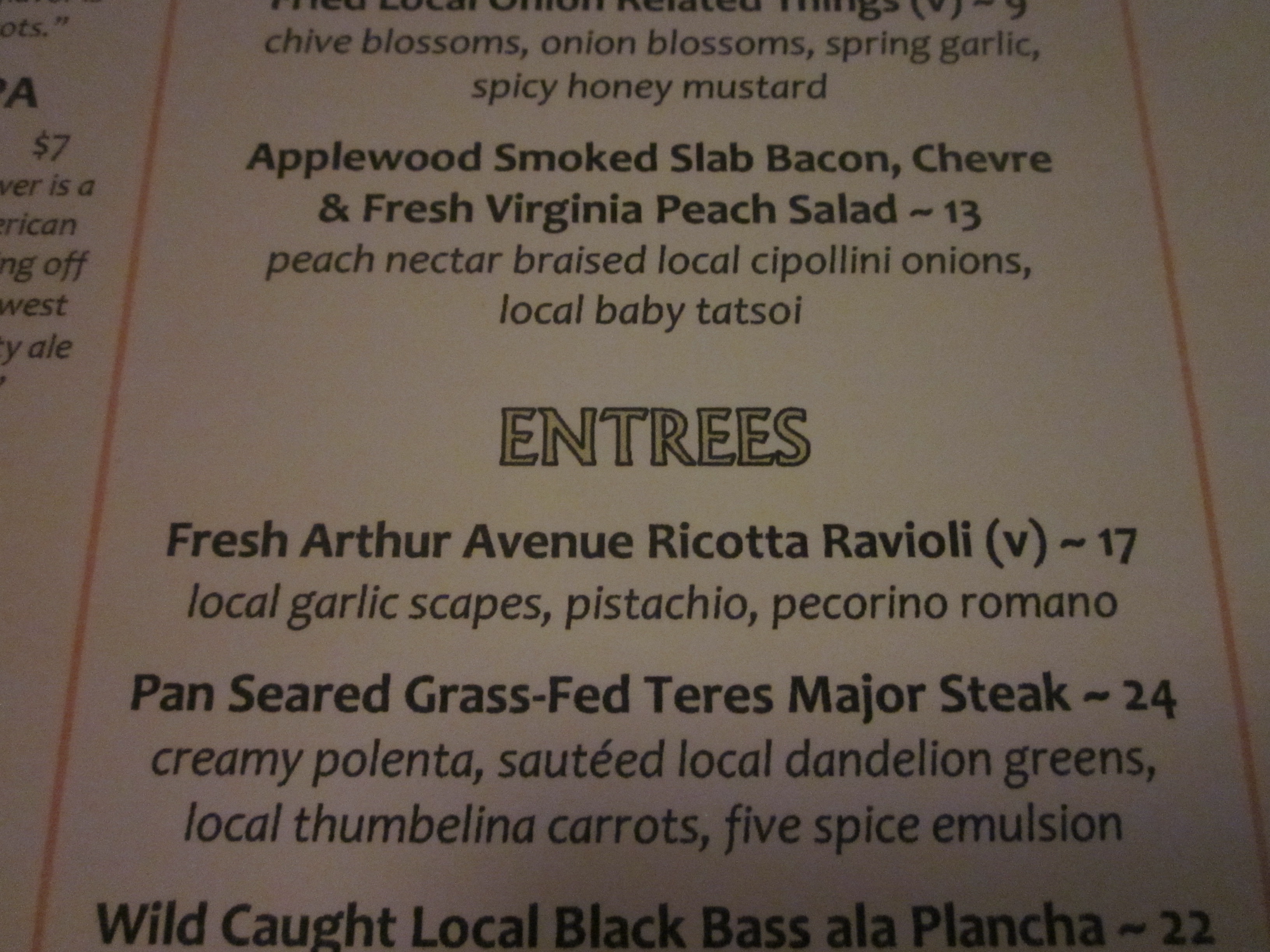
We made it onto the Indian Road Cafe menu this week. The garlic scapes are served with Arthur Avenue ricotta ravioli! I’ve been making korean-style pajeon with the scapes. It’s a savory pancake that cooks up very quickly, has a delicate crunch, and is an awesome and quick appetizer. Want the recipe?

Korean-style Scallion Pancake

  • 1 cup flour
  • 1/4 cup corn starch
  • 1 tsp baking powder
  • 1 tsp salt
  • 1 cup seltzer
  • 6 scallions or garlic scapes
  1. Cut scallion into 3 inch pieces
  2. Mix dry ingredients (flour, corn starch, baking powder, salt)
  3. Mix seltzer into dry ingredients
  4. Working quickly, put scallion into batter
  5. Heat 2 teaspoon oil, pour batter and scallion into pan. Cook each side about 4 minutes until lightly browned.
  6. For dipping sauce, mix 2 Tb soy sauce, 2 tsp sesame oil, 1 Tb sugar, 1 Tb rice vinegar. Optional: ginger, sesame seeds.
Posted in Uncategorized | Leave a comment

Do Be Snappy About It

I had my doubts about the timing of sugar snap peas, but ladies and gents, here they are. They are 4 feet high, and still have a couple more to go. The flower pairs on side shoots grow into the peas – are flat when young, and then plump up quickly.
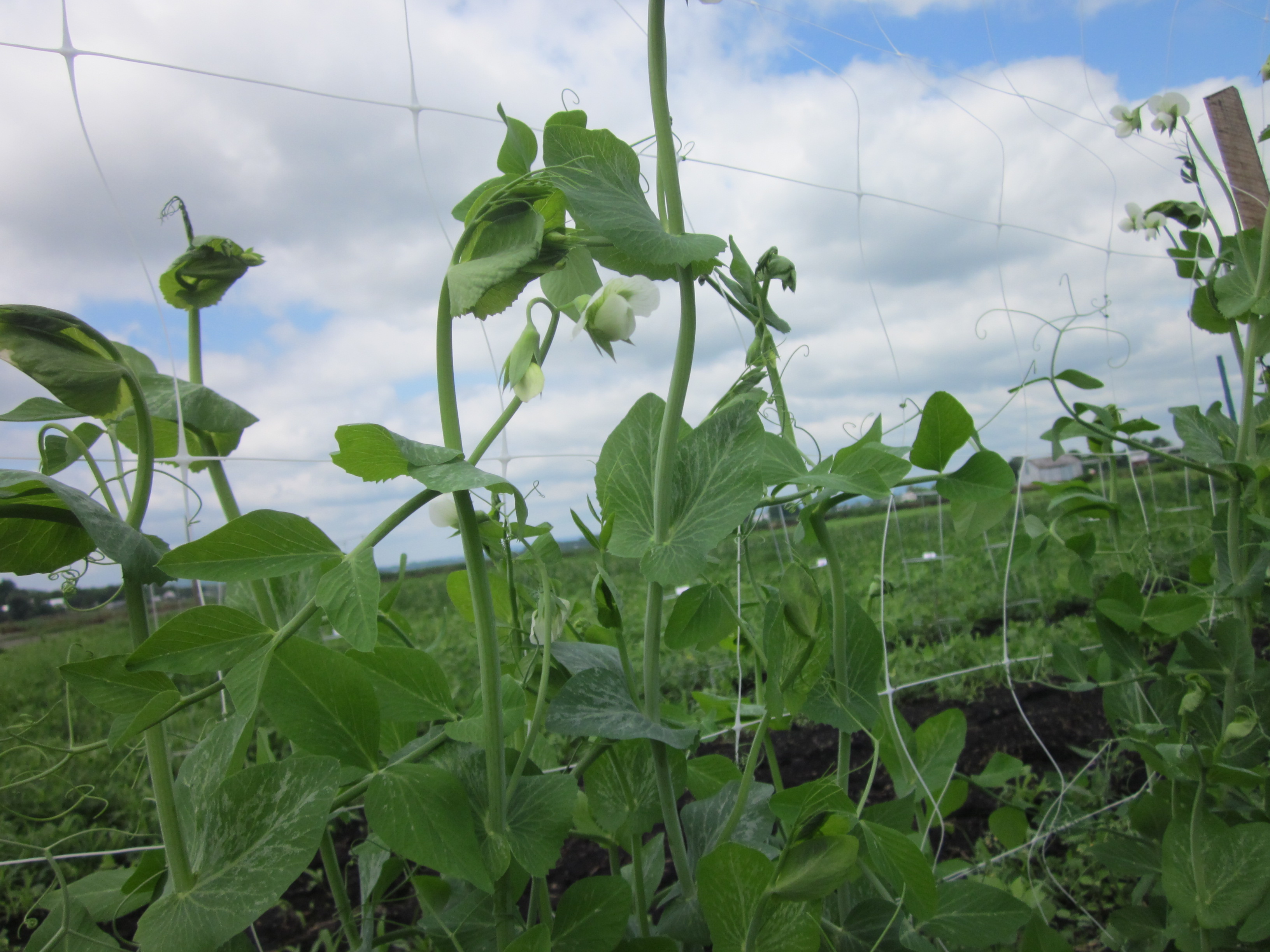
Sugar Snap Peas, Right On Time

Sugar Snap Peas, Right On Time

The potato plants are starting to flower despite the weed pressure. Although it was on my hand-weed list, I never made it into this field.

potato_0621

Flowering Potato

The green beans grow as a bush rather than as a vine. They are easier to grow, but don’t produce as long as the snap peas. The row behind is a vining-type long bean, popular in many asian cuisine. I will need to put up more stakes and trellis very soon. We love green beans but won’t be able to pick every other day, so our harvest may be lighter than the full  capacity.

provider_0621

Green Beans

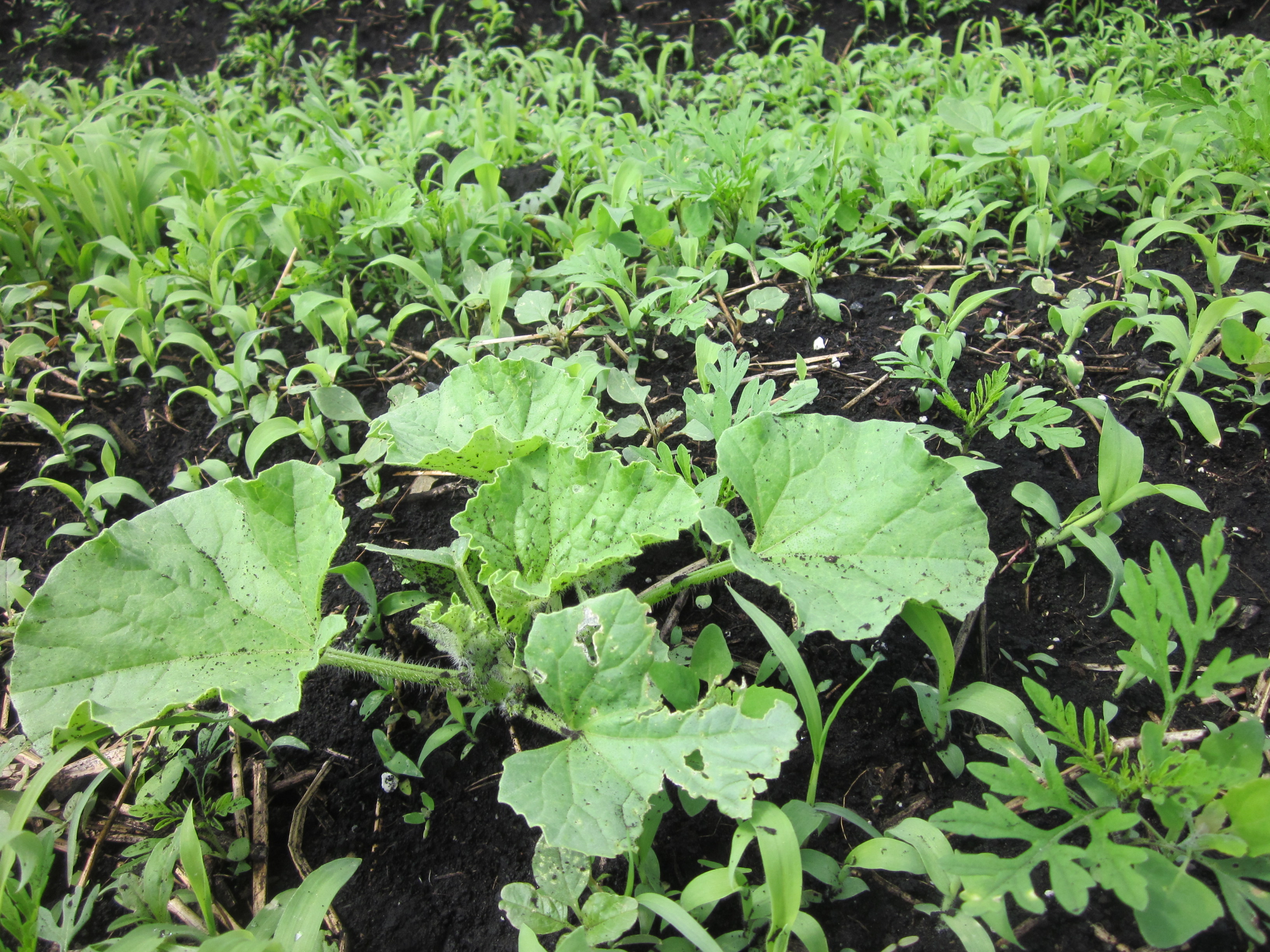
With some help from friends this morning, a lot of the winter squashes were hand weeded. Pumpkins were the first to be planted and were growing quite well. Some of the other squashes are still quite small due to the relatively cool nights we’ve been having.

Pumpkin

Pumpkin

Posted in Uncategorized | Leave a comment

Elevate the Low

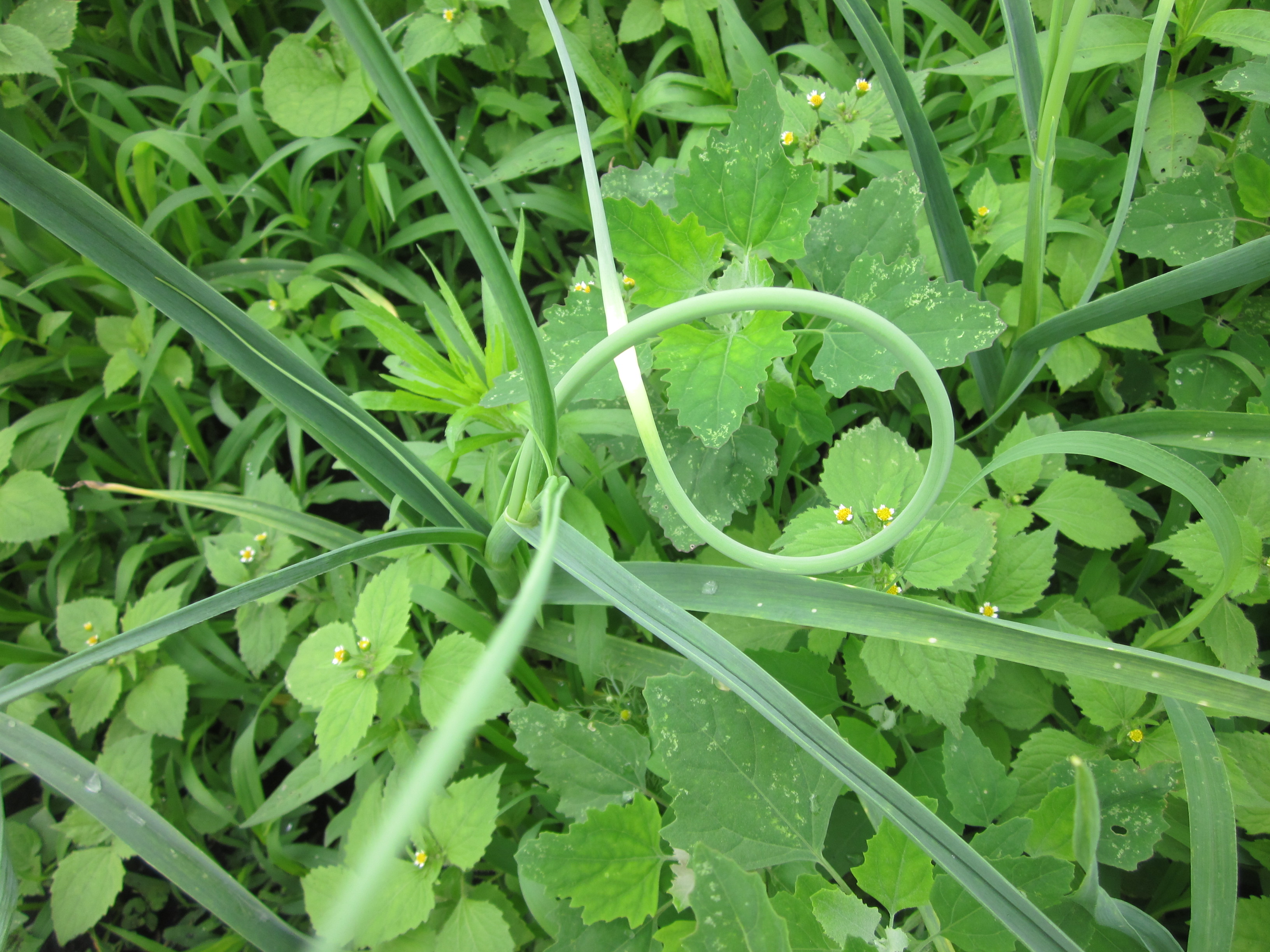
Have you ever noticed the marketing trend of elevating the common, everyday item to the altar of high culture? Think Starbucks, Victoria’s Secret, and now, garlic scapes. The fall-planted garlic leaves were yellowing for a couple of weeks and I was afraid there was some soil imbalance we did not attend to. Then I see the serpentine flower stalk with a thin bulb formation, ready for reaping. I collected 5 pounds, and there are still 2 more rows of spring-planted garlic.

Image

Garlic Scape, Ready to Eat

Snap pea is about 3 feet tall and starting to flower. In 2 weeks, we could start some pick-your-own! The more you pick, the more it produces.

Image

Flowering Snap Pea

Herbs are doing well, and most got a serious pruning this weekend. Removing the flowers forces the plant to grow more leaves and the plant becomes a stronger producer.

Basil

Basil

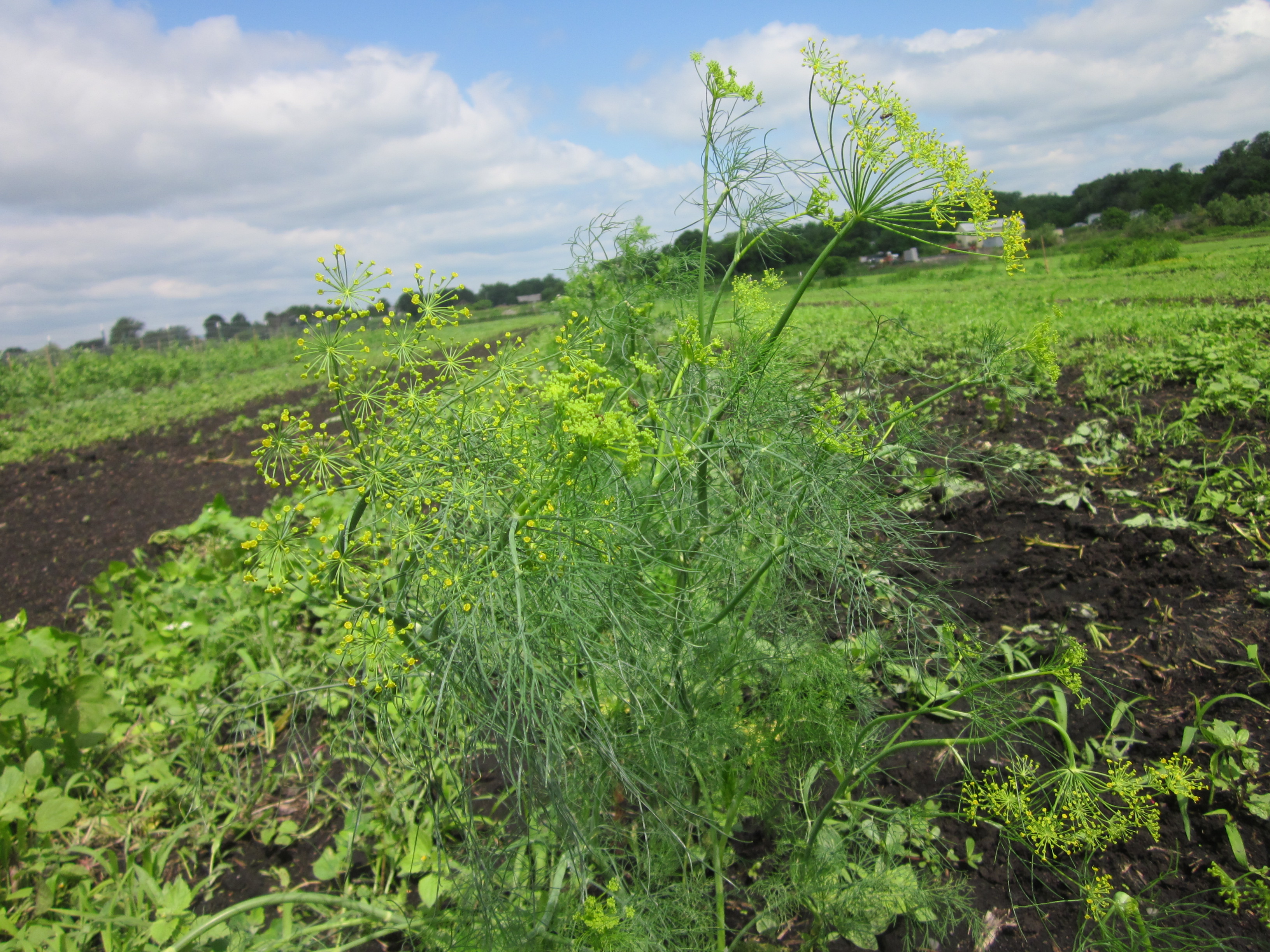
Dill, gigantic and flowering, and were flopping over in the ever-present breeze. They were trimmed down to 2 feet. I don’t think I will ever have to buy dill ever again, not in the grocery store, not as dried herb, not via seed catalogue, and not via transplants.

Dill

Dill

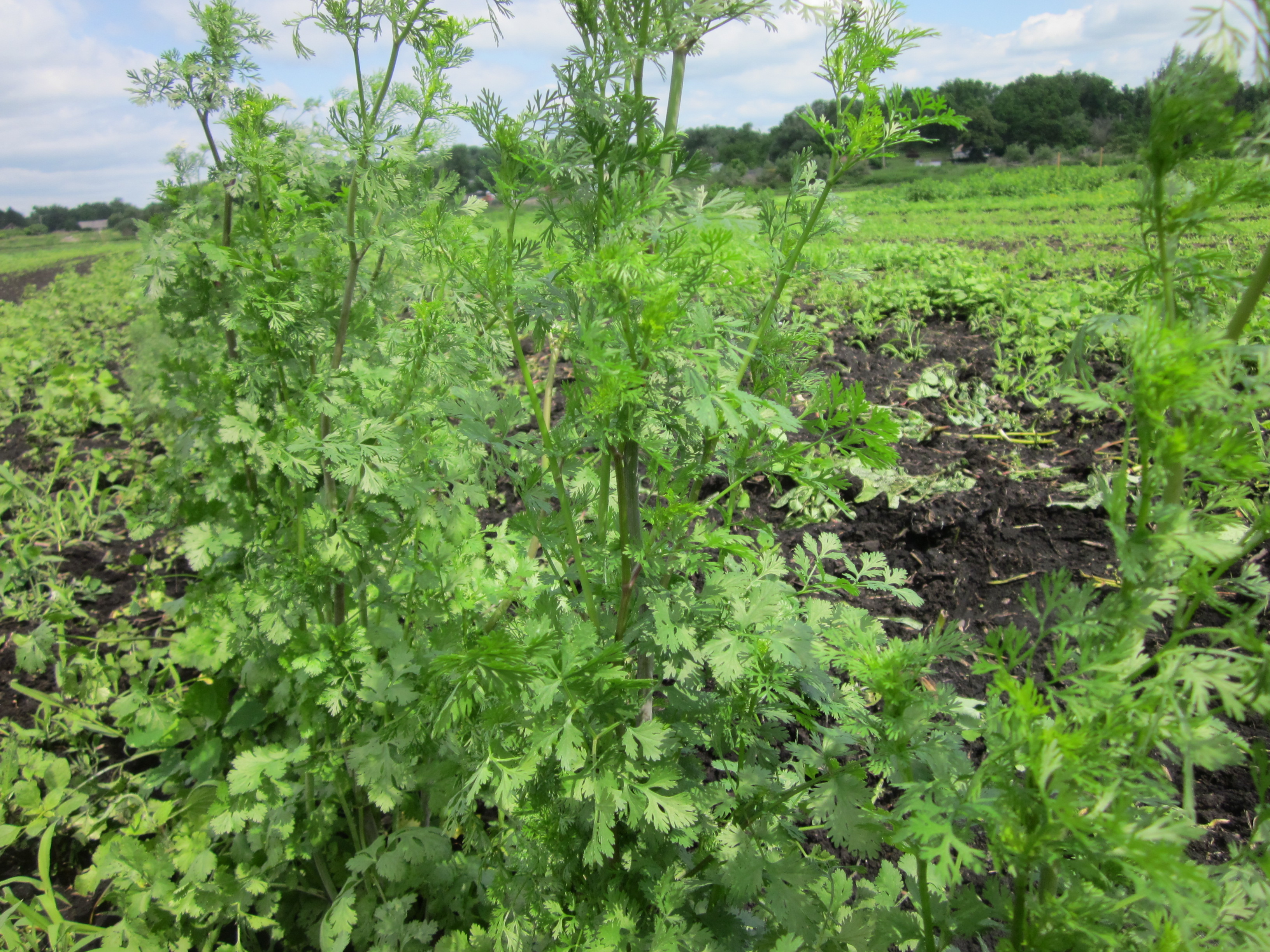
Cilantro is a cool weather herb and these have aged past its prime. You can see the white flowers and the leaves changing to a feathery shape.

005

Cilantro

Cilantro

Cilantro Flower

These are new sage from transplants. The surviving rootstock from last fall is also sprouting nicely. Another herb I don’t need to buy every again.

Sage

Sage

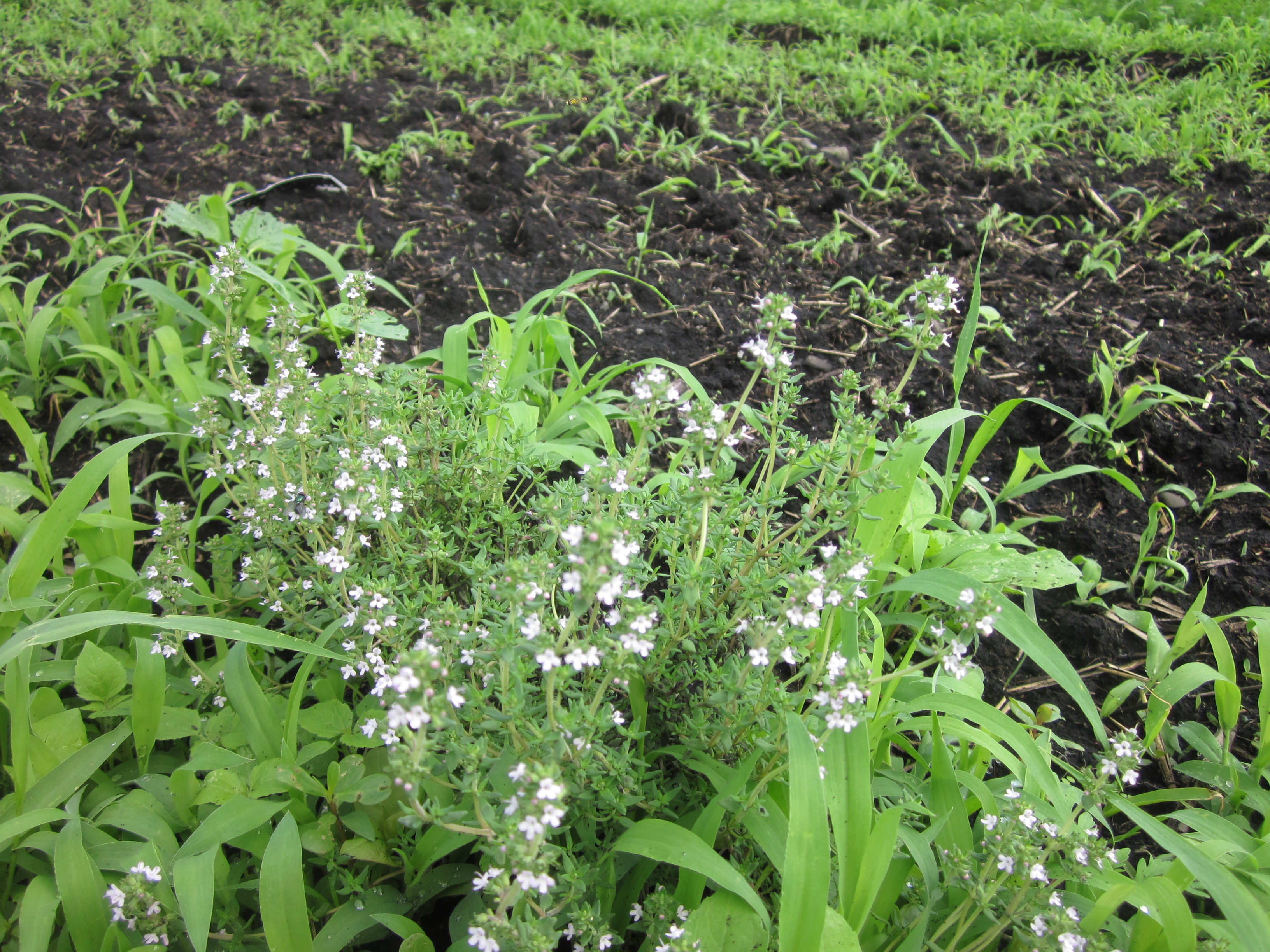
Lovely thyme flowers.

Thyme

Thyme

I tried hard to grow flowers, but so far, only this tiny bit of flower is showing color. Several rows sprouted late, but were overwhelmed by weeds.

Nasturtium's tiny bit of color

Nasturtium’s tiny bit of color

I caught one cucumber beetle munching on a squash leaf.

Cucumber Beetle

Cucumber Beetle

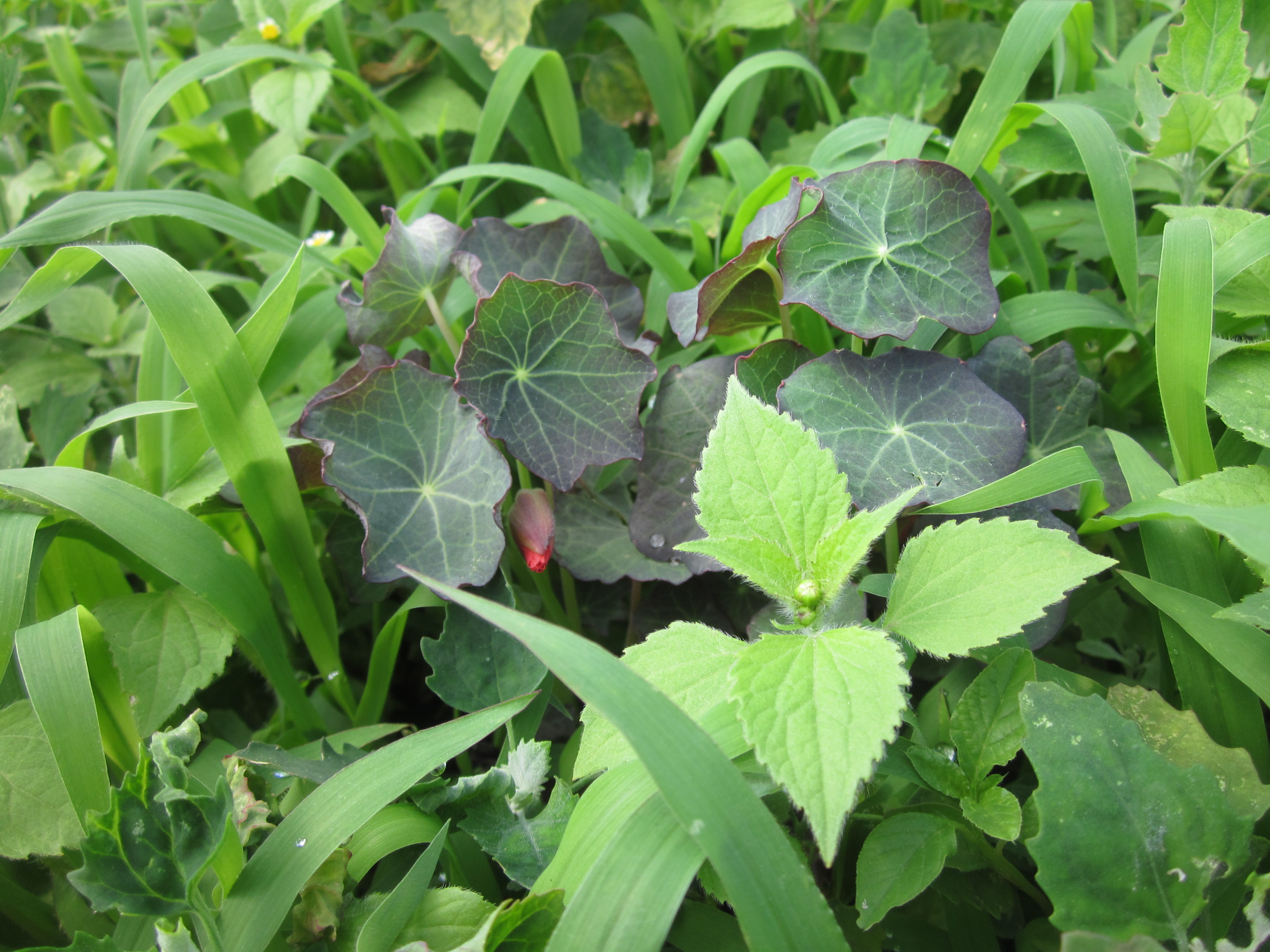
Winter squash seeds are starting to break through. Lesson learned from this week’s soaking rain – when you can, weed. Galinsoga is all over the field and they are about a foot high. They have a million fine roots and when I pull them, a large clump of dirt comes up. They also have an uncanny ability to grow right next to a vegetable seedling.

Pumpkin Seedling

Pumpkin Seedling

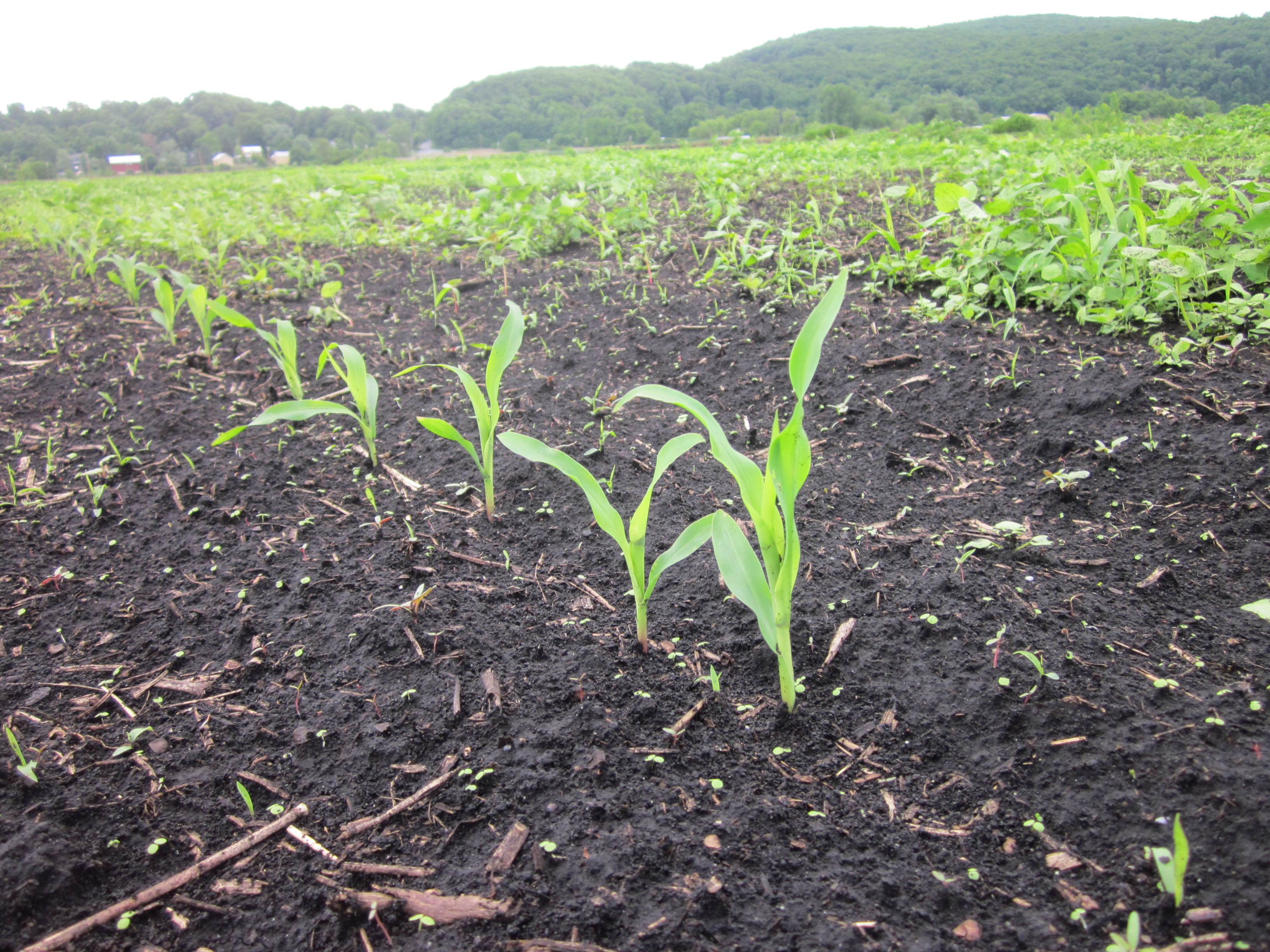
Sweet corn has sprouted well. Popcorn hasn’t done anything yet. One of the fields was damp when we tried to plant corn, so the dirt kept clogging up the corn planter. There are huge gaps, and spotty areas which probably need to be filled in by hand.

Corn Row

Corn

Final call for bok choy! We finished the row, and it will be tilled under next weekend.

022

Last of Bok Choy

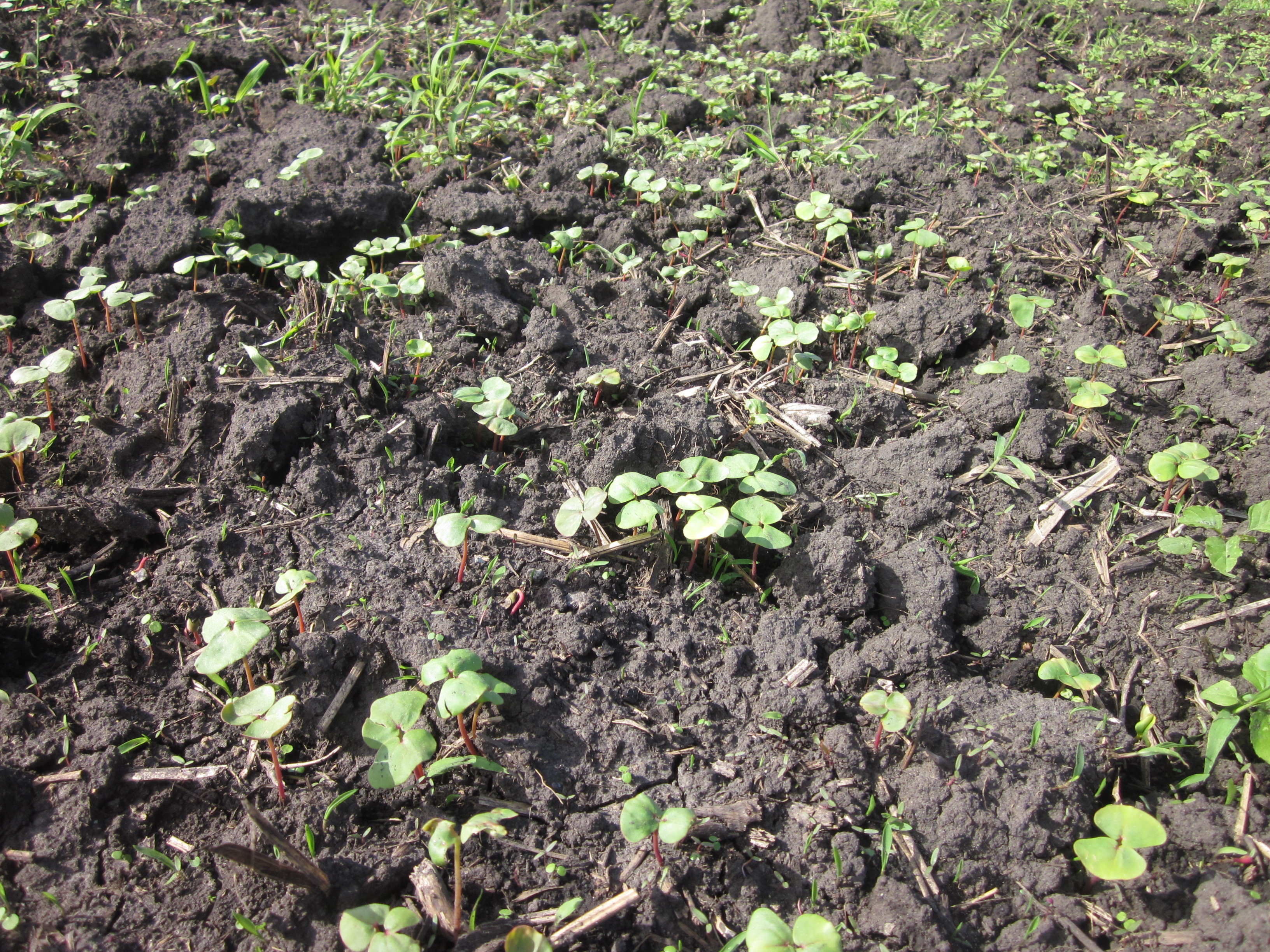
Covercropping with buckwheat so we can control weeds on field areas that are not being planted immediately. It is a fast grower.

Buckwheat sprouting, 1 week

Buckwheat sprouting, 1 week

Posted in Uncategorized | Leave a comment

Priorities

Every weekend, I note new seeds that should be planted, and a second sowing of strong germinating varieties. When I step on the farm and do a walkabout, the need to weed becomes a much higher priority. There’s weeding of the entire row, weeding between plants, and thinning plants. Some of the herbs are beginning to flower, so they need to be trimmed to encourage bushier growth. Now add harvesting to the list and the priorities really get messed up. Dan does the tractor prep work on unplanted fields to get it ready for seeding, but planting becomes the lowest priority.

Bok Choy, Heat Tolerant

Bok Choy “Mei qing choi”

Since our first planting on Apr 19, there’s been a lot of hurry up and wait. Wait for last frost, wait for warmer days, wait for the seedlings to germinate, wait for sun, wait for rain. So waited we did, and 7 weeks later, those early brassicas are ready! Bok choy variety “mei qing choi” are about 6″ tall. They were hand sown a little closely, and never received flea beetle protection with floating row covers, nor hand thinning and weeding. Not too shabby I’d say. According to the seed catalogue, these can be seeded from early spring to mid-summer. Succession planting every few weeks generates a continual supply of vegetables. We may have a couple more chances with brassicas.

Bok Choy "Tatsoi"

Tatsoi, Better Luck Next Sowing

carrots

Carrots Growing Close

Carrots “Nectar” mature at about 72 days, which puts us about 2 weeks away. They weren’t thinned, so root growth might be on the skinny side. The one time I tilled weeds next to the path seemed to have staved off some nearby weeds.

Lemon Cucumber

Lemon Cucumber Seedling

Some farm visitors helped to seed the Lemon cucumbers a few weeks ago and the seedlings are coming on strong. The warmer days are really helping the cucurbit family germinate.

Posted in Uncategorized | Leave a comment