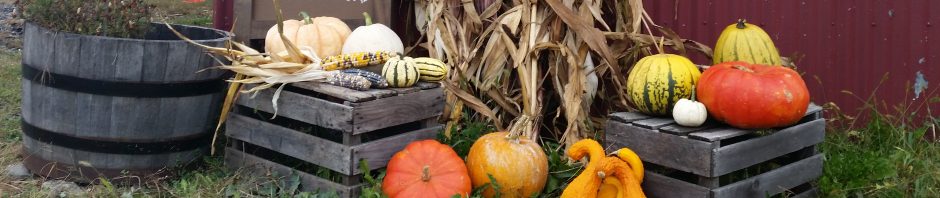
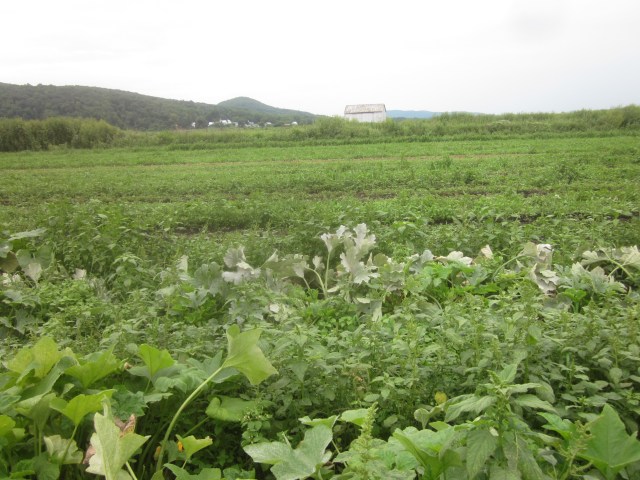
 This time of year, farm nights turn far chillier than city nights. The first question of the day is “how cold will it get tonight”. An early light frost ruined a lot of cayenne peppers last year, something I am trying to prevent this season. I’m also keeping a watchful eye on pumpkin progress, not that there’s much to be done except pray against frost and hurricanes. There are many immature squash as the vines and leaves brown and die out.
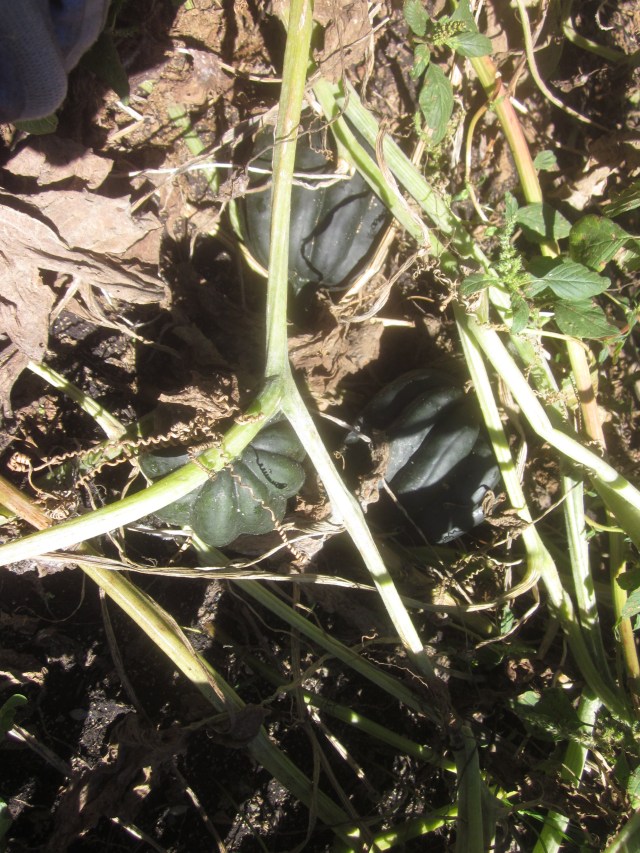 I could have sworn I planted way too many blue hubbard squashes, giant blue winter squash with a rind as hard as a steel jacket. But they are nowhere to be found. Instead, I found Dan’s favorite, acorn squash, growing well this year.

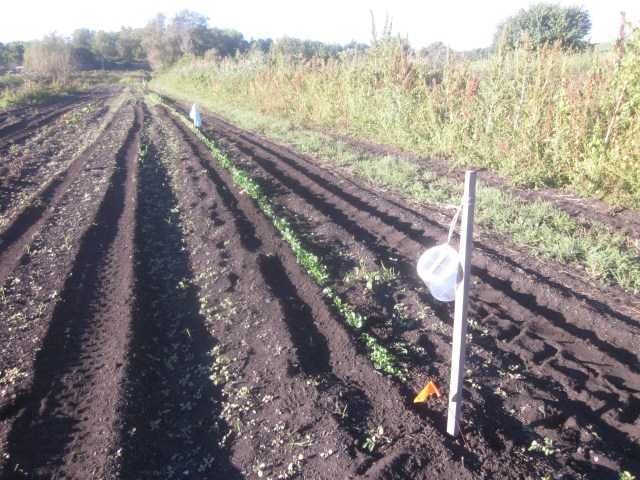
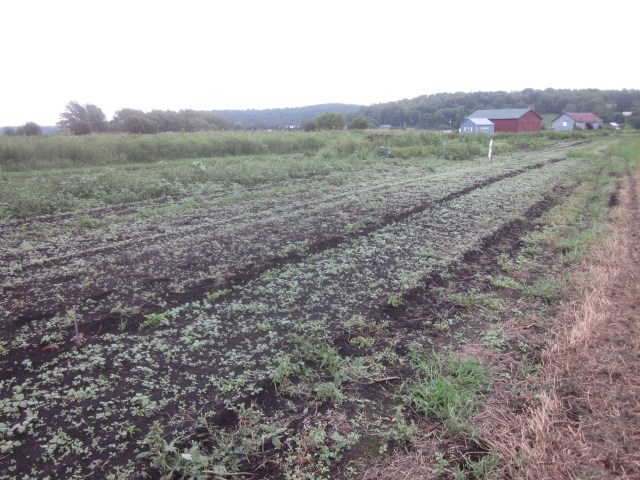
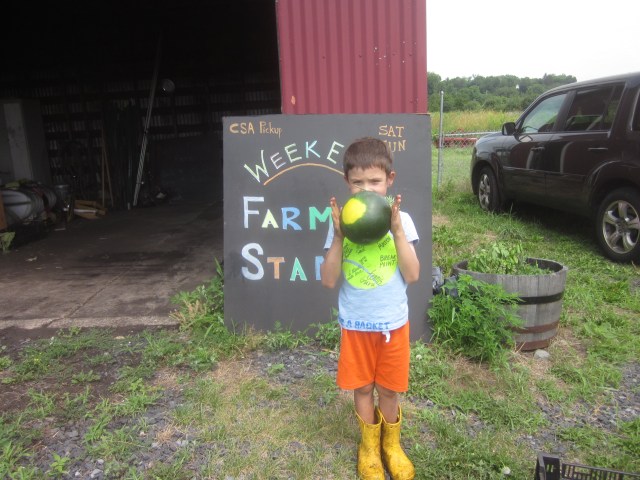
New vegetables started in August are struggling to grow. I had purposely left this field open all summer to beat back bindweed starting in the field, so for the fall planting, this was a perfect plot. Though they made their way through the dry weeks with our once a week irrigation, survived the heat on black soil. but they were defenseless against deer and/or groundhog appetite. I put in some stakes, mounted a flashing solar lantern, a smiley-face beach ball, and some human-scented t-shirts.
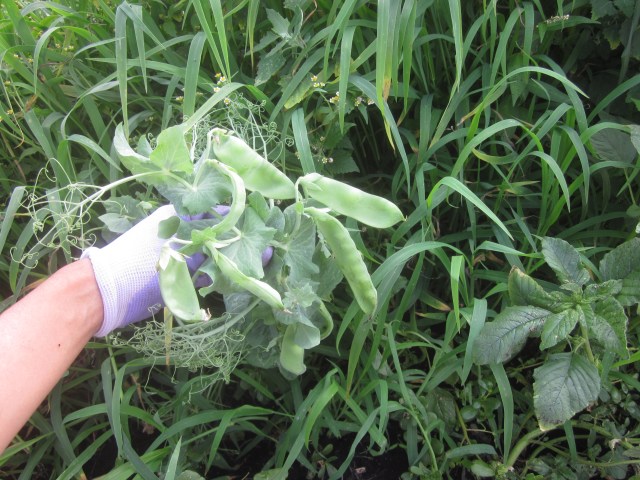
 Must protect sugar snap peas!
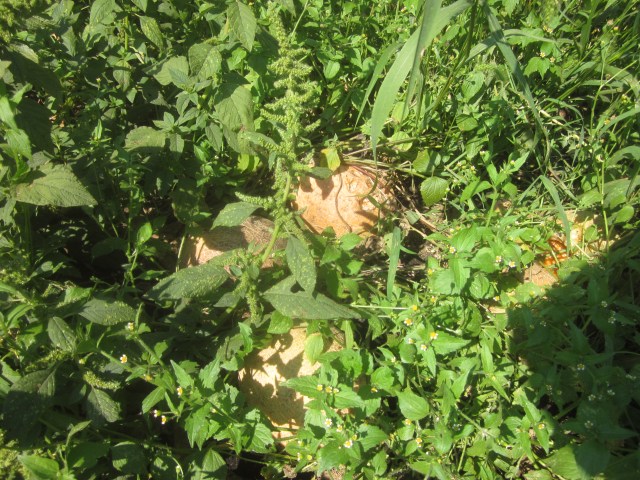
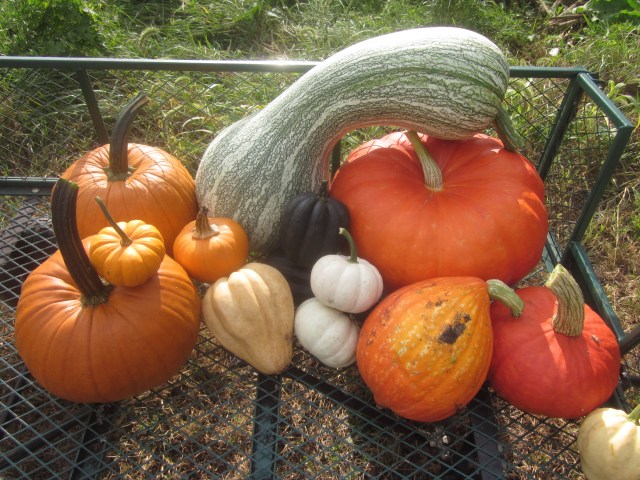 I waded into the pumpkin patch and found these guys ready to pose for the camera.
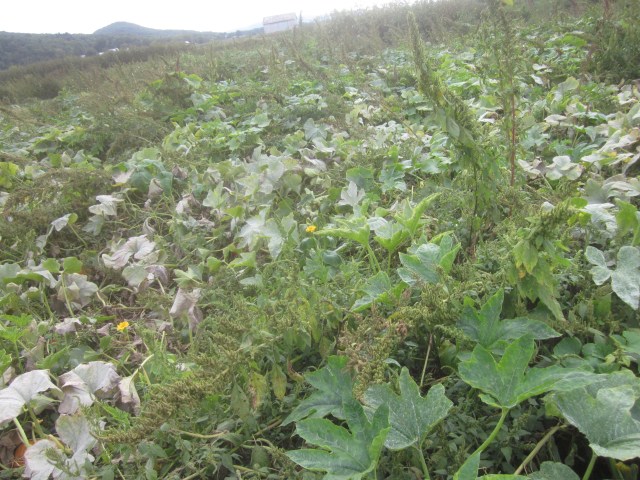 By wading, I mean battling through tall weeds, looking at a field of still-green vines, and plottng how to step through without destroying too many vines.
 The nexus of pumpkin varieties. This is the end of the winter luxury pumpkin, meeting up with a French heirloom Rouge Vif d’Etampes, with a jack-o-lantern type sneaking in on the right.
 This Rouge Vif d’Etampes surprised me. I am fond of growing heirlooms and have learned that they don’t always produce well, or uniformly, or timely, or in enough quantities. This is a deep red, gorgeous, cheese-wheel shaped squash, that announces its presence in the field.
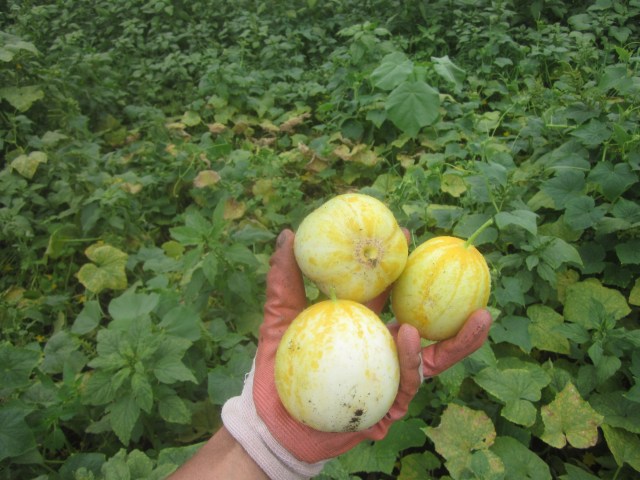
 Another surprising hit, the miniature white pumpkin. I’ve tried several times with larger white varieties to no avail. But these little guys seem have prospered. We cut them, and store them out of the sun so they don’t get a sunburn and turn yellow. Usually pumpkins sit in the sun to cure, which forms a hard shell, and allows it to keep for a long time. Out of the sun, it needs to stay at 85 degrees with good air circulation.
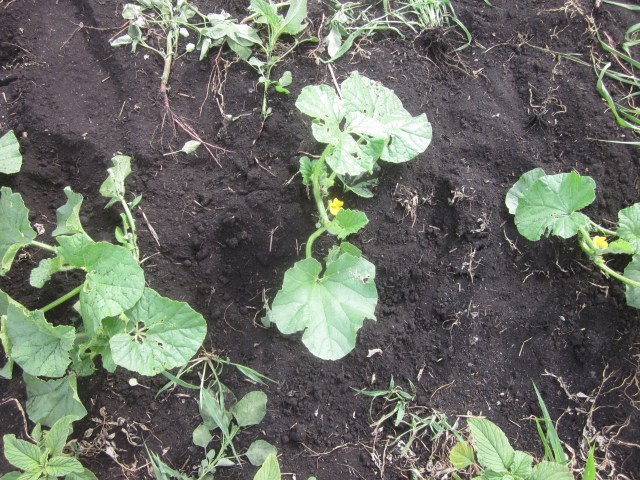
 The delicata squash, still blooming and vining.
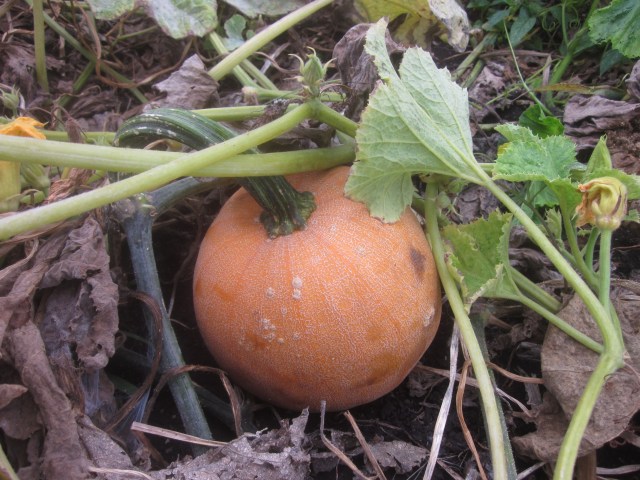 Winter luxury pumpkins are coming soon! Beautiful netted skin. Dry flesh, not stringy. This makes a wonderful pumpkin pie, the first type that got me cooking pumpkins and the only type I will use.
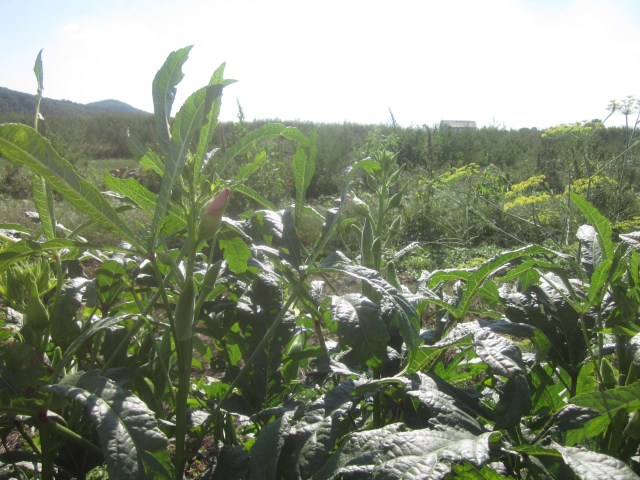
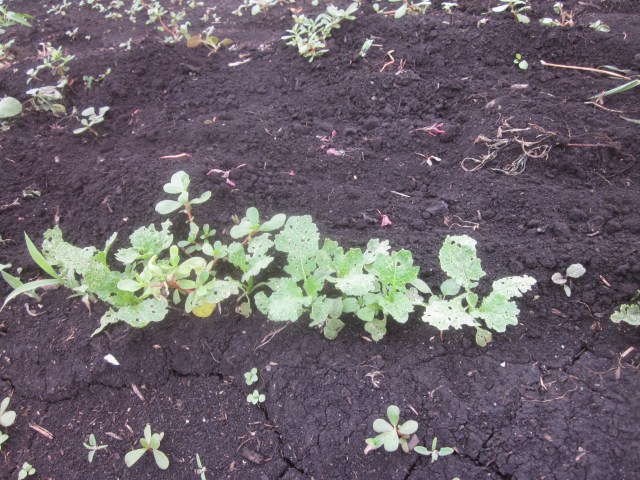
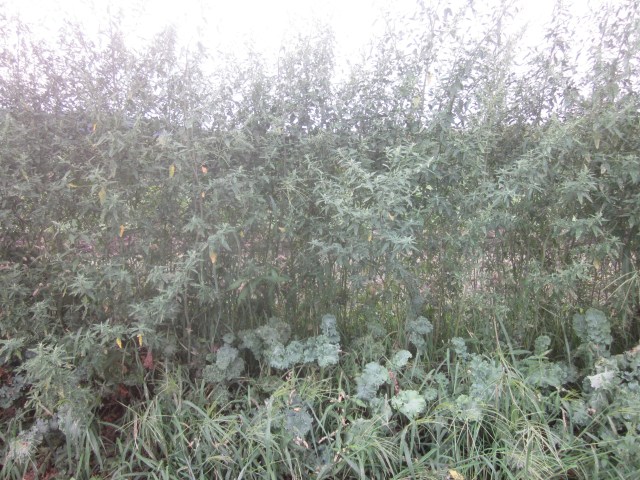
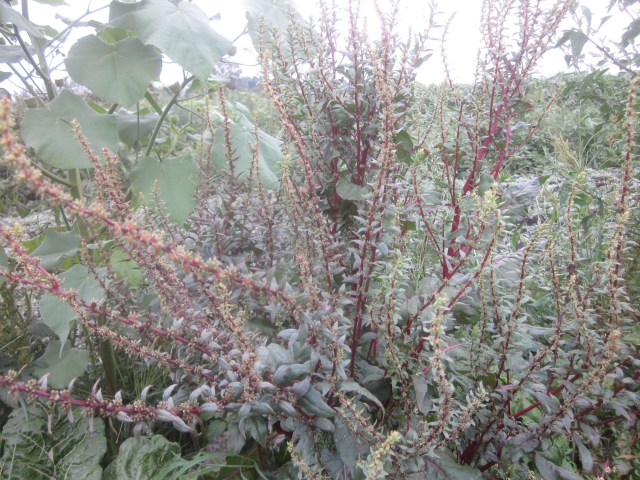
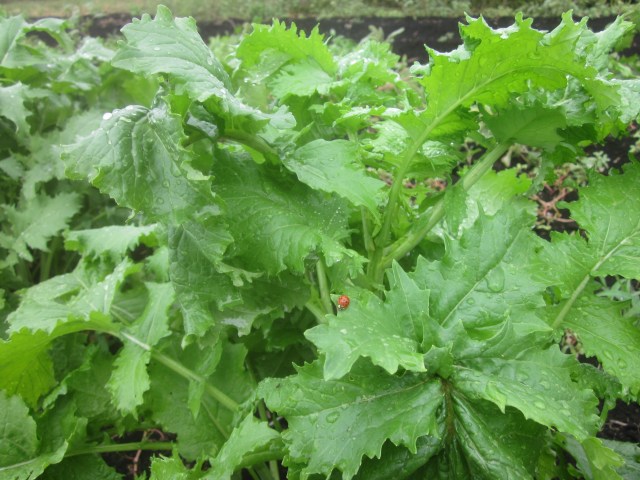 New crop of flowering broccoli rabe. They struggled through August heat and drought, but were helped by some weeds providing shade and moisture in the roots. While I wouldn’t say hand-weeding is efficient, the fall season does make the work less tedious as weeds don’t crop up week after week with the same tenacity. I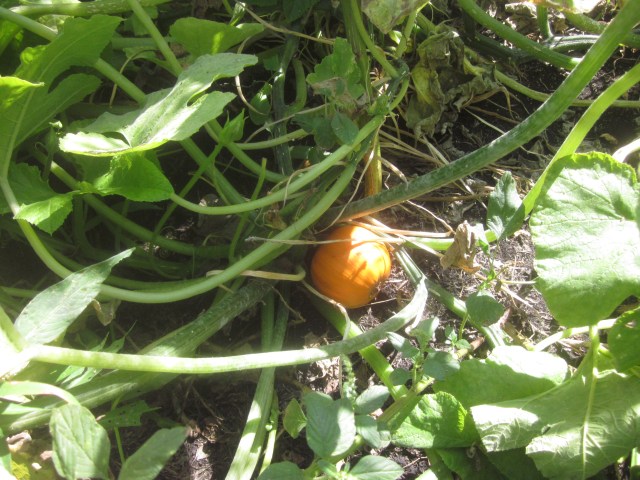














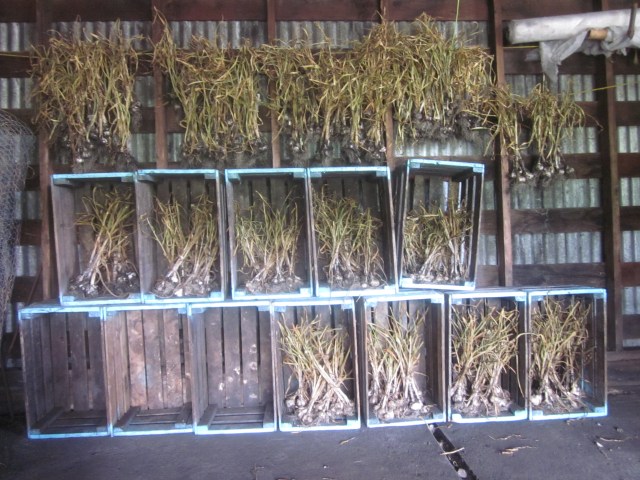 We are starting to pull garlic and hanging it to dry in the barn. A fresh garlic is full of liquid and is amazingly great for … mosquito bites. (I swear by a garlic rub as soon as a mosquito bites. It stings a little so you know that the chemical compound, allicin, that lends garlic its antibacterial and antiviral potency is working. For me, the sting relieves the itch, and also reduces the inflammation and swelling.) Some of the garlic areas got weedy and grassy so require additional effort to dig and pull, that’s for next week.





 Tomatoes are setting. Within two weeks, the plants really grew up and out. The next 2 weeks will be weeding, pruning and working on a support system for the vines.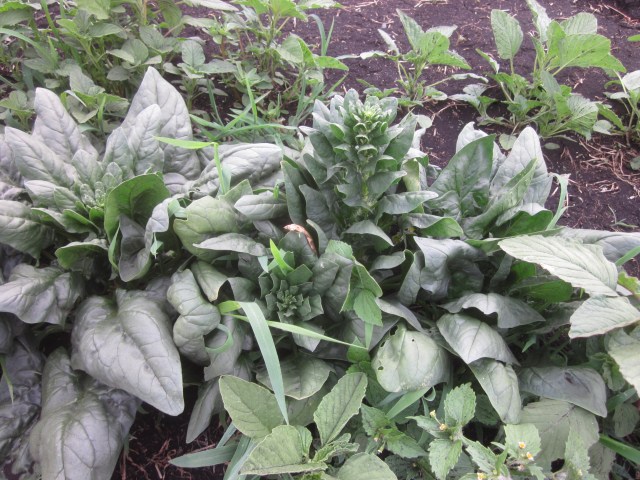


 Russo Family Farms